
Introduction to MTSS
MTSS, or Multi-Tiered System of Supports, is a framework that supports student academic, behavioral, and social-emotional learning (SEL) with a system of tiered interventions that meet student needs with personalized strategies. The goal of MTSS in education is to use complete data to enact the best interventions that support student success.
In this blog, we explore the fundamentals of MTSS, offering an MTSS education to school staff who may want to learn more.
Why was MTSS created?
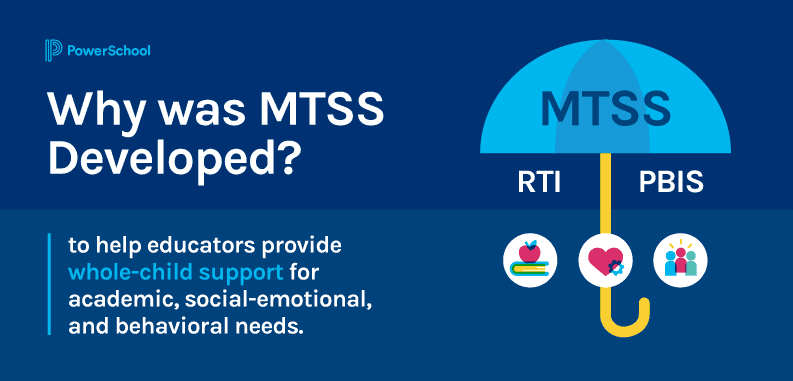
MTSS was developed to help educators provide whole-child support for academic, social-emotional, and behavioral needs. MTSS is based on the integration of RTI (Response to Intervention) and PBIS (Positive Behavior Interventions and Supports) frameworks.
Why is MTSS important?
By merging instruction with data across social, emotional, and behavioral needs, MTSS supports whole-child education. It guides teachers and leaders to make data-driven decisions, streamline high-quality instruction, and bolster positive behavioral supports. This proactive approach identifies challenges early, relying on the expertise of classroom instructors. In sum, multi-tiered system of supports boost schoolwide collaboration and elevate staff agency in contributing to student success.
What is MTSS? And what is MTSS not?
MTSS involves the following three main components.
1. MTSS has a tiered system for student support
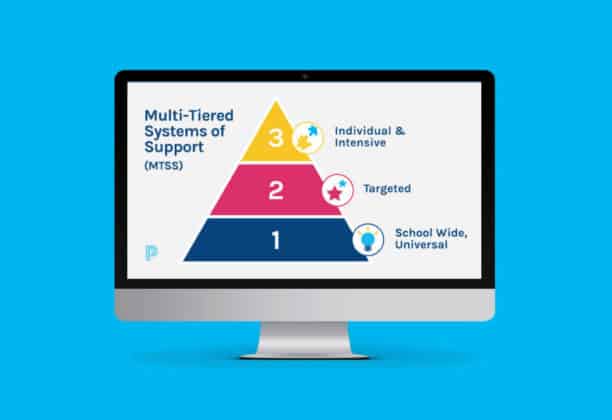
Like triangular building blocks, MTSS has three levels. All students fall into the first tier. Students who need support (as determined by screening, classroom reports, academics, data collection, or a combination of these) will be placed into another tier. At each tier, interventions are selected based on proven effectiveness, ensuring students get what they need.
- MTSS Tier 1: Schoolwide expectations for learning, behavior, and emotional regulation.
- MTSS Tier 2: Targeted group support for those who need it.
- MTSS Tier 3: Personalized interventions for students needing assistance.
2. Ongoing monitoring in MTSS
Just as a coach tracks an athlete’s performance, MTSS tracks student progress. Educators can best monitor students’ progress with reliable tools and a consistent approach. This way, they can adjust student support as needed.
3. MTSS uses data-based decision-making
MTSS relies heavily on data. It’s the compass that guides decisions, ensuring that schools take the right actions, whether it involves instructional changes or support systems.
What is the difference between MTSS and RTI?
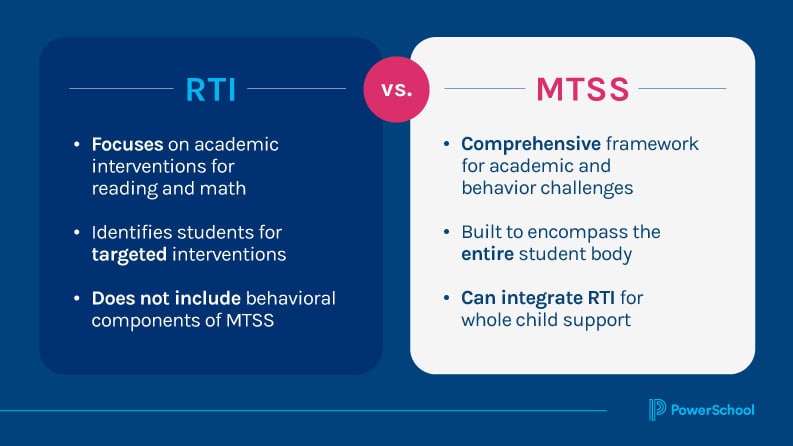
MTSS is a broad, comprehensive framework that can intensify support for academic, social-emotional, and behavior challenges. It integrates RTI as well as PBIS to address social, emotional, academic, and behavioral needs with a whole-child approach.
RTI focuses primarily on academic interventions, particularly for reading and math. It helps identify students who are struggling academically and provides targeted instruction to boost their success.
MTSS is built to address whole-child needs. Its first tier provides schoolwide support. In RTI, the first tier enacts an academic “screening” for students to identify those who need targeted or individualized interventions. RTI also helps teachers and specialists determine if students qualify for special education services.
RTI and MTSS have the same goal, which is to address academic challenges.
What is the MTSS pyramid?
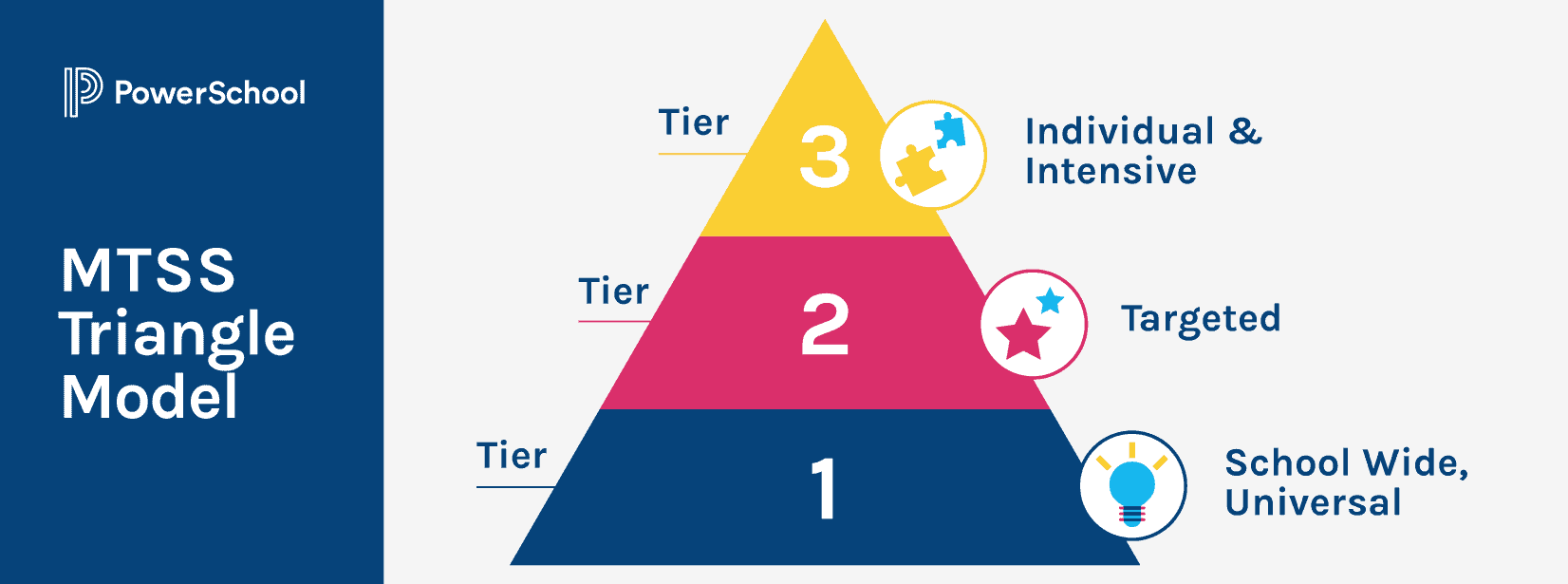
The three-tiered approach is the foundation of MTSS. It’s structured as a triangle of support:
Tier 1
This is the foundational level. It’s all about offering quality universal school-wide instruction and support. The goal is to create a solid learning base and positive behavior for everyone.
Tier 2
For students who need more than just foundational support, Tier 2 helps. Here, targeted group sessions address specific challenges, ensuring students get the extra care they require.
Tier 3
Tier 3 is the most specialized. If a student needs personalized, intense support, this tier ensures they get it. It’s about making sure no one is left behind.
While the triangle framework is more widely adopted, the diamond model continues to gain momentum. Each has its advantages, and both are effective when correctly implemented.
What is the MTSS diamond framework? 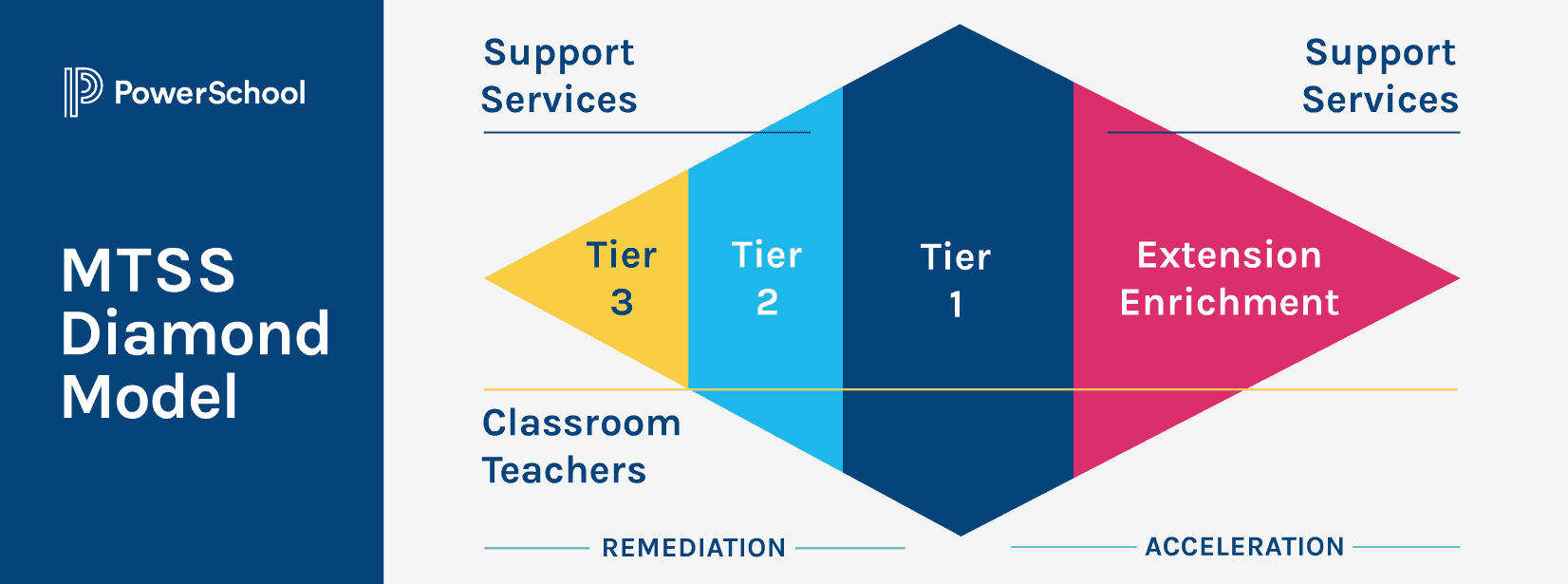
Some schools use the MTSS diamond framework that extends to learners needing advanced curricula or acceleration. Although we understand that MTSS is for all students, many are surprised to learn that MTSS can be a robust framework to support students with advanced learning needs.
The diamond model encourages a more strengths-based approach. A student needing Tier 2 support on the behavior side may also need better academic engagement and acceleration on the enrichment side. This diamond model may help educators better differentiate instruction to ensure students stay challenged.
Key components of an MTSS intervention plan
No matter whether your school uses a triangle or diamond approach to MTSS, students in tiers 2 and 3 will be given an intervention plan. An intervention plan is a structured approach that educators use to support the specific needs of individual students. It is a tool that details the goals, tracking mechanisms, and tailored strategies for each student’s success.
The three key components of a comprehensive intervention plan are:
- Goals: Clear, achievable targets for the student.
- Ongoing progress monitoring: Continuous tracking ensures that students are on the right path and making progress.
- Interventions: Specific strategies help students achieve their goals. Whether students are offered a new teaching method or a specialized support tool, it’s all about what will most effectively help them.
MTSS benefits
MTSS isn’t just a tiered system of interventions. It is a proactive framework that helps schools and districts make data-driven decisions to support each student.
How does MTSS help students?
Whether you’re an educator in a large district or a smaller school system, your students can benefit from its preventative and proactive framework. In short, MTSS is for helping students and teachers find success in supporting student learning.
How do you explain MTSS to parents or families?
Getting families on board in every aspect of their child’s education—including interventions—helps them engage with the school community. In fact, school-home partnerships are often strengthened by the increased family engagement that comes from MTSS initiatives.
When families are aware of a school’s MTSS process early on, they can understand its vision and mission. This sets the stage for engaging with them about their child’s needs, interventions, and progress.
Some schools introduce their MTSS tiers and expectations during orientation and then reinforce main concepts during semi-annual conferences. They often use visuals and flowcharts to explain how the tiers work, and that reiterates that all students start at the first tier. When speaking with families, educators should note that MTSS jargon can feel overwhelming at times, so it helps to stay focused on student strengths as opposed to their “placement.”
Some schools avoid “Tier 1, Tier 2, and Tier 3” language in favor of “All-Some-Few” charts to explain how tiers work across a school. Regardless of your school’s presentation of MTSS concepts, MTSS is most effective when everyone remains eager to give every student the support they need.
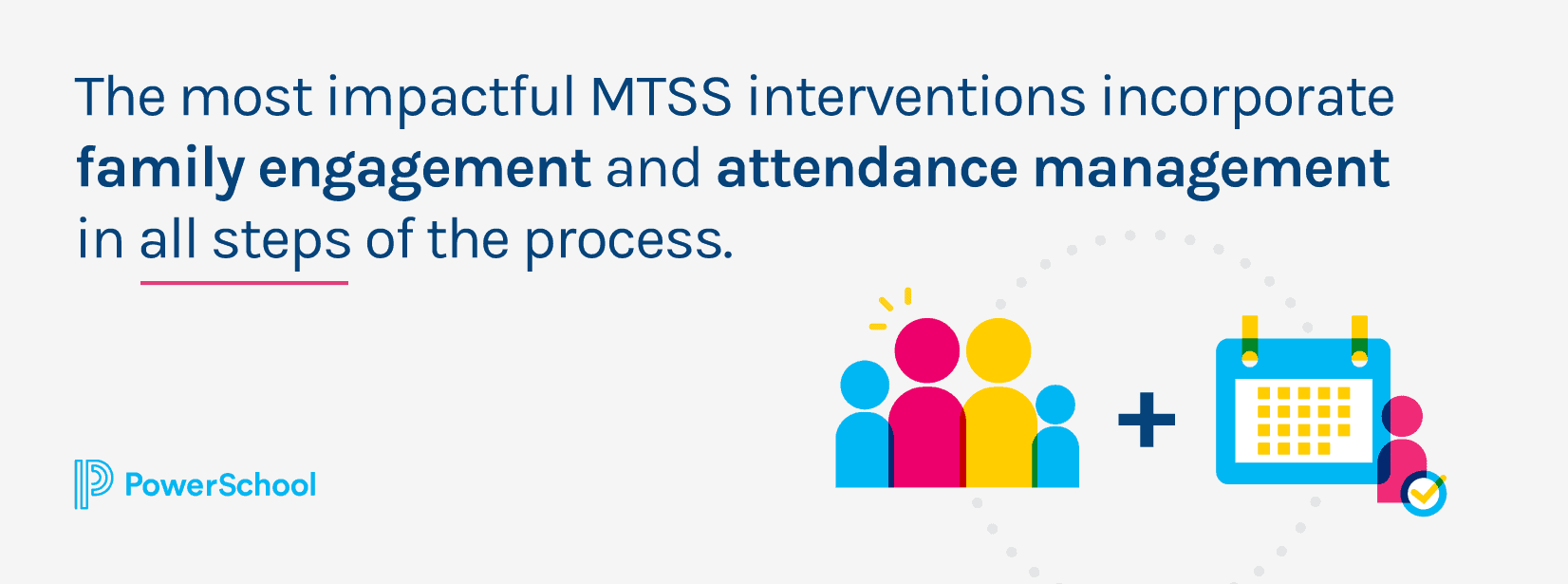
- At Tier 1, schools can support families with strategies for community-wide engagement. An example is regular school communication regarding assessment results or attendance tips.
- For Tier 2, schools can offer tailored engagement opportunities. That could look like weekly outreach that connects families to local resources and service providers.
- At Tier 3, schools might create individualized spaces for families participation. Many schools also build wraparound teams that connect family with individualized services and supports.

Explore Solutions for Family Communication
PowerSchool Communication products connect families, boost attendance, and empower teachers to support each student's unique needs.
Learn MoreHow does MTSS help teaching?
The goal of MTSS is to provide adequate and equitable support for all students. For this reason, it helps teachers help students. Since MTSS considers whole-child data, it helps teachers track student needs, conduct interventions, and review their efficacy on a regular basis. With the right technology, MTSS can also support student mental health and wellness.
MTSS is a proactive, data-driven, and dynamic framework. Its clear and consistent structure helps teachers spot potential challenges early, and without bias.
Students in schools with MTSS consistently do better in school—both academically and emotionally. University of South Carolina Professor Mitch Yell states, “If it’s implemented properly, it helps every student in the school.”
MTSS fosters a positive school culture by setting clear expectations and offering a consistently holistic view on student success. Schools using MTSS data can ensure that each student gets consistent support regardless of their background.
MTSS interventions
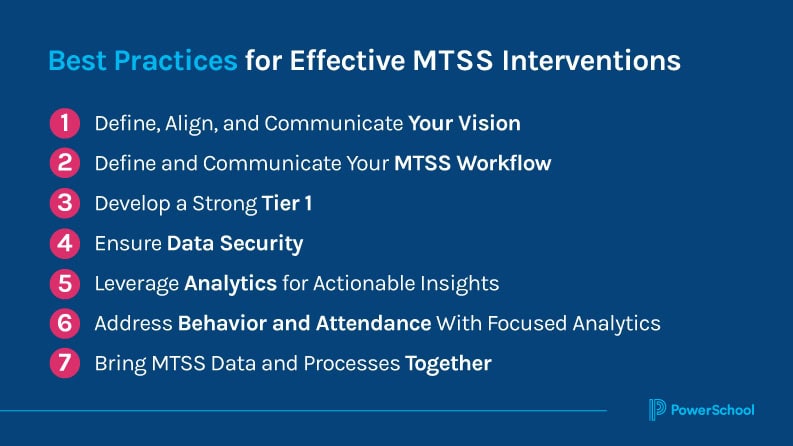
The goal of MTSS interventions is to support whole-child success, yet some schools struggle to clearly identify and monitor interventions due to lacking an organized and collaborative system. Without a comprehensive, centralized system, they often use disconnected solutions like shared computer drives and folders to add data.
To have effective MTSS practices, schools need to analyze, collaborate, and act on all critical student data, including historical information. These deep insights help educators better meet the needs of the whole student. Sharing those insights with families and involving them throughout the process contributes to more impactful interventions.
Move your MTSS forward
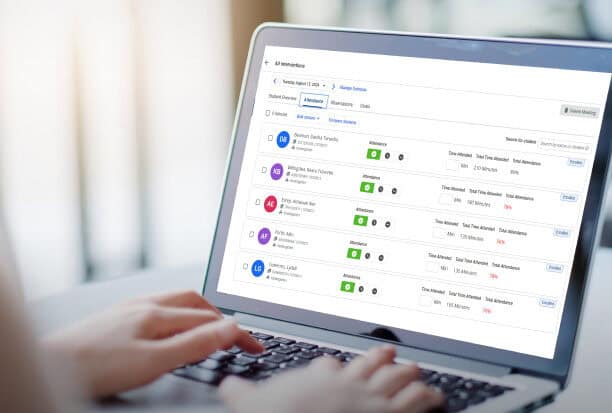
Face common challenges like lack of resources, inability to gauge effectiveness, and challenges with collaboration with an award-winning solution.
Learn MoreHow do schools implement MTSS processes?
The MTSS framework is flexible and can be applied to any subject or behavior. The goal when implementing MTSS best practices is to ensure that every student is at the right tier to best support their development. So, how does a school get started on MTSS processes? Here are 5 steps.
Five steps for implementing MTSS processes in your school or district.
- Review Student Data: Identify and track student needs with an extensive range of inputs, including the ability to create student plans. It is best to select a leader for this process.
- Select an Intervention: Implement and monitor interventions.
- Monitor the Intervention: Access comprehensive learner profiles that centralize all student data, including interventions and student plans.
- Assess Effectiveness: Review the efficacy of your MTSS framework for continuous improvement.
- Communicate Next Steps: Communicate with families to share interventions and student progress.
How does MTSS look in the classroom?
Here’s how an MTSS Tiered Triangle framework might be applied in a school, with the goal of every student being a fluent reader. There are three essential components of MTSS in this example:
- Data-driven decision making. Regular assessments and progress monitoring help to identify students’ needs and the effectiveness of interventions.
- Layered support. Students receive support at varying levels of intensity based on their individual needs.
- Collaboration. Teachers, administrators, and specialists all work together to develop and implement interventions, ensuring that students receive the appropriate amount of support.
Tier 1 (Universal Support): All students receive high-quality, evidence-based reading instruction in their ELA class. Teachers use a standardized curriculum that is designed to meet the needs of most students. They regularly assess students’ reading abilities to identify those who may need additional support.
Tier 2 (Targeted Support): Students identified by their teachers as needing more help than is offered in Tier 1 receive more reading support. This might include smaller group instruction with more frequent progress monitoring. The interventions are targeted, meaning they focus on specific skills such as phonemic awareness or comprehension. Tier 2 students continue to receive high-quality, evidence-based reading instruction in their ELA class, too.
Tier 3 (Intensive Support): Students with significant needs—those not making progress in Tier 2—move into Tier 3, the “top” of the MTSS triangle. This level of support is the most intensive and individualized. It likely includes one-on-one instruction or specialized programs designed to address reading difficulties. The efficacy of these interventions is closely monitored, and progress is assessed regularly to ensure student improvement. As students begin to meet expected benchmarks, they may move from Tier 3 to Tier 2 with continued monitoring.
MTSS and PBIS
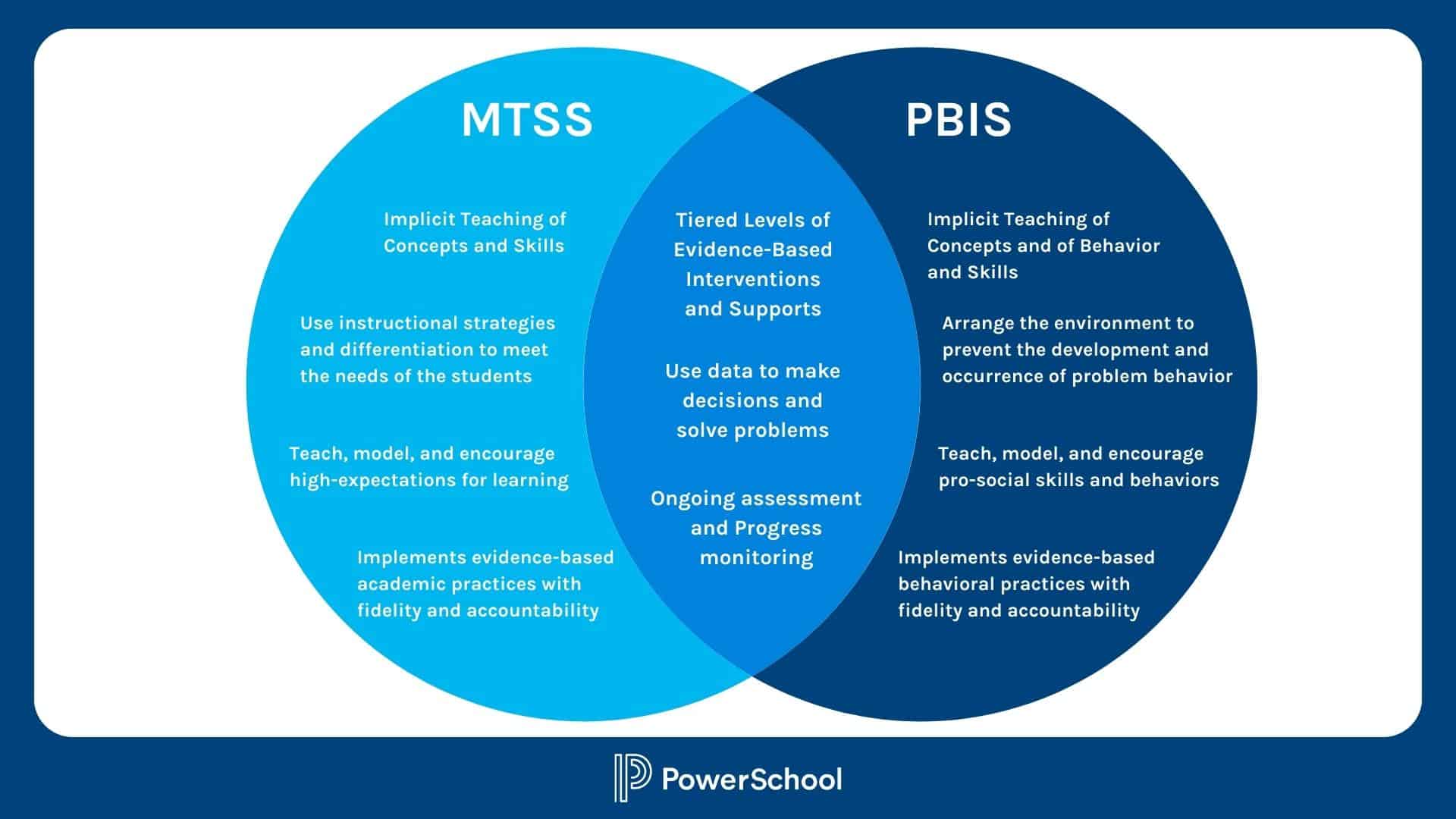
PBIS is a component of MTSS that focuses on behavior-related aspects of the broader MTSS framework that offers a comprehensive approach that includes academic (RTI), behavioral, and social and emotional support.
FAQ about PBIS and MTSS
1. How does PBIS support MTSS?
Think of PBIS as the portion of MTSS that specifically addresses behavior. While MTSS provides a broader framework for supporting students academically and non-academically, PBIS offers a systematic approach to teaching positive behavior.
PBIS and MTSS work together to support student success. PBIS is a proactive approach to establishing the necessary behavioral supports for students to excel socially, emotionally, and academically. Like MTSS, it also uses a three-tiered system of universal supports, targeted supports, and intensive supports.
2. How do PBIS tiers work in MTSS?
PBIS operates within the MTSS framework by addressing the behavioral needs of students across all tiers.
- In Tier 1, PBIS includes creating clear behavior expectations, teaching SEL skills, and implementing systems for acknowledging and reinforcing positive behaviors for all students.
- In Tier 2, PBIS provides small-group social skills training, mentoring, and check-in/check-out systems to address specific behavioral challenges.
- In Tier 3, PBIS provides individualized interventions for students with significant behavioral challenges, such as functional behavior assessments and behavior intervention plans.
3. Does MTSS include behavior even if my school does not have a specific PBIS structure?
MTSS covers academic and non-academic factors, including behavior. The behavioral component of MTSS typically involves evidence-based interventions and supports to promote positive behavior, SEL, and mental health.
By incorporating behavior data into MTSS decision-making processes, districts can better support students and encourage positive behavior. One way to do this is to use a behavioral support solution where educators can enter incidents in one place, making it easy to identify trends, patterns, and potential behavioral issues using embedded tools. With one place to collaborate and easily access important student information, this solution helps teachers spot students needing support quickly.
4. What is the difference between PBIS, RTI, and MTSS?
PBIS (Positive Behavioral Interventions and Supports), RTI (Response to Intervention), and all attendance interventions live under the MTSS umbrella by addressing behavioral, academic, and attendance challenges across tiers of support.
PowerSchool MTSS
Learn strategies for making data-based decisions for your MTSS, RTI, and PBIS programs with this on-demand webinar.
Watch NowMTSS success stories
Fully implemented MTSS can have a significant impact on academic and behavioral outcomes. According to research from the University of Nebraska,
- Schools implementing MTSS have 30% fewer suspension incidents and 5% fewer behavioral referrals than non-MTSS schools
- In 500+ schools in Kansas, schools participating in MTSS training were moving toward higher stages of implementation and showed increased proficiency in state assessments, decreases in office discipline referrals, and decreases in special education referrals
- In Florida, elementary, middle, and high schools participating in MTSS Tier 1 interventions saw a 33% reduction in office discipline referrals (ODRs), a 16% reduction in days of in-school suspension, and an increase in the average percentage of students scoring Level 3 or higher in reading.
PowerSchool success with MTSS
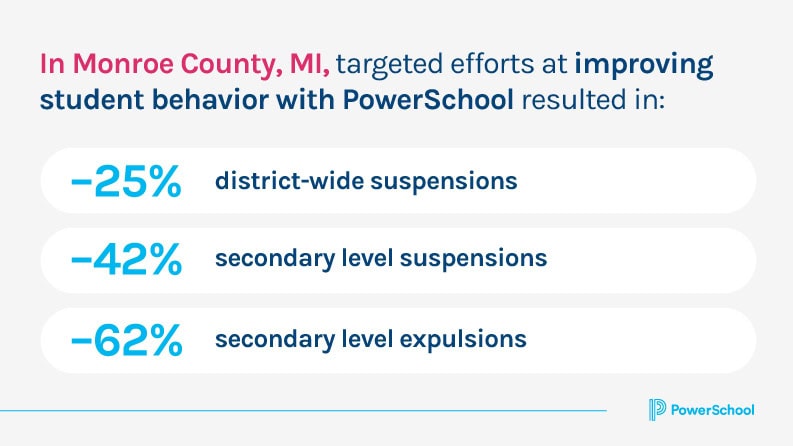
- In Monroe County, MI, targeted efforts at improving student behavior reduced district-wide suspensions by 25%. At the secondary level, suspensions were reduced by 42% and expulsions by 62%. By intentionally implementing and monitoring a behavior points system within their MTSS framework, educators saw visible improvement in the kindness and positivity of the student body.
How do I choose the best MTSS product for my school?
Choosing the right MTSS technology solution is crucial for effectively implementing and managing the framework in your school or district. Follow these steps to make the most informed decision:
- Identify your needs and goals. Evaluate what systems you have in place and identify gaps or inefficiencies. Are you looking for a solution that integrates academic and behavioral data? Do you need better data visualization tools? After this, it helps to clearly define your goals. Are you aiming to improve data collection, streamline intervention tracking, enhance communication among staff, or all of the above?
- Consider the key features you need and list them in order of priority. Your list may contain features such as data integration, tiered support management, progress monitoring, customizability, user experience, and collaboration tools.
- Evaluate vendors, training, and ongoing support. Ask vendors if they supply comprehensive training for your staff during initial rollout and afterward. Look for a vendor with strong customer support, quick response time, and timely problem resolution. Make sure you understand the full cost of partnering with the vendor and check that they comply with data safety regulations and education standards. After thoroughly researching and comparing options, create a clear implementation plan to ensure the transition to the system is as smooth as possible.
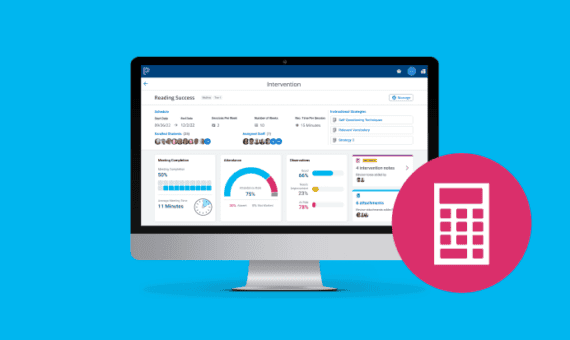
See how much you can save by streamlining your MTSS processes
Use our MTSS ROI calculator to learn the annual cost of your district’s MTSS procedures and the time and cost savings that could follow by leveraging MTSS technology.
Calculate SavingsHow an MTSS solution can improve data security
Your successful MTSS framework depends on data from multiple sources and systems to see the whole child. Protecting all that data throughout the process is challenging, but critical.
A modern MTSS framework provides better security by centralizing data in one tool that identifies and tracks student needs. A single secure system provides role-based access controls, end-to-end encryption, fully encrypted storage, full auditing, and full data recovery. It also streamlines the MTSS workflow and helps ensure that feedback loops are closed.
Reasons why MTSS is worth the investment
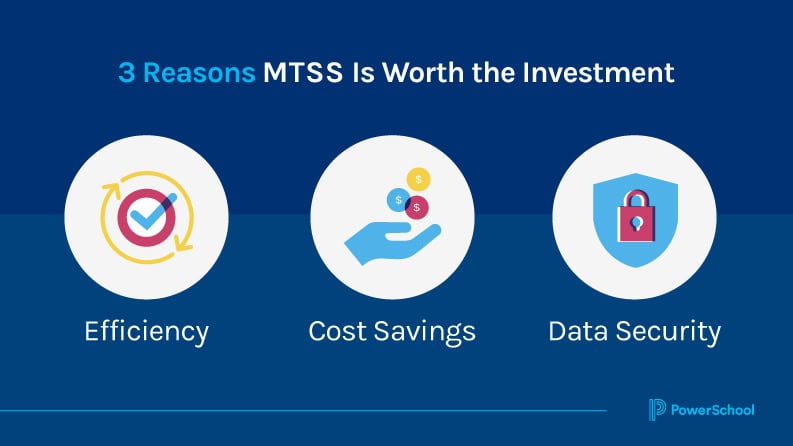
Time spent inefficiently is a waste of money. Time spent executing your MTSS framework is no exception. Educators often jump inefficiently from system to system, spreadsheet to spreadsheet, and form to form to complete the entire MTSS process. As educators navigate between and within these items, they waste precious time that could otherwise be directed toward supporting students. The chaos of “system jumping” impacts implementation fidelity, student outcomes, and efficiency. Here are some reasons why MTSS educational technology is a worthy investment:
1. Efficiency and cost savings
MTSS educational technology is a time and money saver. Think about these questions for each interventionist or teacher. If you imagine that MTSS educational technology results in a mere 30% reduction in time savings for teachers, this alone could save districts six figures per year.
- How much time do they spend locating and reviewing multiple data sources, including screener, formative, and summative assessments across different data domains? (ex: academics, attendance, behavior, SEL)
- How much time do they spend understanding if a student is at risk of falling behind and determining what support is needed?
- How much time is spent progress monitoring, including inputting data, taking notes, and collecting information throughout interventions?
- How much time is spent collecting and sharing data to support collaborative problem-solving meetings?
- How much time is spent reporting outcomes to school leaders and district leaders?
- How much time is spent understanding if interventions are working and for whom?
2. Increased data security
Investing in modernized systems that provide improved data security is a critical aspect of maximizing your ROI. Data breaches and compliance violations can result in significant financial losses, including legal fees, reputational damage, and potential loss of funding. Much of MTSS data lives precariously in unprotected spreadsheets containing highly sensitive student information. There is almost nothing stopping an email from being forwarded containing this information. By proactively addressing security vulnerabilities, districts can mitigate these risks and protect their financial and reputational interests, not to mention the rights of students.
How can PowerSchool help?
Attendance, assessments, office discipline referrals, and SEL surveys are just a few examples of some of the data that can streamlined with PowerSchool MTSS. With a single location for school MTSS data, an education leader can better address whole-child needs.
Naturally, district leaders, CAOs, superintendents, and school board members want to know if MTSS investments are making a difference. They need to know which interventions are working and which students they’re helping. Unfortunately, most districts don’t have data systems that can support this type of questioning and analysis.
This means that the people accountable for improving student outcomes are operating in a black hole. While they can see student outcomes like standardized test scores, they can’t see the assigned interventions that led to these outcomes. Educators deserve better.
At the same time, MTSS technology can also contribute to a district’s financial return on investment through efficiency gains.
Whether your district uses the Diamond model or the Triangle model, PowerSchool can help you enhance your MTSS practice. PowerSchool MTSS is a comprehensive and secure tool to establish personalized student plans and equip intervention teams with critical data to identify student needs, assign and monitor interventions, and track progress toward goals. This approach helps you meet students where they are and provide the support they need.
With the right MTSS tools and processes, educators can create a responsive and supportive environment that supports each student along their journey.
Explore the Student Success Cloud
Only PowerSchool’s Student Success Cloud provides the complete support students need for future success—from addressing chronic absenteeism to promoting positive behavior to comprehensive multi-tiered system of supports (MTSS).
Learn More