Schools support a safe and respectful learning environment for all students by establishing expectations for behavior. However, there are times when a student’s behavior does not align with this code of conduct. Schools often enact behavioral interventions for this reason.
In this blog, we offer a brief professional development session on the tiered behavior interventions commonly used in PBIS, MTSS, and RTI (Positive Behavior Interventions and Supports, Multi-tiered Systems of Support, and Response to Intervention).
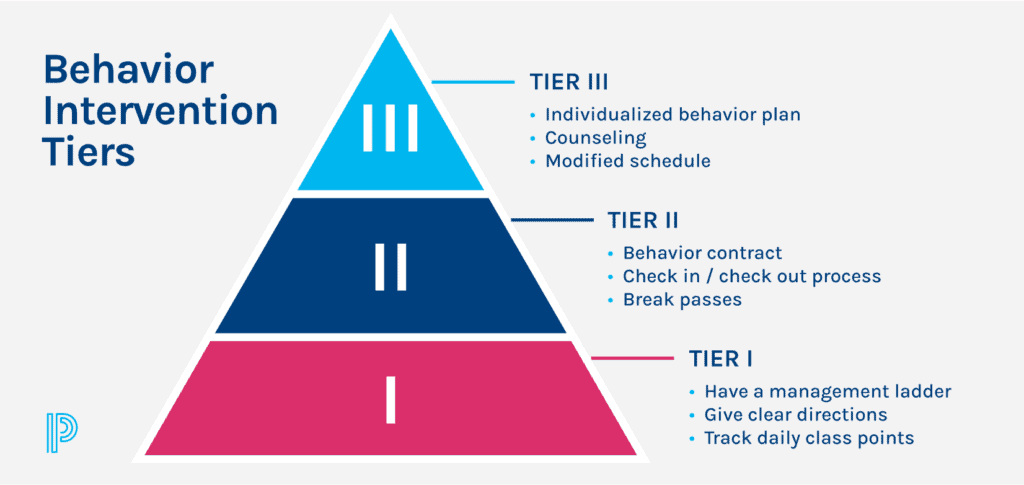
Positive Behavior Interventions and Supports (PBIS) are proactive behavioral supports schools can put in place to affect student outcomes. There are three tiers of support:
- Tier I: Strong school values and policies, as well as healthy classroom practices (all students)
- Tier II: Targeted support to groups of students that need alternative strategies to support their behavioral success (subset of students)
- Tier III: Individualized support (student-specific)
The first step in creating a behavior management plan
Before developing a behavior management or behavior intervention plan, schools may consider which common practices could unintentionally exclude students who may not easily follow cultural norms. A best practice for Tier 1 interventions is to review current policies through a lens of equity and respect, since there are many factors that can impact a student’s behavior. School leaders, teachers, and parents can regularly reflect on their policies to evaluate the balance between student behavior and overall school conditions.
Students can engage in problematic behaviors because of health problems, personal or family problems, adjustment or developmental challenges (e.g., “immaturity” or self-esteem issues), cultural factors, or general academic difficulties.
Carnegie Mellon University
How do schools put behavior interventions in place?
Tier I behavior interventions are systems that ensure that daily instruction runs efficiently. These expectations are often enforced due to policies already in place. Meanwhile, Tier II and III behavior interventions usually include more personalized interventions that occur through the Response to Intervention (RTI) process for students who don’t have a diagnosed behavioral disability.
What is RTI, or Response to Intervention?
Response to Intervention (RTI) is a multi-tier approach schools use to identify students with learning and behavior needs. Through data collection, intervention, assessment of progress, and more, an RTI team makes recommendations for interventions, accommodations, and services that will decrease academic and behavioral challenges and improve student success.
If a student has an Individualized Education Plan (IEP) for a behavioral disability, a behavioral intervention can be established through the special education team at the school.
Which positive interventions (PBIS) support student behavior?
When it comes to PBIS, or Positive Behavioral Interventions and Supports, the key is to distinguish which practices will work for all students and what adjustments can be made when students need more personalized support.
The Center on PBIS states that schools using PBIS do the following:
- Use a continuum of evidence-based practices to support student needs
- Engage students, families, and community members to co-create culturally responsive practices
- Regularly check the effectiveness of their practices
- Rely on teams to guide implementation
- Use data to identify strengths, uncover needs, and monitor student progress
- Implement universal screening
- Develop content expertise through coaching and on-going professional development

What are Tier 1, Tier 2, and Tier 3 interventions in education?
The term “tiered interventions” refers to the varying levels of support that schools offer to help each student succeed. While Tier 1 interventions in education are applied across a school, students receiving Tier 2 behavior interventions receive personalized instruction or interventions. This may include smaller-group support in addition to regular lessons. Tier 2 interventions may also include more check-ins with their teachers who evaluate their progress more regularly.
Tier 3 interventions are the most intensive. They involve regular check-ins and smaller group or individual attention. Tier 3 interventions may include wrap-around supports involving parent meetings, behavior plans, schedule adjustments, or specialized services.
Tiered intervention systems can go by a variety of names. Some schools use multi-tiered systems of support (MTSS) or response to intervention (RTI) systems that include behavior interventions. Others may have a separate positive behavior interventions and supports (PBIS) structure. No matter the name, tiered levels of support are meant to meet students where they are in order to help them succeed.
Implement Successful MTSS & RTI Supports
Discover three simple steps to implementing MTSS and RTI for social, emotional, and behavioral skill development.
Get the eBookWhat is a Tier 1 Behavior Intervention?
Tier I behavior supports are behavioral strategies that all students have access to. These interventions set the foundation for behavior across the classroom. Thinking strategically about support systems can help teachers reinforce behavior in a positive, productive, and predictable way.
Three ways schools can use Tier 1 Interventions
1. Have a management ladder
Teachers often have consequences, or use a consequence ladder, but behavior can be framed more positively with a ladder of expectations or a management ladder. For students, self-regulation is in the middle rung.
Below the basic expectations on the ladder are ways that teachers can help students regulate behavior. If a student is struggling, a teacher might redirect the student, provide an alternate workspace, or reach out to a parent for extra support.
At the top of this ladder are the ways in which students who are behaving can advance. For example, teachers could let them choose a classroom job, give them some independence, or offer leadership opportunities.
2. Plan classroom management alongside lessons
While lesson planning, teachers should consider how students will move, at what volume they should speak, and what participation looks like. These directions may change with each lesson plan, since the classroom can change depending on group work, partner work, or individual work scenarios. Clear directions can prevent unwanted behaviors, especially when teachers positively narrate the students who are meeting expectations.
3. Track daily class points
Teachers might give class points when they are collectively meeting expectations. These points can be connected to classroom incentives such as free time or a night without homework.
What is a Tier 2 Behavior Intervention?
Some students can benefit from more specific behavioral support to succeed. When that is the case, teachers should rely on Tier II and Tier III positive behavior interventions to help students. Tier II interventions often apply to a small group of students, while Tier III interventions are generally more personalized.
Ideas for Tier 2 Behavior Interventions
1. Behavior contract
A behavior contract is an agreement between staff and a student that describes the behavior that is expected and outlines what students earn if they meet expectations. Many schools give students and families a paper copy of their behavior contract so they can review it often.
2. Check in/check out system
This Tier 2 system connects students with a staff member who checks in with them each school day. Together, they track how well the student is reaching their behavior goals with a daily rating. This ongoing feedback helps students adjust their behavior more quickly, and ratings can be attached to student incentives. Schools may opt to send these weekly reports to families for a signature worth bonus points.
3. Break passes
This intervention is designed for students who exhibit disruptive classroom behavior that interferes with learning. Students are given break passes and are taught how to use them appropriately. This helps students identify their own behavioral patterns and learn how to advocate for their needs. Ideally, students will discover the best ways to self-regulate over time.
What is a Tier 3 Behavior Intervention?
A Tier 3 behavior intervention offers the most intensive and individualized support for students. Tier 3 behavior interventions address whole-child needs across academic, behavior, and social-emotional success.
If a student needs Tier III behavioral support, the school will hold a Response to Intervention (RTI) or Individualized Education Plan (IEP) meeting focused on the student’s behavior. This meeting includes families, the student’s teachers, and relevant service providers. Tier III behavioral supports can greatly improve student behavior, but they require documentation and follow-up practices.
What are some examples of Tier 3 Interventions?
1. Individual behavior plan
A behavior plan is an all-encompassing plan that pinpoints specific behaviors that are impacting a student’s success. The plan will include an analysis of why the behavior may be happening and clarification about the desired behavior. It will break down the steps required of staff and students to reach their behavior goal. Often, behavior plans include checkpoints on progress and may also involve services like counseling or classroom modifications.
All school staff who work with the student are responsible for reviewing, enacting, and periodically adjusting a student’s behavior plan. After a while, students may be able to operate without behavior plans if they continue to progress.
2. Counseling
Consistent negative behaviors are often tied to a root cause that can be assessed and aided with school counselor support. With family and staff support, these meetings benefit the long-term success of a student.
3. Modified schedule
After multiple interventions, teachers may learn that a student needs a completely different school structure. In these cases, the student’s family and support team make strategic plans about the timing of breaks, transitions from class to class, and the student’s overall schedule. This individualized approach can be the key to improving a student’s learning experience.
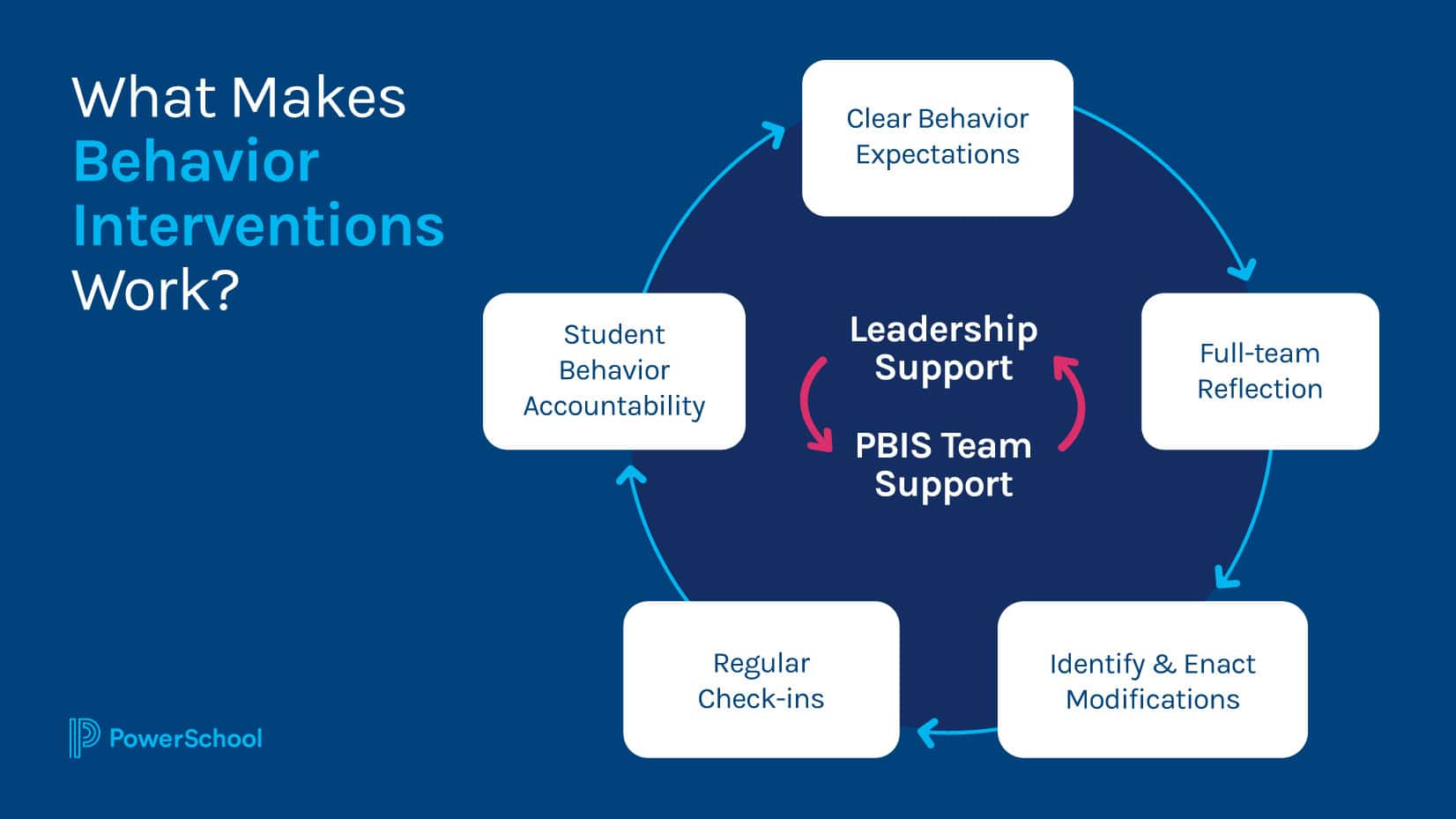
What makes behavior interventions work?
When it comes to behavior interventions for individual students, consistency is key. Regular check-ins help a support team quickly and accurately identify any necessary modifications to help a student reach their goals. Ideally, behavior interventions provide a temporary structure that helps a student self-regulate to the extent that they can enter another tier. Across schools, ongoing reflection on Tier 1 behavioral practices helps ensure that expectations remain equitable for all students.
Does PowerSchool have behavior intervention software?
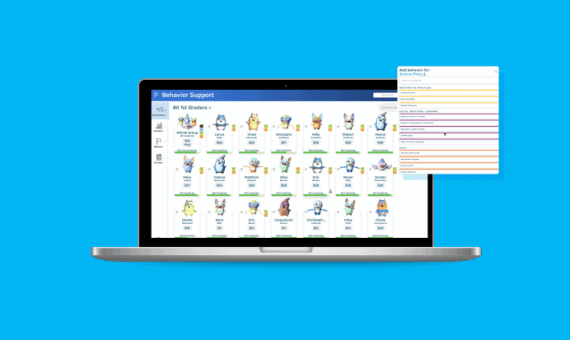
We support every step of the K-12 journey with the only evidence-based (ESSA Level II) behavior solution proven to reduce suspensions and referrals and increase school positivity. PowerSchool Behavior Support enables educators to promote positive school culture and support the whole child with real-time data.
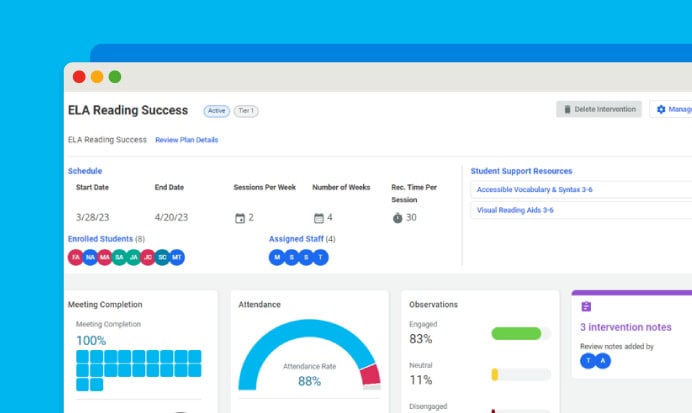
Simplify your SEL and behavior management system
See how PowerSchool supports your students across Tier 1, 2, and 3 initiatives with a personalized demo.
Get a demo