Written by
Grayson Williams
•Chief Information Officer, PowerSchool
October marks Cybersecurity Awareness Month—a timely moment for school districts to reflect on how emerging technologies like artificial intelligence (AI) are reshaping the educational landscape, and how we can harness their potential while prioritizing the safeguarding of student data and their digital environments.
As AI tools become more prevalent in classrooms and district operations, they bring both promise and complexity. From personalized learning to predictive analytics, AI can help educators make more informed decisions and improve student outcomes. But with these opportunities come new cybersecurity risks and ethical considerations that must be addressed head-on.
In our webinar, “School Cybersecurity and AI: Balancing Safety & Innovation,” we explored how K–12 leaders can integrate AI responsibly, drawing on insights from cybersecurity experts and our technology partners, including Microsoft, Abnormal AI, and Secure Schools.
Here are highlights from the webinar:
Understanding the new cybersecurity threat landscape
AI is changing the nature of cyber threats. Phishing attacks are becoming more sophisticated, and malicious actors are using AI to automate and scale their efforts. At the same time, schools remain vulnerable due to limited IT resources and fragmented systems.
Districts must stay ahead of evolving threats by investing in modern security infrastructure, conducting regular risk assessments, and fostering a culture of cyber awareness.

In education, we’re often asked to do more with less, and now we’re facing adversaries who are constantly evolving—enhancing their tools, tactics, and reach to target our users.
Zach Oxman Vice President
Abnormal AI
Zach Oxman, Vice President of Abnormal AI shared, “It’s shocking when you look at things like spam GPT and the rootkits available on the dark web. What’s happened is that even the most novice hackers now have access to tools that were once reserved for highly organized groups. This has dramatically expanded the attack surface. In education, we’re often asked to do more with less, and now we’re facing adversaries who are constantly evolving—enhancing their tools, tactics, and reach to target our users.”
Using AI safely and ethically in schools
AI tools often rely on large datasets, including sensitive student information. That’s why ethical use and data governance are critical.
“If we look back, even as educators, we’ve had programs for decades focused on being prepared and staying aware. We’re returning to that space now—especially when it comes to cybersecurity. Awareness is critical, and we must include everyone in our learning community,” shared Dr. Geri Gillespy, Director Industry Advisor at K-14 Elevate for Microsoft.
She continued, “As educational leaders, it’s always a challenge to balance oversight without micromanaging. We want to support our teams and trust them to do the jobs we’ve hired them to do. But cybersecurity is one area where leaders must be actively engaged. These conversations need to happen across all departments.”
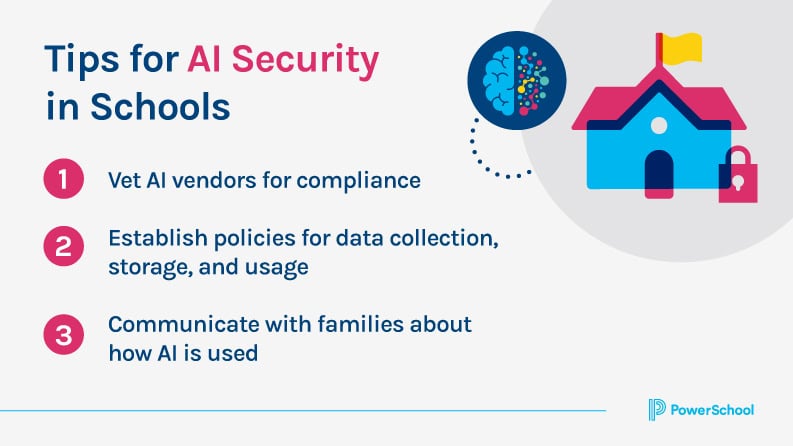
Districts should:
- Vet AI vendors for compliance with FERPA, COPPA, and state privacy laws
- Establish clear policies for data collection, storage, and usage
- Ensure transparency with families about how AI is being used
AI should enhance—not compromise—student safety and equity.
Building professional learning for AI adoption
Educators need more than just access to tools. They need support to use them effectively and responsibly. Professional learning frameworks should include:
- Training on AI fundamentals and ethical considerations
- Guidance on evaluating AI tools for instructional use
- Clear collaboration between IT, curriculum, and leadership teams
Dr. Gillespy continued, “This isn’t a conversation we can reserve for the start of the school year. It needs to happen consistently—monthly, after every break, and throughout the year. Cybersecurity must be part of our ongoing dialogue.

Cybersecurity must be part of our ongoing dialogue.
Dr. Geri Gillespy Director Industry Advisor
K-14 Elevate for Microsoft
Bad actors have access to more information than ever, and we need to be proactive. This is where education can truly shine. It’s our opportunity to step up, be part of the solution, and make a real impact.
Integrating AI across disconnected systems
Many districts struggle with siloed data systems, which can hinder AI’s effectiveness and increase security risks. To address this, the panel recommended:
- Investing in interoperable platforms that support secure data sharing
- Using centralized identity management and access controls
- Aligning AI initiatives with broader digital transformation strategies
Integration must be intentional, secure, and student-centered, and this includes how AI is leveraged across platforms, tools, and data sets.
Engaging the whole school community
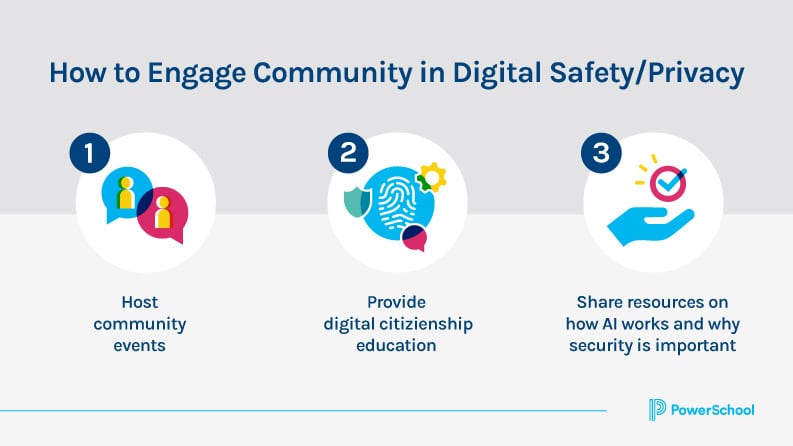
AI adoption isn’t just a technical shift. It’s a cultural one. Districts should actively engage staff, students, and families in conversations about digital safety and data privacy. Best practices include:
- Hosting community forums and webinars
- Providing age-appropriate digital citizenship education
- Sharing resources on how AI works and why it matters
Paul Alberry, Founder & CEO of Secure Schools shared, “It’s important not to bury our heads in the sand. Avoiding decision paralysis is critical. We need to be decisive, select a strategy, choose the tools we’ll use as an organization, and document that approach clearly. Documentation, from an auditor’s perspective, is often underinvested in and tends to fall to the bottom of the priority list, especially in school districts. It’s time-consuming and requires collaboration across departments, but it’s essential.”
If we can document our AI strategy in a way that’s easy to understand—for staff, faculty, students, and even the broader community—it becomes a powerful tool.
Alberry continued, “When it’s marketable, it’s understandable, and that builds trust. Communities are going to embrace AI regardless, so this is a prime opportunity for school districts to lead. By clearly defining how AI will be adopted and used both within the school and in the community, districts can take a proactive leadership role.”

By clearly defining how AI will be adopted and used both within the school and in the community, districts can take a proactive leadership role.
Paul Alberry Founder & CEO
Secure Schools
A vision for secure AI in K-12
AI has the potential to transform education, but only if we approach it with care, foresight, and a commitment to protecting our students. As we celebrate Cybersecurity Awareness Month, let’s recommit to building safe, ethical, and innovative learning environments.
School Cybersecurity and AI: Balancing Safety & Innovation
Watch the webinar with cybersecurity experts discussing the dual priorities of protecting sensitive data while leveraging AI responsibly.
Watch Now