

The COVID-19 pandemic’s impact on K-12 education amplified pre-existing learning inequalities. Educators, students, and parents have gone through a period of navigating a public health emergency, an economic crisis, and a time of increased unrest surrounding racial equity and social justice causes.
But disruptions can also become a catalyst for positive change. As K-12 schools and districts continue to adapt to an ever-evolving education environment, leaders have an opportunity to prioritize improving equity and narrowing achievement gaps. They can do this with accurate, informative data highlighting where equity and achievement gaps exist and what factors contribute to them.
Planning for New Circumstances
As a starting point, education leaders must engage with marginalized student populations and their families to figure out how to best meet their needs. This helps schools and districts avoid further widening the equity and achievement gaps that the pandemic exacerbated. Building these plans with an equitable approach ensures that the intersections of race, poverty, residential segregation, and accessibility to social services are addressed.
Disproportionate Access to Essential Resources and the Digital Divide
Schools have always been more than just places of learning. Many students rely on school for meals, shelter, and mental health services. When schools aren’t operating on-campus, children and families may miss those services. Access to community resources is vital under normal circumstances, let alone during public health and economic crises.
Students can’t effectively learn if they lack the basic resources, and access to devices and the internet are issues that disproportionately affect already-vulnerable student populations. According to the most recent federal data, about 14% of households with school-age children do not have internet access. To be a part of the solution in bridging the digital divide, PowerSchool launched a tool during the pandemic to assist education agencies in mapping wifi access points and helping students and their families locate their nearest hotspot.
Social and Emotional Learning and Mental Health Support
According to a study by JAMA Pediatrics published in April 2020, “Schools have long served as a de facto mental health system for many children and adolescents. During 2012 to 2015, 35% [of adolescents receiving mental health services] received their services exclusively from school settings.” The study goes on to say, “It is important to also understand that school closures will be relatively more disruptive for the mental health care of some youths. Adolescents in racial and ethnic minority groups, with lower family income, or with public health insurance were disproportionately likely to receive mental health services exclusively from school settings.”
Social and emotional learning (SEL) has understandably become a top priority for many educators in the last two years. Some educators have integrated simple daily check-in surveys, while others have embedded curriculum with academic initiatives to support the whole child. It’s important to understand that social-emotional data is often collected in a silo, and therefore does not provide whole-child insights. PowerSchool helps educators bring this information together in one place for a holistic view.
Gleaning Insights and Building Actionable Plans with Data
Data can tell a valuable story. Equity and achievement gaps can be identified and analyzed with data. To make informed decisions and drive effective action plans, you need information. Equity-oriented data analysis, including subgroup analysis, is critical to pinpointing disproportionalities in your education systems.
The U.S. education system is intended to provide equal opportunity, but its design often results in disparities. It’s imperative that all stakeholders in this education today examine the design of our systems and how each of us upholds the parts that aren’t working for all students.
You’ve probably heard the saying that schools are a microcosm of society, and change starts with education. With access to data and training on how to use that data, we have a valuable opportunity to initiate positive change for all students. PowerSchool’s data consulting team is here to help you identify your data needs and develop a strategic plan for creating equitable outcomes.
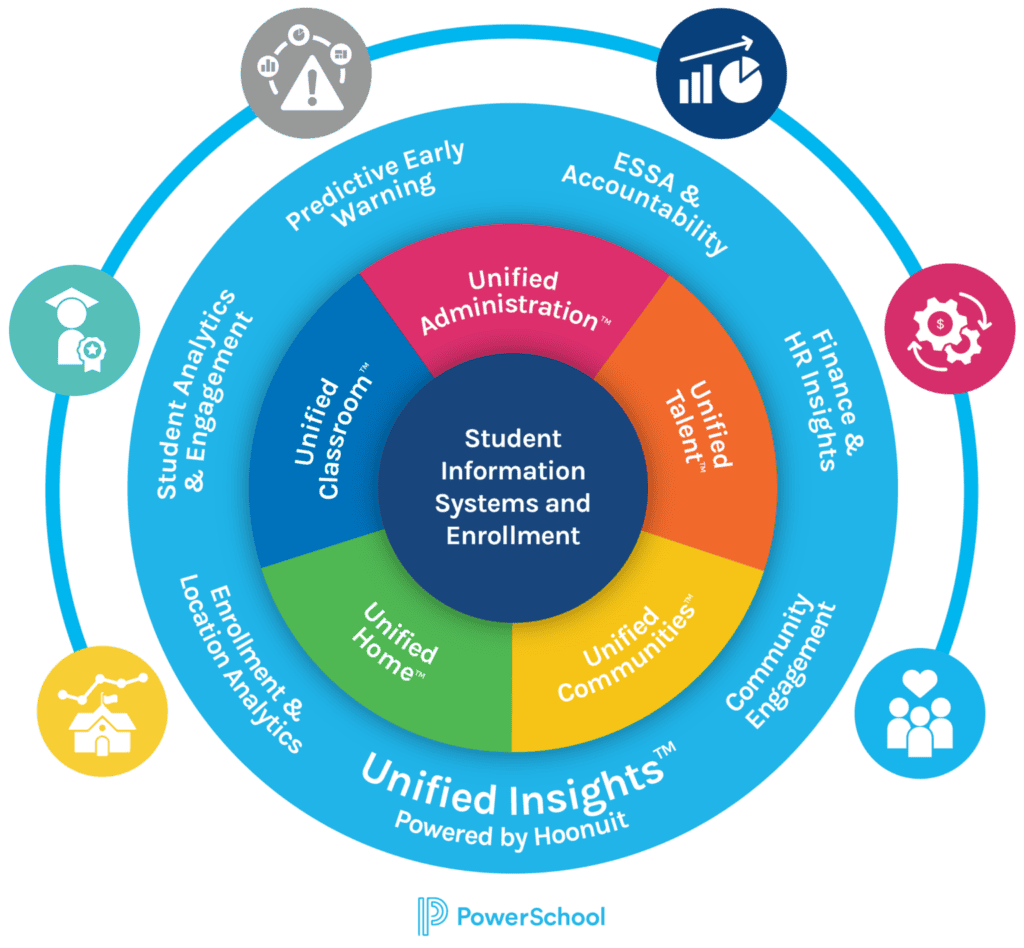
Learn more about Analytics & Insights
Adding Analytics & Insights' advanced analytics and data management tools to PowerSchool’s K-12 technology solutions creates the most comprehensive K-12 education technology portfolio.
Learn More