Social and Emotional Learning (SEL) is the process of developing and using social-emotional skills to:
- Understand and manage emotions
- Set and achieve positive goals
- Feel and show empathy for others
- Establish and maintain positive relationships
- Make responsible and educated decisions
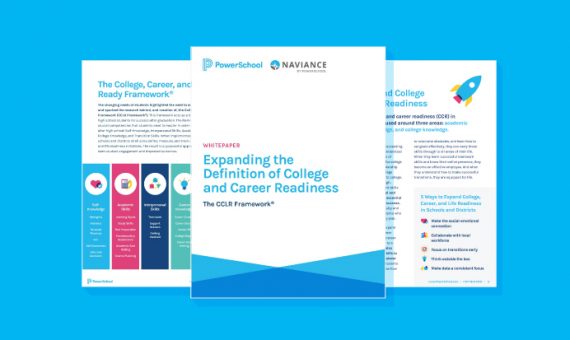
SEL is one of the key competencies which students need to be successful and a core component of the College, Career, and Life Readiness (CCLR) Framework®. This research-backed model helps educators drive student engagement and better outcomes through a purposeful approach, and it helps students meet their full potential and enjoy long-term success after high school.
Why is social and emotional learning important to students?
Social-emotional skills are essential for students’ success in school and in life.
During the middle and high school years, in particular, students are challenged with a myriad of complex situations and changes. SEL helps students get to know themselves as individuals during this pivotal time in their lives. This self-awareness leads to a deeper understanding of their strengths and weaknesses and their likes and dislikes. It also creates a healthy foundation to set and meet goals, foster positive relationships, and make responsible choices. Social-emotional programs increase students’ resilience and grit. SEL skill development has been proven to help students more effectively cope with stress, solve problems, and avoid peer pressure.
From an academic perspective, students with stronger social-emotional skills are more ready to learn and motivated to achieve success. They are less likely to be thrown off course during times of transition, such as the change from middle school to high school or high school to college.
Studies by the Collaborative for Academic, Social, and Emotional Learning (CASEL) report more than a 10% percentile increase in school attendance and overall grades when students participate in SEL programs. According to CASEL, students who participate in SEL programs have a 6% advantage in their high school graduation rate.
CASEL analysis examined the practical effects of SEL. They wanted to know: how much better off would a student body be over time if offered an SEL program? Their analysis found that with SEL:
- 27% more students would improve their academic performance at the end of the program
- 57% more would gain in their skills levels
- 24% more would have improved social behaviors and lower levels of distress
- 23% more would have improved attitudes
- 22% more would show fewer conduct problems
CASEL concludes that adding an SEL program to the school curriculum can lead to multiple real-life benefits for students.
How can students develop social and emotional skills?
SEL-related tools such as Naviance by PowerSchool help students understand their strengths, manage emotions, build relationships, plan ahead, and make informed decisions.
Naviance by PowerSchool provides online content and assessments so schools can flexibly incorporate critical social and emotional learning into the curriculum at multiple stages throughout middle and high school. Naviance’s social-emotional lessons align with each of CASEL’s five SEL Pillars: Self-Management, Self-Awareness, Social Awareness, Relationship Skills, and Responsible Decision-Making.
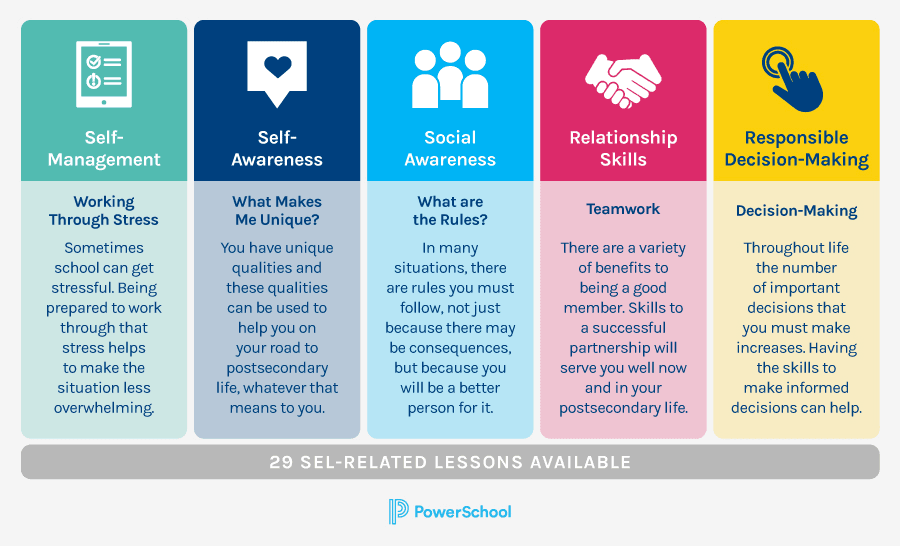
Social and emotional learning activities for high school
How can you measure benefits of social and emotional learning?
Schools with Naviance-based SEL programs experience a positive impact on attendance, grades, and graduation rates. Among the schools investing in SEL, Everett Public Schools and Chicago Public Schools have already seen measurable success.
Everett Public Schools (EPS), a district located in Everett, Washington, launched Naviance by PowerSchool as part of its focus on SEL. Since introducing Naviance’s social-emotional curriculum, the district has consistently surpassed the state’s graduation rate. EPS has experienced a 65% increase in on-time graduation and decreased drop-out rates by 50%.
Chicago Public Schools (CPS), the third largest school district in the United States, uses Naviance by PowerSchool to help students develop transition skills, a key aspect of social and emotional learning. The district has achieved a college enrollment rate of 68%, a 13% increase in just two years, and a 36% increase since 2006.
Social and emotional learning resources
Below are resources you can use to learn more about how you can integrate SEL into your curriculum to prepare your students for success in school, college, career, and life.
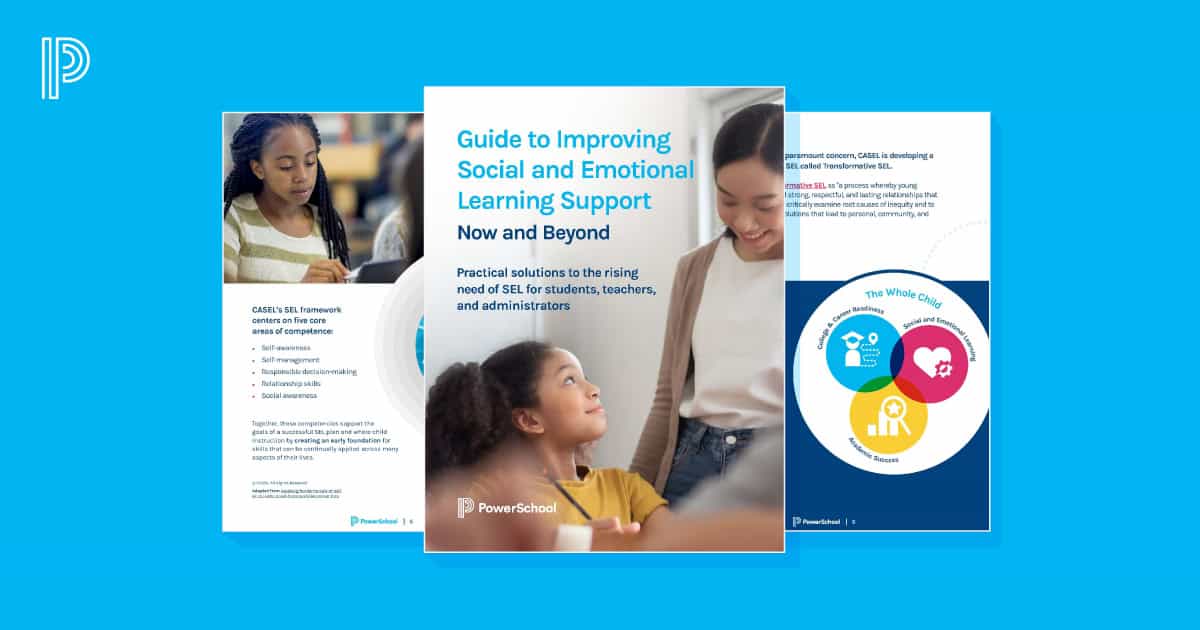
Guide to Improving Social and Emotional Learning Support Now and Beyond
Get an in-depth look at the fundamentals of SEL and ways schools and districts are implementing programs to address social-emotional concerns at the student, educator, and institutional levels.
Learn More