
Written by
Jesse Roy
• Education Strategy Director, PowerSchool
Integrating AI in education offers promising solutions to the most pressing challenges schools face: constrained budgets, increasing demands for personalized learning, and the administrative burden on educators. AI-driven technologies can significantly enhance student learning experiences, streamline administrative tasks, and boost efficiency. However, one significant obstacle remains—how to effectively fund these AI initiatives.
When considering how to fund AI, it’s important for districts to begin with the specific goals they aim to achieve, not the AI-enhanced strategies that may get them there.
Explore Federal Grant Opportunities
While some states and districts may provide funding, exploring other sources is necessary. Funding AI in education often starts with federal grant programs that align with educational goals. These programs allow districts to secure the financial resources to implement AI technologies. For example, the Every Student Succeeds Act (ESSA) could offer districts opportunities to fund professional learning and technology purchases.

Title I Funds
Designed to narrow achievement gaps, Title I funds can support AI-enhanced learning platforms and data dashboards. These tools aid in decision-making around tiered supports, helping to personalize and improve student learning experiences.
Title II Funds
Title II funds aim to improve educator effectiveness. Districts can leverage these funds to integrate AI tools into curriculum development, lesson planning, collaboration, and individualized staff development, ultimately enhancing the quality and efficacy of education.
Title IV Funds
Title IV funding supports student well-being and holistic educational opportunities. AI applications in this area include college and career readiness platforms, family engagement tools, and solutions for analyzing student well-being needs.
Other Federal Programs
Additional programs like IDEA, Perkins, Title III, McKinney-Vento, and unique state grants can also be tapped to fund strategic AI investments. These programs provide a broad spectrum of support, from special education and career and technical education to services for English learners and homeless students.
Establish Return on Investment
AI-supported technology can yield substantial returns on investment (ROI) that can fund future initiatives or justify sustained investment. Broad use cases like predictive analytics for identifying student needs, AI-driven assessment tools, and automating administrative tasks offer significant time and cost savings opportunities.
AI-powered data visualization can enable early intervention strategies, reducing the need for costly remediation programs and improving overall student outcomes. Similarly, administrative tasks such as scheduling, data management, and reporting can be streamlined through AI automation, resulting in valuable time savings for educators and administrators.

Monitor and Evaluate Impact
Implementing AI is not a one-time effort but an ongoing process. Continuous monitoring and evaluation are crucial to assess the effectiveness of AI initiatives, identify areas for improvement, and adjust funding priorities accordingly. Utilizing data analytics and feedback mechanisms enables districts to track the impact of AI with key performance indicators, ensuring that AI investments continue to deliver value over time.
By exploring federal grant programs, establishing a clear return on investment (ROI), and continuously monitoring AI’s impact, districts can secure the necessary funding and fully take advantage of AI’s potential to enhance education.
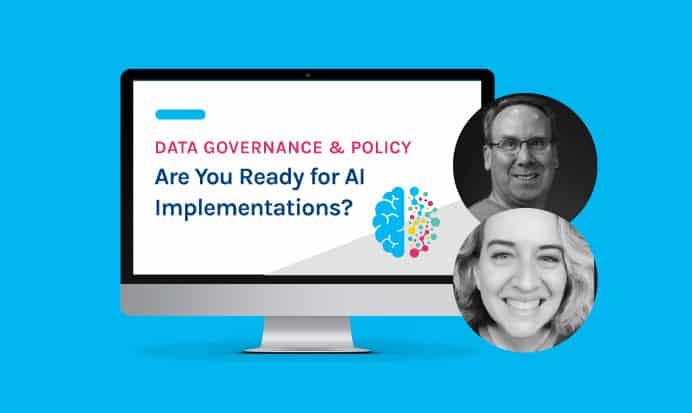
Data Governance and Policy for AI
Part of our special “Are You AI Ready?” webinar series, this video highlights why it’s so critical to consider the data governance and policy implications of leveraging AI in education.
Watch On-Demand