Dr. Lisa Andrejko, Director of Education Solutions at PowerSchool, draws on her more than 30 years of K-12 experience as an educator and superintendent to write this blog. She looks at the current state of educator and staff evaluations and offers experience-based guidance for making positive changes to improve support and help educators and staff grow their skills.
The principal is the instructional leader of the school. That was my mantra when working in the school system. Certainly, management of a building or school district is critical to a successful operation, yet decisions always had a focus on excellence in teaching and learning as the goal.
Principals and their school’s administrators cultivate student success through effective instructional supervision and professional learning. But unrealistic expectations for teachers and administrators in recent years have taken their toll. We see record numbers of school leaders and teachers facing burnout and stress causing too many to leave the profession. Additionally, fewer college students are choosing K-12 education as a career.
Important questions about the future of teacher and staff evaluations:
- Is it realistic to expect administrators to handle all aspects of teacher evaluations effectively?
- How well does the current teacher evaluation process inform and support professional learning?
- What developments can be expected in the future of teacher evaluations and professional learning?
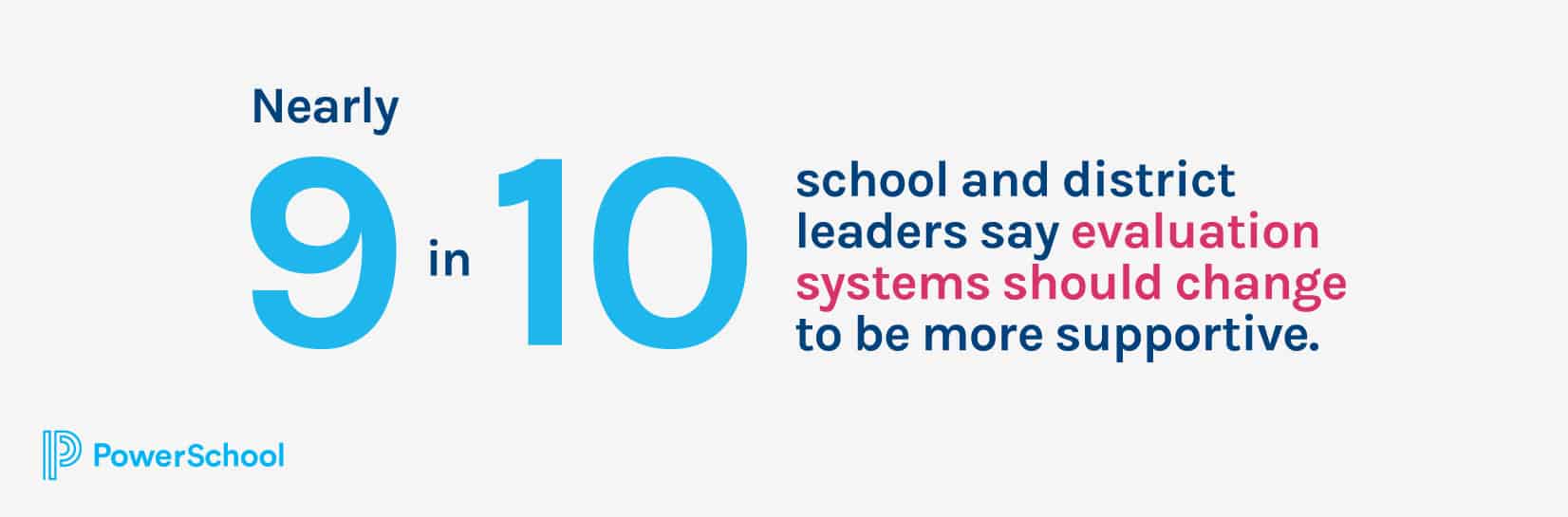
The truth is that our approach to teacher and staff evaluations needs to change. By providing more supportive and personalized feedback and professional learning, we can help our valuable K-12 employees find more fulfillment, build successful careers, and deliver effective instruction and support for students.
In this blog, I want to explore ways to make these changes.
Moving Beyond Compliance: Collaborative Evaluations Models for Educator Growth and Development
Recent federal policies and state accountability systems, like Race to the Top, played a role in accelerating rigid evaluation systems. Most evaluation systems utilize the following steps throughout the school year:
- Goal setting, based on data
- Instructional observations using highly specialized frameworks
- Feedback that shares evidence of strengths and areas of opportunity
- Professional development aligned to evaluation results
This evaluation process can certainly lead to instructional improvement if implemented correctly. However, with infrequent observations and little or no supportive and personalized feedback, a checklist of observed practices, or a year-end summative rating, it results in a one-size-fits-all assessment of educator quality that may or may not actually improve instruction.
Evaluation could be used collaboratively to support an educator’s development. Rather than a technical implementation that is focused on compliance and checking boxes, a more collaborative model connects evaluation to teachers’ content and grade level-specific work, with goal setting tied to standards and students; discussion of strengths and limitations in the content and instruction methods; and personalized professional development providing subject matter expertise and effective teaching strategies. Additionally, collaborative models address teachers’ growth needs in direct relation to student learning standards.
Current systems place the responsibility of supervision, evaluation, and professional development on principals and other administrators. Administrators must observe and rate teachers using a standardized rubric in a systematic manner. They must gather and analyze student and teacher data. They must also identify and design professional learning opportunities for teachers. However, it is unrealistic for principals to completely ensure accountability and development on their own because they lack the specialized content knowledge and resources, including the time, for ongoing learning opportunities.
Clarifying the Differences Between Instructional Coaching and Traditional Evaluation in Education
While instructional coaching has been recognized as the most effective form of job-embedded professional learning, it has not been until recently that coaching has been viewed as the companion to evaluation. Principal and supervisors take the role of evaluation very seriously for employee relations, legal, regulatory, and contract reasons. The role of “leader of instruction” is a bit less defined.
So, what is the difference between traditional evaluation and instructional coaching model? Drawing a line between coaching and evaluating is key. Coaching is about supporting and guiding educators’ learning and growth, whereas evaluation is a formal process to rate and review their teaching. Evaluations can cause stress and anxiety for those being reviewed, so it’s important that educators know when they are being evaluated. Then, leaders must be clear when that part of the interaction is over, and they are returning to their role of coaching.

The Role of the Instructional Coach in K-12 Education and Who Can Fulfill It
Coaches can support the principal in data analysis and professional learning decision-making. They provide actual professional development and guidance for teachers to improve their content knowledge and instructional strategies.
Overall, the job of the coach is to build the capacity of the school and its teachers to meet the learning needs of all students. The coach’s goals are to ensure that school staff acquire the understanding and skills to enhance instructional practices at the classroom level and raise the level of student achievement.
The effective coach spends most of their time working in classrooms with teachers modeling, observing, and co-teaching. The coach plays a very strong role in the analysis and utilization of student achievement data to inform instructional decision-making.
The focus of the coach’s work is to help teachers learn to use data for instructional planning that will have a positive impact on student achievement. In that role, the coach helps the teacher learn how to administer and interpret various assessment tools.
The coach may facilitate teacher study groups in which they analyze student work and lesson plans to develop improved instructional strategies. The coach’s analysis of student work is not evaluative but provides data to inform coaching sessions with individual teachers and teacher study groups. Since coaches are not used to evaluate teachers, they act as liaisons between teachers and the administration–using observations and feedback as tools for professional growth and not as data for administrative decisions.
Unlocking the Power of Instructional Coaching for a Culture of Continuous Improvement in Schools
The culture of every school should be one of continuous improvement for students, faculty, and staff. Effective instructional coaching supports classroom success by building instructional efficacy and capacity. Can the same be said for compliance-based evaluation by itself? I argue it can’t, and that instructional coaching is the key ingredient for support, growth, and success.
Coaching that isn’t done well can break down the culture of the school, causing mistrust and poor morale among the teachers, coaches, and administration – even students. While emphasizing that coaching supports professional learning in various subject areas, district leaders should clarify the
boundaries between coaching and evaluation. They need to emphasize that coaches do not evaluate, but they do assist teachers with multiple aspects of the evaluation process. While it may blur the lines, district leaders should frame the ways in which coaching enables teacher growth as measured by formal evaluation. Finally, the role of instructional leader can be easily shared between administrators, coaches, and teachers helping everyone manage their work in a collaborative environment with less stress. Integrated data systems can assist coaches in this work by giving them access to the information they need to provide complete, well-rounded feedback and support.
Educators and Students Succeed in a More Supportive, Growth-Focused Future
We can deliver a brighter future for both educators and students by focusing more on personalized support and growth. While compliance requirements can get us part of the way there, instructional coaching closes the gap between intentions and success.
Learn how to support and retain more educators and staff
Hear K-12 experts discuss how supportive, personalized evaluations and feedback can help you retain more of your valuable educators and staff.
Watch the Webinar