


Challenges
- Clunky teacher evaluations software
- Unclear workflows stalling collaboration
- Disparate evaluations & professional learning
Solutions
Results
- Informed, district-wide equity initiative
- Climate and culture data dashboards to glean insights
- Quick access to real-time, relevant data
The teacher evaluations process was clunky at Spotsylvania County School District in Virginia. Unclear workflows blocked collaborative teacher evaluations.
They were using a system created by their own IT department. However, it had everyone spending too much time on process, drawing focus from the real purpose of evaluations: helping teachers grow.
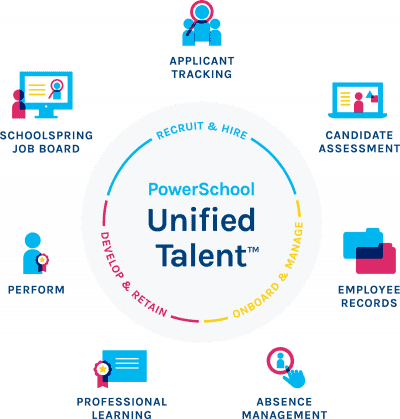
Mike Brown, Director of Human Resources at Spotsylvania County School District, says they needed a people-focused solution to simplify processes and clear two-way communication roadblocks. District leadership looked to PowerSchool Unified Talent to alleviate these issues with a digital solution for teacher evaluations and professional learning.
Clearing the path to collaborative, growth-oriented teacher evaluations
Simplifying workflows was the initial priority. Eliminating task and timeline confusion would free teachers and administrators to work on improving evaluations. “Our previous system didn‘t make it clear who was responsible for what,“ says Brown. Emailing back and forth about tasks and review completion wasted valuable time. Brown and his team knew evaluations should be about more than checking boxes and completing the process—they saw more value in supporting teachers individually and helping them grow.
Automating workflows and simplifying the user experience with a single login for Perform and Professional Learning removed the process hurdles. Brown says beyond clearing the path for collaboration, their new solution provides better tools for supporting teacher growth than they ever had before.
Since observers can recommend professional learning courses within Perform while providing evaluator feedback, development planning derives directly from classroom observations. “We‘re not just checking boxes,“ explains Brown. “We‘re making sure feedback is relatable to what administrators see in the classroom, and then they‘re able to suggest professional learning and follow up with a conversation.“ He says incorporating recommendations as part of feedback drives meaningful follow-up conversations.
Improving teacher evaluations, planning professional learning, and tracking results virtually
Virtual management of evaluations and professional learning makes work easier. Administrators can go into a virtual or in-person classroom, complete the observation, and it‘s ready for the teacher‘s review almost immediately. Secure online access means teachers can digest feedback from anywhere, at a time they can give it their full focus.
Brown says the quality of teacher evaluations has improved. Eliminating paper forms was a big part of shifting time back to supporting teacher growth. “I really never thought we‘d get to the point where we are now,“ he says. He admits getting away from the old way of doing things seemed like a pipe dream, but now it‘s reality.
Going paperless helped Brown‘s team adapt quickly to the virtual learning model during the global pandemic. Administrators had the tools they needed to conduct walkthroughs and provide feedback while students and teachers interacted remotely. Teachers continued working on PD assignments through Professional Learning.
Customizing teacher evaluation and professional learning tools
The agility of Perform and Professional Learning lets districts like Spotsylvania tailor the look, feel, and functionality of the tools to users‘ needs and preferences. Brown says this is what he likes most. “Probably my favorite part is the ability to customize the tools. I‘m a bit of a tinkerer at heart.“ In addition to the district‘s logo, he adds graphics to the front page of Professional Learning announcing upcoming critical dates and learning events.
In Perform, Brown takes customization further. “Every form we use, we‘ve customized and created ourselves,“ he says. Rather than being forced to adapt to standard forms, Spotsylvania enjoys shaping forms to individual educators’ specific needs. For instance, they can add fields specific to teaching students with autism. As teachers continue developing their skills teaching in the virtual environment, administrators can adapt evaluation forms to those needs. According to Brown, “It allows us to give better, more specific feedback.“ In the end, it‘s all about supporting each teacher‘s unique growth journey.
Most importantly, it‘s easy for Brown and his team to tweak evaluation forms as needed. He says staff members often call him to request a change to form fields, and within 45 seconds, it‘s done. Changes take effect immediately across the district since forms are digital.
An easier, more supportive take on teacher evaluations
Brown says his district couldn‘t be happier with the switch to PowerSchool Unified Talent for supporting teacher growth. Evaluations are easier for administrators to complete, more convenient for teachers to review, and deliver more value in terms of supportive, collaborative growth. They cleared process roadblocks and now see a clearer path toward helping teachers adapt and grow through today’s challenges and those ahead.
Need to make evaluations more about teacher growth?
Simplify evaluations and personalize professional learning with a single solution built to support classroom success.