

NOTE: This is part 3 of a 3-part blog series on interoperability. Check out part 1 and part 2!
In the world of education, simpler is better. For teachers, students, and parents, an interoperable solution streamlines access to applications and opens a window into the factors contributing to student performance–since all data sits on one platform shared by all applications.
Think about how edtech has played out in the past: You might have used (or still be using) one program for your student information system (e.g., student registration, demographics, contact information), another program containing the classroom gradebook, a third program serving as the learning management system, and myriad other programs to support and enhance learning, including data analysis.
Interoperability changes all of that, which is why digital systems interoperability has long been a goal of the U.S. Department of Education, among other institutions. The need for simplicity during remote and blended learning, made all the more critical during the pandemic, are not going away as schools return to a semblance of normalcy. If anything, the need is greater post-COVID because students, teachers, and families must focus on addressing learning loss rather than spending time switching back and forth between edtech tools. Interoperability promises the benefits of a unified system: simplicity and seamlessness so that everyone can stay focused on what matters: the learning.
RSU 10 Western Foothills, a district in western Maine, realized these benefits when the district adopted an interoperable solution that combined its SIS, learning, gradebook, and assessment solutions on one platform.
CA
I like having a one-stop location for students and parents to check grades, access lessons, and assignments, and communicate upcoming events. It is really nice to not have to have students (and parents) remember multiple websites, logins, and passwords.
CHANDELE GRAY HIGH SCHOOL SCIENCE TEACHER
RSU NO. 10, MAINE
So how do you convince your district to get on board? Here are 5 reasons to make the switch to a system based on interoperable solutions.

1. Interoperable Edtech Reduces Operational Costs
Disparate IT environments eat up your IT resources. They make implementation, maintenance, and training really difficult–and costly. However, with an edtech ecosystem built on interoperability, less IT staff time will be required to deploy, maintain, and manage your solutions.
Think about how much time and money your district spends to keep your edtech solutions up and running. With an interoperable solution, those costs can be drastically reduced–and redirected toward student needs. If you’re looking to keep the money closer to learning in the classroom, an interoperable solution is for you.
2. Integrated K-12 Software Improves Data Connectivity
A successful district relies on accurate data. But what good is accurate data if it’s inaccessible?
Interoperable edtech solutions can make it possible to access multiple types of data much faster. And with single sign-on, there’s only one password between you and your data.
Better yet, bring your data with you in a mobile app that’s accessible from anywhere and any device. As more districts go 1:1 or implement “bring your own device” policies for both students and staff, it’s even more critical to build systems that can seamlessly accommodate all hardware platforms (e.g., desktops, laptops, tablets, smartphones, and other mobile devices) and software options (macOS, Windows, iOS, Android, and others). It should all just work across devices and platforms so you can get to your data whenever you need it.

3. Interoperable K-12 Systems Increase Communication among Teachers, Staff, Students, and Parents
Since interoperable solutions share data among themselves, they give your district and community instant access to real-time data across multiple platforms. More information means more collaboration.
Teachers get the information they need to intervene sooner. Parents can use insights to be more involved in their child’s education. Students can track their progress towards their ultimate learning goals.
Interoperable solutions lead to increased engagement for everyone involved in the educational journey.
4. Interoperable District Solutions Enhance Reporting
A well-crafted report can determine your district’s future funding. Interoperable systems allow administrators to pull data from across multiple platforms in real time. Not only does this make reporting quicker and easier for district administrators, but because the reports are built on comprehensive real-time data, they are more timely and meaningful for all your stakeholders.
Interoperable edtech solutions can also help your district better allocate funds and prepare for resource planning. And they’ll ultimately help maximize your state funding so you can better support your staff and students.
5. Integrated Student Data Systems Heighten Security and Privacy
Protecting student data has become a crucial part of K-12 education. Bad actors target school districts for ransomware attacks and other intrusions for many reasons, including the presence of valuable data and a perceived lack of cybersecurity compared with their corporate counterparts.1
When your systems can talk, there’s no need to export data or distribute it in unsafe ways. Your risk is drastically reduced with interoperable systems.
An interoperable solution decreases vulnerability because all data remains on the same platform. It also provides IT with a single source of accountability. When issues do arise, there is one clear point of contact.
Make the Switch to Seamlessness
Format wars make everyone miserable. Remember VHS versus Beta? Windows versus macOS? The ongoing streaming wars? When systems are siloed, users suffer. In education, student information systems and learning management platforms have become more sophisticated and account for increasing sums of student data. When data is not securely and easily shared between the systems, teachers and administrators have to fill in the gap, which is time– and cost-intensive. Interoperable systems, like those provided by PowerSchool, help educators move education forward and promise a much better way.
Want to take a deeper dive? Get more information on interoperability, including benefits and implementation strategies, in this guide from the Center for Digital Education.
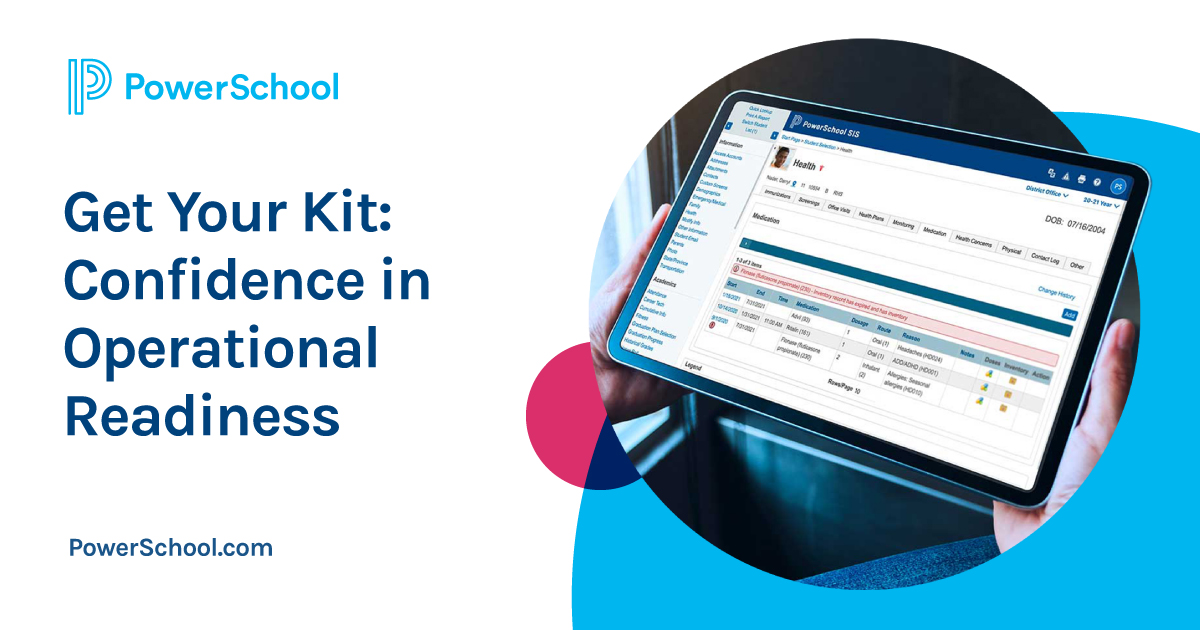
Operational Readiness Resource Kit
We’ve compiled resources with tips, insights, and guidance on interoperable solutions, data security, and optimizing your systems for efficiency and adaptability.
Get Resource KitResources
- Molnar, M. (2020, July 8). Number of ed-tech tools in use has jumped 90 percent since school closures. EdWeek Market Brief.
https://marketbrief.edweek.org/marketplace-k-12/access-ed-tech-tools-jumped-90-percent-since-school-closures/ - Ibid