With nearly a third of U.S. K-12 educators thinking of leaving their jobs, it’s essential that schools and districts invest in resources that retain current educators and attract newcomers to the profession. One such resource, professional development, is frequently underutilized or disconnected from the daily reality of being a teacher.
We’re asking more of teachers, staff, and paraprofessionals than ever before. The calls for providing personalized learning experiences, using the most innovative tech tools, closing pandemic-induced learning gaps, nurturing students’ cognitive and emotional development, and improving student outcomes can easily overwhelm even the most experienced educators.
With all these challenges, PD is more critical than ever. We can’t change the number of hours in a day, but we can offer flexible approaches to PD programs to respect teachers’ time, be purposeful about areas of focus, and meet teachers where they are.
Here are three ways your school or district can make PD more flexible.
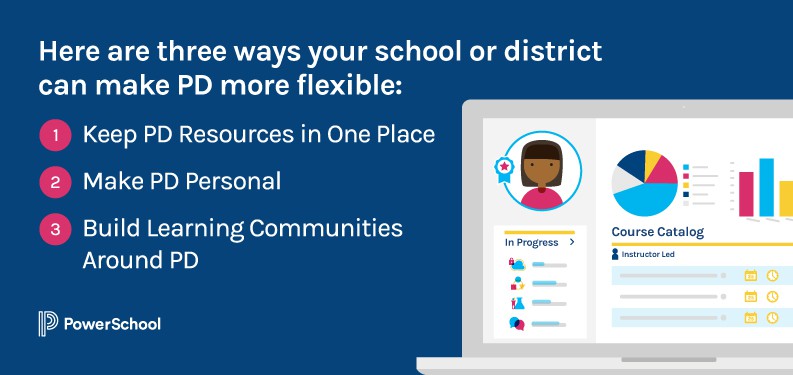
1. Keep PD Resources in One Place
Putting all PD tools in one place, so teachers don’t have to search for materials across various platforms, helps teachers save valuable time. Suppose the PD platform is part of a system the teachers already use? In that case, they may have an even easier time tracking and reporting their PD activities.
For example, if you have professional learning software that can integrate with your LMS or your SIS, educators can get a one-stop shop for PD using an interface they’re already familiar with. Teachers can find all their professional progress and certifications in the system, communicate with other teachers, and complete courses at their own pace.
2. Make PD Personal
Every teacher is unique, and so is their approach to PD. Some teachers may gravitate toward purely asynchronous PD activities, while others may opt for blended courses.
A flexible PD approach empowers teachers to set their own goals and build their personalized learning path. Online, on-demand training can help teachers complete their PD work when it’s convenient. They may also be able to apply new knowledge to the classroom right away. Teachers won’t need to wait for in-service days or summer break to take part in their PD activities. The return on their time investment will be quicker. Many teachers need extra and more consistent training to help them keep up with newly adopted technology.
When a teacher chooses their personal approach to PD, there is room for innovation. Districts can create searchable content libraries. Teachers can curate book lists to read and share with their peers. A personalized and diversified approach to PD supports educator equity, just as similar practices do for students.
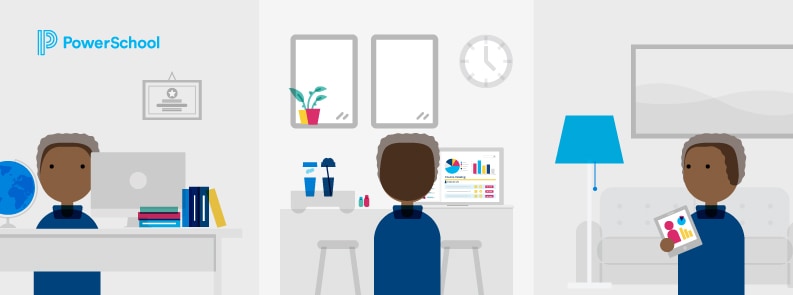
PowerSchool offers tools to help personalize PD activities. School districts can use surveys to gauge which types of PD interest teachers. Our 2022 Education Focus Report found that 41% of educators prefer regular, ongoing coaching, 40% desire Professional Learning Communities (PLCs), and 31% find the greatest value in multi-session workshops. Other top PD choices identified by educators included academies or certified PD programs, single session workshops, peer walkthroughs, and in-class observation.
3. Build Learning Communities Around PD
Once teachers have designed their personalized learning plans, school districts can build learning communities for teachers with similar interests. A Professional Learning Community (PLC) can promote collaboration among teachers. These PLCs can be flexible. Teachers can join and take part when it works for them.
A PLC can exist beyond a PD course and help teachers collaborate into the future. Educators can use PLCs to build relationships with other educators in their school or district. They’ll have a place to share ideas with peers. The teamwork doesn’t have to stop at the walls of the school. A PLC can include teachers nationwide or even across the globe.
Bringing It All Together
At a time when educators are being asked to be more agile than ever before, a flexible approach to professional development helps teachers stay connected and supported while giving them the essential information they need, when they need it.
Educator Effectiveness Cloud
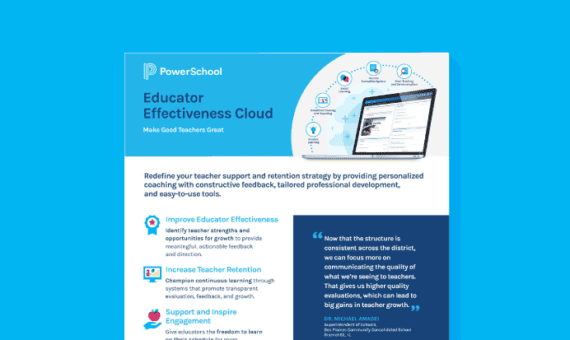
Discover how PowerSchool’s Educator Effectiveness Cloud helps you retain talented educators and improve teacher support through practical evaluation and coaching practices.
Learn more