This two-part series illuminates why and how superintendents across the country are creating greater workforce development, career readiness, and real-world work experience for students. Download the whitepaper, Developing New and Innovative Approaches to Support Career Readiness, to read the full interview with all the superintendents.
If students are to be career-ready, they need to be exposed to career exploration and career learning opportunities early in their academic journey. And if students are to reach their best-fit careers, they must follow their own unique paths after high school. The path could include enrolling in a trade school, community college, or four-year institution, entering the workforce, enlisting in the military, or a combination of these. In fact, almost a quarter of seniors surveyed in the 2022 Naviance Student Survey indicated that college was not their initial plan after high school.
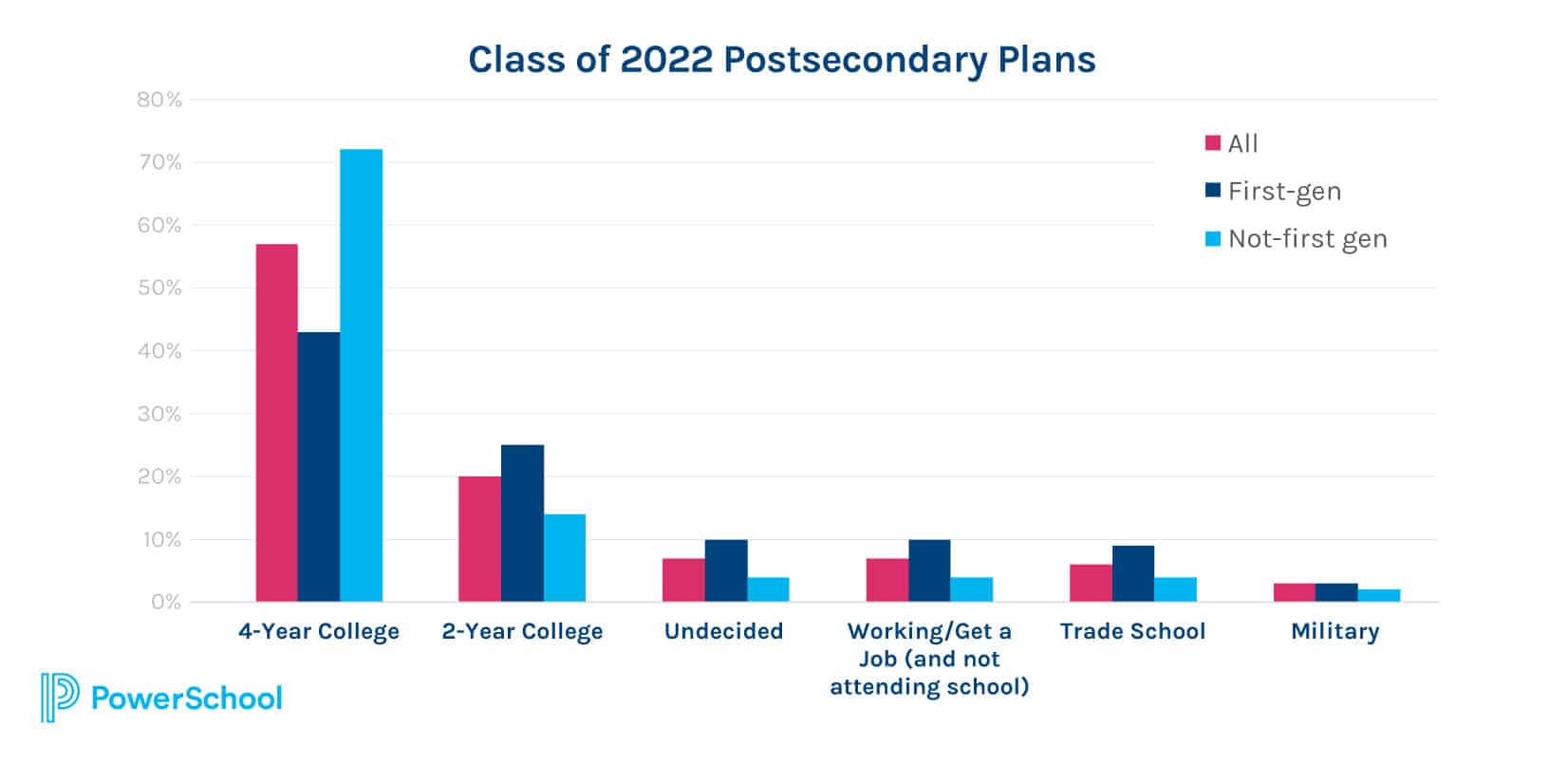
With an increased emphasis on the importance of aligning all types of pathways to drive career outcomes for students, schools and districts must expose students to a broader range of post-high school opportunities besides college.
To illuminate the value of innovation when it comes to career readiness, PowerSchool Naviance has released the eBook Developing New and Innovative Approaches to Support Career Readiness. We asked leading superintendents across the country about how their districts are including workforce development and real-world work experience in their career readiness programs. We are sharing the following questions and answers from the discussion, edited for length and clarity.
How do you rely on local business and industry to support work-based learning experiences?
At PowerSchool, we know that real-world career learning opportunities are key. Access to work-based learning opportunities allows students to enhance their career research and planning, ultimately paving the way for them to meet their future career goals. Work-based learning offers the capability to present opportunities to help students determine if their interests lead to a good career fit.
In Chattanooga, Tennessee, hundreds of students at Hamilton County Schools participate in internships with local businesses. “Career has a strong meaning for us,” says Superintendent Bryan Johnson. “This work is not just about finding a job; it’s about pursuing a career and finding what you’re good at and passionate about.”
The district also runs a program called Future Ready Institutes, “which are career academy schools within schools,” says Johnson. “We’re very blessed to have an extremely engaged local business community and chamber of commerce, and an organization called Chattanooga 2.0 that spearheads our work.”
In Phoenix, Arizona, the Phoenix Union High School District has developed a partnership with local trade unions, which provide paid internships for students. The district prioritizes paid internship opportunities, but also looks to work with companies that will hire students and pay their college tuition once hired. “We serve primarily low-income youth and so it’s important to us that if they choose a career after high school, that it is a high-wage career,” says Superintendent Chad E. Gestson.
The district also launched a computer programming high school that offers programs in coding, cybersecurity, networking, and software development. “We have many unique partnerships within that school,” says Gestson, “some of which offer paid opportunities.”

How do you market your programs?
“The goal of our marketing is to make students aware of all the programs that are available to them,” says Diana L. Greene, Superintendent of Duval County Public Schools in Jacksonville, Florida. “We outline all our academies, and we identify which ones are sponsored by a corporation with a goal of hiring, so students know that they could get a job in that program.”
In Kansas, Wichita Public Schools has a Business and Education Alliance in which local business leaders and educators meet regularly to discuss internships, mentorships, and career exploration opportunities. “We have advisory committees for each of our 26 pathways that include representatives from companies and businesses interested in or related to that subject area,” says Superintendent Alicia Thompson, “and we rely on them for marketing and outreach to help build our internship and mentorship programs.”
“A challenge for us has been getting the business community in nearby Richmond and Petersburg to understand the benefits of having partnerships with our co-op programs and offering internships for students,” says Merv Daugherty, Superintendent of Chesterfield County Public Schools in Chesterfield, Virginia.
To that end, Daugherty’s district has been working to get its high schools to allow half schedules, co-op programs and partnerships to increase internship opportunities. “We’re trying to expand our programs because we believe that every student should have an internship during their senior year, not just students in career programs.”
For Gestson’s district in Phoenix, outdated state legislation has been one hurdle. “Across the country, K-12 education is ready and willing to think and operate differently, but some outdated policies and legislation can stand in the way. Also, there is often a misconception in the business community that they must wait until students are 18 to have an internship. We’ve been using our chamber of commerce to raise awareness with businesses and enable 16- and 17-year-old students to get internships.”
Superintendent Johnson agrees that antiquated laws are a problem. “We’re hoping for new legislation that will change or update the requirements for teachers and licensure for teaching postsecondary courses. We are challenged by many students having limited transportation options, so we want to offer as many postsecondary options on campus as possible.”
Download the whitepaper Why Districts Should Innovate to Support Career Readiness.
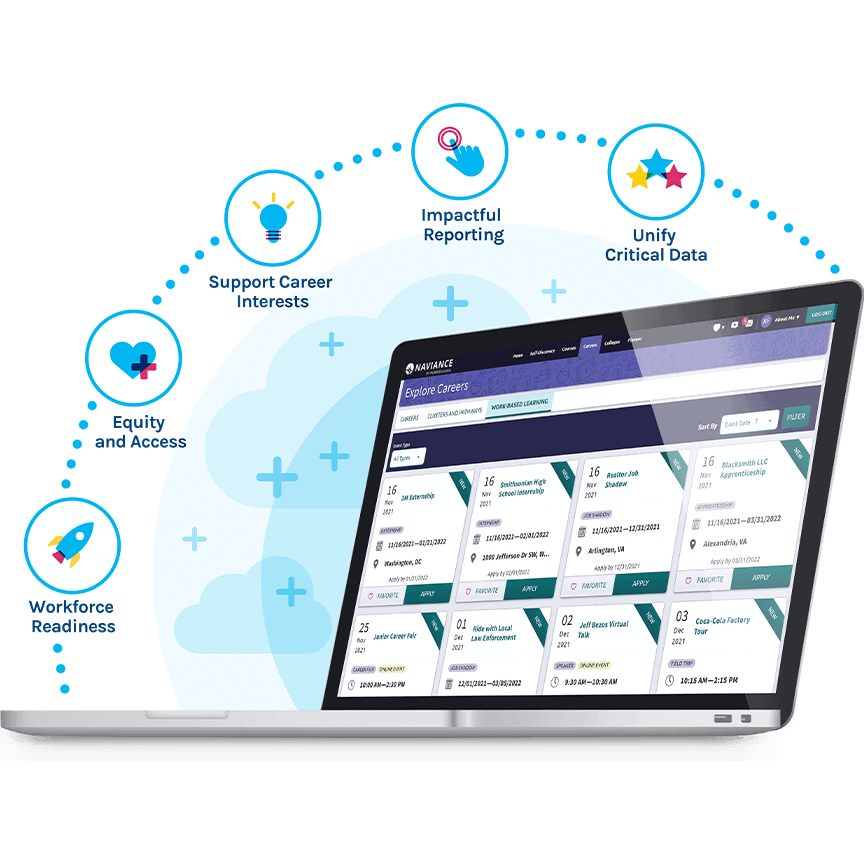
Meet the Workforce Development Cloud
K-12's first complete solution for college, career, and life readiness, connecting key stakeholders from schools, districts, and states to better prepare students for life after high school.
Learn More