

Boosting retention and building trust with K-12 teachers and staff
Retaining teachers and staff starts with knowing what they want and need. Stay interviews give you the chance to find out before it’s too late. Traditional exit interviews happen too late. Proactively learning what teachers and staff like about their jobs and what they’d like to see addressed creates an opportunity to keep them in your school or district before resignation letters start landing on your desk.
In this blog, we’ll explain what a stay interview is, look at why K-12 schools and districts do them, and offer helpful tips for getting the most out of these candid, one-on-one chats with teachers and staff.
What is a stay interview?
A stay interview is an informal discussion between a supervisor and an employee. It’s a chance to check in about job satisfaction, career optimism, and thoughts on the organization’s culture.
While staff-wide issues may be raised during the stay interview, the goal is to address issues at the individual level. Conversations should be candid and confidential to foster trust. Most importantly, this is each teacher’s or staff member’s chance to be heard by someone who can address issues that matter to them. Go into the stay interview prepared to listen.
According to employee retention thought leader and author Richard P. Finnegan, the person conducting the stay interview should listen 80% of the time. He writes, “Enter the meeting with a commitment to ask, listen, and only ask again once you’ve digested all you’ve heard.”1 The purpose, after all, is to gain insight into staff morale and engagement.
Why K-12 districts do stay interviews
Teachers leaving the classroom is a driving factor in the nationwide teacher shortage. In fact, 2 out of 3 teachers exit the profession for reasons other than retirement. Replacing them can cost more than $20,00 per teacher, and it only becomes more difficult as the shortage worsens.2
 Stay interviews could be your best tool for finding out how to keep valuable teaching talent. Plus, adapting to the needs and wants of teachers and staff helps your school or district build a reputation as a great place to work. They may want more personalized professional development opportunities, better communication, or easier processes for contract renewals. After conducting stay interviews, you’ll know how to take action.
Stay interviews help teachers and students succeed at this K-12 district
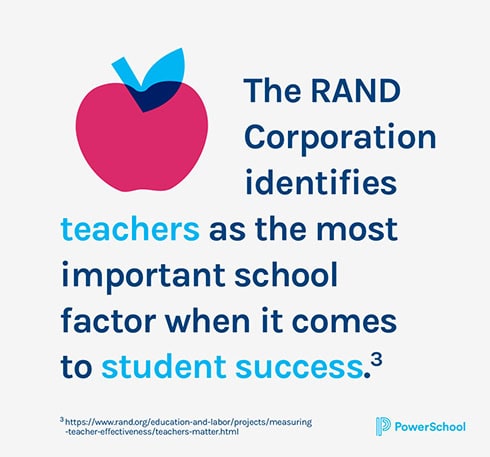
Teacher retention makes a big difference in student outcomes, and that’s why Prosper ISD in Texas began doing them. Bernadette Gerace, Director of Recruitment & Retention, says, “This year we started doing stay interviews … asking, what’s keeping you here? What are we doing right? What are some things that would cause you to leave?” They know teachers only become more valuable the longer they’re in the job.
Like any professionals, the experience and professional training educators gain year after year helps them build their skills and become more effective. Gerace says stay interviews help them meet teachers where they are, provide support where they need it, and ultimately give students the highest quality education.
When to conduct stay interviews
 Now is the best time to start doing stay interviews if you’ve never done them before. These informal, candid discussions don’t have to be complicated. Check in with teachers and staff, asking them to talk about how they feel about their job and their future in education. Finnegan advises scheduling 20 to 30 minutes for stay interviews. The most important thing is to start doing them before teachers and staff begin leaving.
Going forward, HR Drive author Pamela DeLoatch suggests revisiting stay interviews once per year in general, and possibly as frequent as every six months with newer hires.4 As new employees adjust and adapt to their roles, stay interviews can give you key insight into your onboarding and training processes from their perspective.
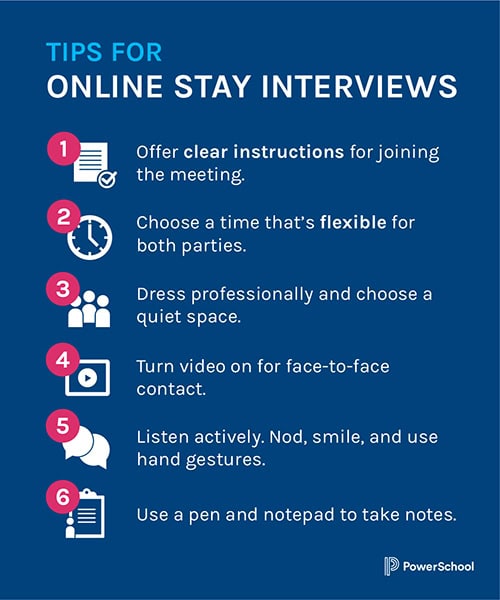
Although most stay interviews are conducted in-person, video conferences also work well. Face-to-face conversation is better than a phone call for encouraging an open, honest conversation.
If your school or district already uses video conferencing, employees may already find this format familiar and comfortable. For those just beginning to use video conferencing as a result of COVID-19 school closures in 2020, use these tips to conduct remote stay interviews.
What to ask in stay interviews with teachers and staff
You’ll want to find out from teachers and staff what they like about their job, but also what they’d like to see improved. Finnegan suggests combining core and follow-up questions.1 This way you keep the interview on track while also prompting deeper discussion.
When preparing core questions for teachers and staff, consider:
- What do you like about your job?
- Where do you see your career in a few years?
- What might make you leave?
- How can we better support you?
The stay interview is the perfect place to find out what individual teachers and staff want. Dig deeper for specifics about process frustrations, career blockers, workload, or culture issues. If your school or district already offers resources to help alleviate an issue, mention it and ask if the teacher or staff member is aware of it. However, the stay interview is not the place to explain away a problem. This is the time to listen, learn, and find out what your valuable talent needs.
Increase teacher retention with stay interviews
Conducting stay interviews gives teachers and staff a sense of control over their career. You’re enabling them to call out what they like and raise issues in a safe, collaborative setting. With stay interviews, you’re also creating an opportunity to keep teachers and staff happy before they decide to apply elsewhere or leave K-12 altogether.
Quality teachers are priceless—especially in these unprecedented times. Find out what your best people need and support them, so they can grow their skills and thrive.
RESOURCES: