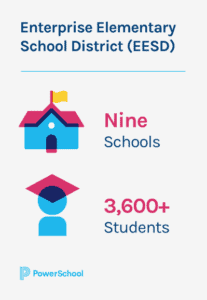
 Enterprise Elementary School District (EESD) is a predominantly K-8 rural district in Northern California, with nine schools serving a diverse population of over 3,600 students. Many of these students come from low socio-economic households, and the district has a high rate of English Language Learners and foster youth.
Like many districts across the U.S., EESD has faced a drastic drop in enrollment since the pandemic. Navigating these challenges, the district recognized the need for a unified behavior management system to support every student’s success. Discover how EESD transformed its approach to behavior management, improved student outcomes, and created a more positive school environment with the help of PowerSchool Behavior Support, evidence-based software that collects and analyzes real-time behavior data.
The Struggle with Google Forms
Enterprise Elementary School District was grappling with a fragmented approach to behavior management. Different schools within the district were using various tools that didn’t fully meet their needs, leading to inconsistency and gaps in communication.
“One school uses this, and another school uses this. So as a parent, if I have a kid in multiple schools, I’m using multiple apps,” says Kristin Bowling, the Director of Technology Services for the Enterprise Elementary School District.
“We do not have district-wide communication and district-wide PBIS. We’ve had a district-wide referral system, but that is a Google Form, and you’re limited. The principals have to copy and paste, and the parents don’t get to see this information,” Bowling explains.
EESD used Google Forms for years, and while it was easy for the end user to submit referrals, it was inadequate for tracking data and ensuring follow-through. Teachers would submit referrals but had no idea what would happen next. They lacked visibility into the status of referrals or the actions taken by administrators.
The previous system also did not provide actionable insights or allow for practical data analysis. There was no way to determine where and when behavior issues happened, making it difficult to deploy staff effectively.
Ultimately, EESD needed a system to provide detailed, trackable, and actionable behavior data. They required a solution that would unify their approach, offer transparency, and empower teachers and administrators to support student success comprehensively.
"We need to have one platform to make it easier for our parents." - Kristin Bowling, Director of Technology Services, Enterprise Elementary School District
Real Results with PowerSchool Behavior Support
Kristin and her team were searching for a product that could provide a more effective referral system, and they discovered Behavior Support. This new tool quickly proved to be a game-changer for the district.
“Behavior Support has allowed us to figure out at this time, in this location, we needed another adult here because, based upon our numbers, we’re seeing most of our referrals or issues coming from this location at this time,” Bowling shares.
One of the major benefits of Behavior Support for EESD is the ability to look back on old referrals. “My teachers love the ability to change the referral date and time because if a referral happens at 12:30 PM, but they don’t get to write it until 3 PM, they love the ability to go ahead and fix that,” Bowling explains.
Behavior Support has brought more transparency and accountability between teachers and administrators. “There’s transparency on the admin side for the teachers,” Bowling says. Administrators at EESD can now see data on “which one of my teachers is giving more referrals.”
Additionally, teachers and staff gain insights into student behavior across different classes. Bowling notes how easy it is to see if “this student is having issues, but yet they’re doing very well in this teacher’s class.” With this level of detail, EESD has the data and tools to create a more supportive and proactive environment for students and staff.
Tailoring Behavior Support to Fit School Needs
“Each school can build the platform for them,” Bowling notes. This adaptability has been necessary in helping schools transition smoothly to the new system. 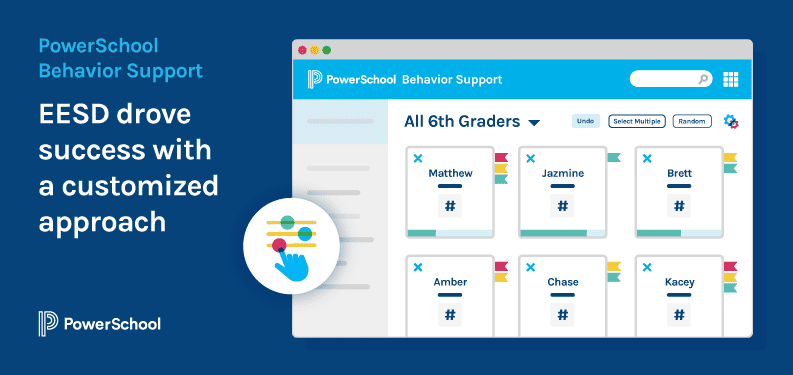
For example, one school site decided to keep its positive behavioral interventions and supports (PBIS) system very simple, focusing on just three positive behaviors: be safe, be kind, and be respectful. This straightforward approach was particularly beneficial for veteran teachers less inclined to use technology.
“If they had too many positives, it would be too overwhelming, and they’d stop using it because it would be just too much,” Bowling explains.
The simplicity of this model proved so effective that other schools in the district wanted to try it out. “I had three other schools in the district adopt, that added maybe one or two more that fits their school site, but it kept it between three to five things, and I think that was a great starting point,” says Bowling.
Behavior Support’s customization capability was a driving factor in successful adoption across the district.
A Partnership for Continued Success
In just the first year of using Behavior Support, the district saw significant improvements in transparency, accountability, and data-driven decision-making. “We see the vision,” Bowling says, acknowledging the potential for even greater impact as they continue to refine and expand how they use the platform.
The story of EESD exemplifies how dedication, innovation, and collaboration can create a positive and supportive learning environment for all students. As the district prepares for a full transition next year, they are paving the way for a brighter future for every student.
See It in Action
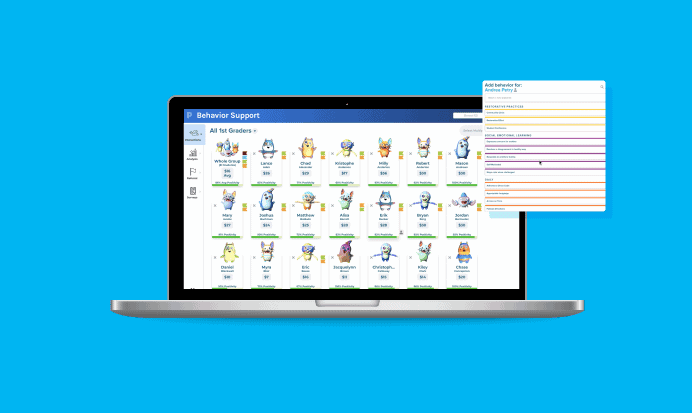
Discover how Behavior Support can help reduce disciplinary actions and identify real-time behavior patterns by promoting positive interventions and leveraging data analysis tools.
Watch On Demand