Though positive behavior interventions and supports (PBIS) can improve all students’ social, emotional, and academic outcomes, many schools and districts find it challenging to implement a system effectively and efficiently.
PowerSchool Behavior Support Purchase Mode Makes PBIS Rewards Easy
Behavior Support can help you simplify your PBIS rewards system within your school or district. Educators can choose a dollar or point system, customize the incentives, and easily input and keep track of student behavior patterns. Using the platform, it’s simple to monitor progress and use analysis to improve behavior or make adjustments to the rewards system.
As a part of PowerSchool’s classroom product suite, educators can quickly access behavior management data from PowerSchool Schoology Learning or PowerSchool Performance Matters. The behavior data integrates with the Schoology Learning dashboard and Performance Matters baseball cards, giving everyone a quick snapshot of any student’s behavior in a central location.
Educators can track behaviors and purchases right in Schoology Learning with the Behavior Support app. The new Purchase Mode feature makes managing dollars and points for your school store more straightforward.
What is Purchase Mode?
Say goodbye to manual, paper-and-pencil-based PBIS rewards systems. Purchase Mode helps you simplify the management of school stores at the class- or school-level, no matter the PBIS structure.
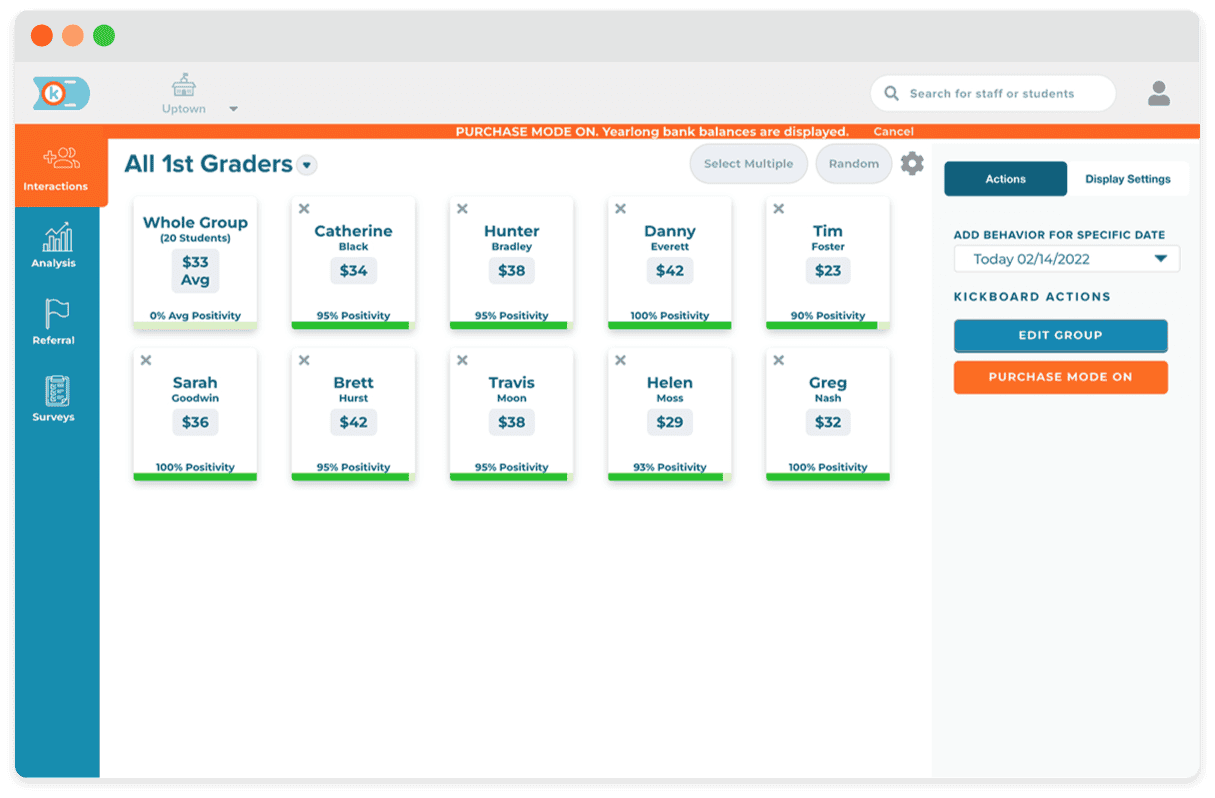
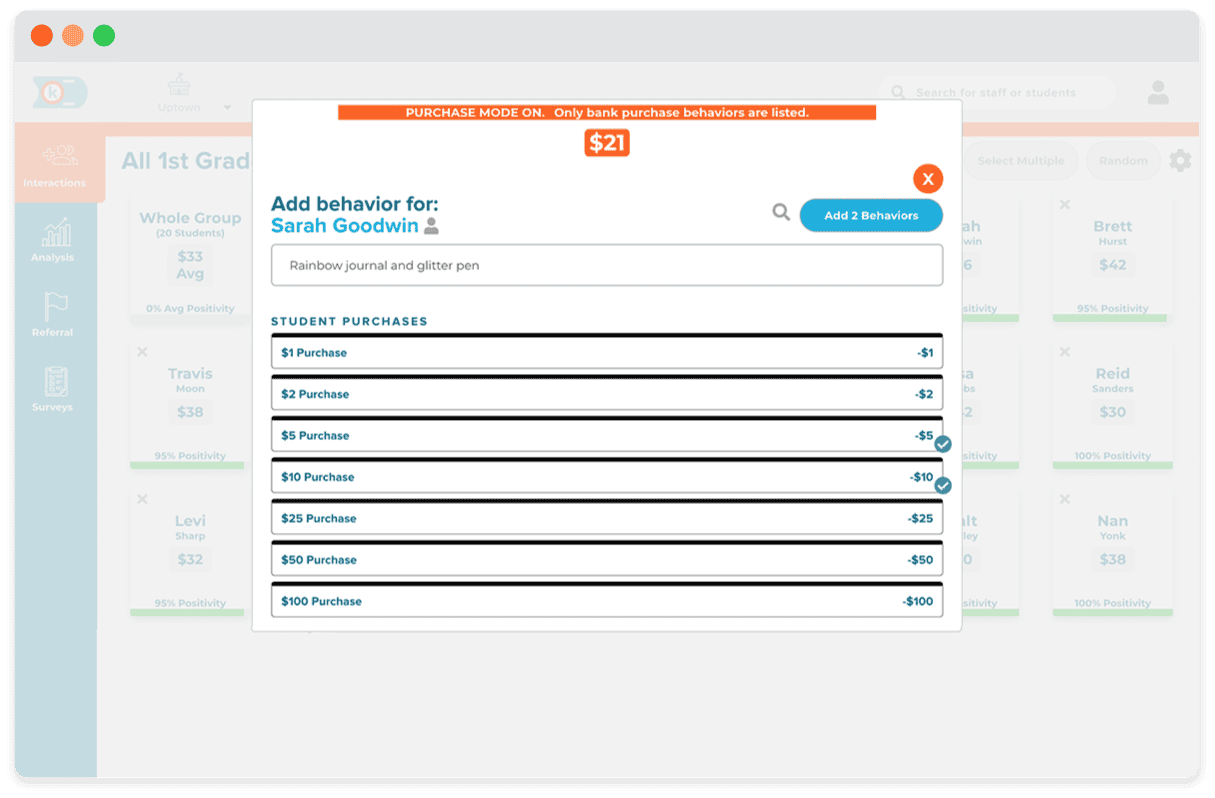
With Purchase Mode, teachers can easily record bank purchases and manage classroom-level rewards. If you have a schoolwide reward system or regular PBIS celebrations, administrators can easily assign point or dollar values to behaviors and track reward purchases using Purchase Mode. Best of all, users can track purchases right where they record behavior interactions.
For example, third-grader Joey showed up to class on time and displayed good listening skills, earning him 15 points this week, which makes his year-to-date balance 350 points. Using purchase mode, his teacher doesn’t have to worry about manually keeping track of his bank balance when he purchases a pencil at five points or a notebook at 50 points.
How Edtech Supports PBIS Reward Systems
Managing behavior shouldn’t get in the way of teaching and learning. With the right tools, teachers and administrators can easily build and manage classroom- and school-level stores or PBIS rewards systems while delivering lessons.
When first establishing a PBIS reward system, consider tools that make implementation and management as straightforward as possible for easy adoption schoolwide. It’s also important for the behavior management system to work wherever the student is learning—at home or in school.
It’s also helpful to use data to track, analyze, and monitor positive behavior within schools. Ideally, your behavior management platform allows you to proactively look at trends and highlight at-risk situations. The ideal behavior management system should also make it easy to engage the family when a student demonstrates challenging behavior or to share positive reports when a student demonstrates positive behavior.
Getting Started with Your School Store
Motivate students, from kindergarten to 12th grade, to consistently demonstrate positive classroom behavior with PBIS systems and school stores. Consider a school store at the school- or classroom-level to get started. Interest and encourage students by carefully considering rewards and discussing desired behaviors. Some teachers work with students in choosing PBIS rewards to increase buy-in. Others establish their own rewards. School leadership can also determine the rewards for alignment across classrooms.
PBIS rewards could be free or inexpensive and just as effective. For example, offering Joey the opportunity to wear pajamas to class or get extra recess time can be just as effective as a new pencil. Briana, a seventh-grader, may be more interested in having lunch with a staff member or bringing her favorite board game to school.
However you set up your PBIS reward system, it’s helpful to establish attainable goals for students and reward them along the way. Some examples include homework completion, discussion participation, and following directions or transitions without reminders. One of the most important aspects of a PBIS reward system is how it empowers teachers to acknowledge and reward positive behavior when they see it. This way, students are motivated to meet the expectations set by leadership, educators, and staff.
How PBIS Can Improve School Culture
Increase student engagement and strengthen student-teacher relationships by encouraging students in safe, warm learning environments. Starting with effectively rewarding good behavior, you can use PBIS systems to boost positivity and strengthen school culture.
PBIS systems help improve overall school culture by developing an atmosphere that encourages students to meet (and even exceed) behavioral expectations. Reward systems help shape student behavior to build positive habits like taking turns, reporting problems, and working independently. With robust PBIS reward systems, educators and staff build future leaders who are productive change-makers in society.
Equip your teachers with more ways to support the needs of the whole child with Behavior Support.

See It in Action
Find out how Behavior Support can help you more successfully support PBIS throughout your school or district.
Schedule a Demo