In today’s world, the importance of technology is undeniable. It touches every industry, from healthcare to manufacturing, entertainment to finance. Regardless of whether students are interested in pursuing a tech-related career, they benefit from learning computer science (CS) by practicing critical thinking, problem-solving, and creativity—skills that are useful in any field. Many K-12 districts have responded dynamically to this shift by making computer science a core part of their curriculum.
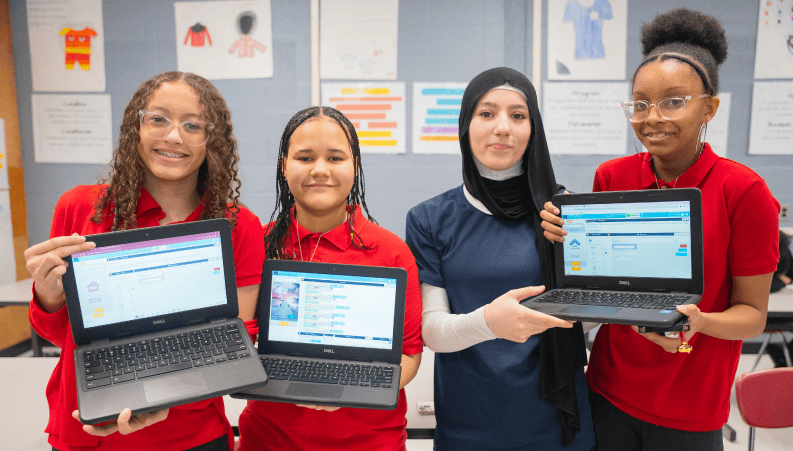
Why Every Student Needs Computer Science
The world is changing rapidly, and we’re moving deeper into a digital age. As a result, computer science education is not just a “nice-to-have” but a “must-have.” Students who lack computer science skills will find themselves at a disadvantage in the workforce. Here’s why integrating CS in K-12 education is essential:
1. Preparing for the Future Workforce
Growing Demand for Tech Skills: Most careers today require some level of digital literacy. Roles like software engineers, data analysts, and cybersecurity experts are in high demand, but so are positions in marketing, healthcare, and education that also rely on tech.
Adaptability: Computer science teaches students how to approach complex problems and adapt to new technologies, making them future-proof for whatever the workforce demands down the line.
Global Competitiveness: Countries worldwide are investing heavily in technology education. Ensuring our students have access to CS education levels the playing field globally.
2. Teaching Critical 21st-Century Skills
Problem-Solving: Computer science encourages students to break down problems into manageable pieces, an approach that applies to any career or life challenge.
Creativity and Innovation: Whether it’s coding an app or designing a game, CS allows students to be creators, not just consumers of technology.
Collaboration and Communication: Many CS projects require teamwork, teaching students how to collaborate with peers and effectively communicate their ideas.
3. Emphasizing Cross-Disciplinarity
Cross-Disciplinary Impact: Computer science has applications across fields like biology, engineering, music, art, and more. Studies suggest that students who learned computer programming outperformed those who did not in programming skills and other cognitive skills such as creative thinking, mathematical skills, metacognition, and reasoning.
Problem-Solving Beyond Technology: Computer science helps students become better problem-solvers, even in non-tech situations. They learn perseverance, attention to detail, and logical reasoning.
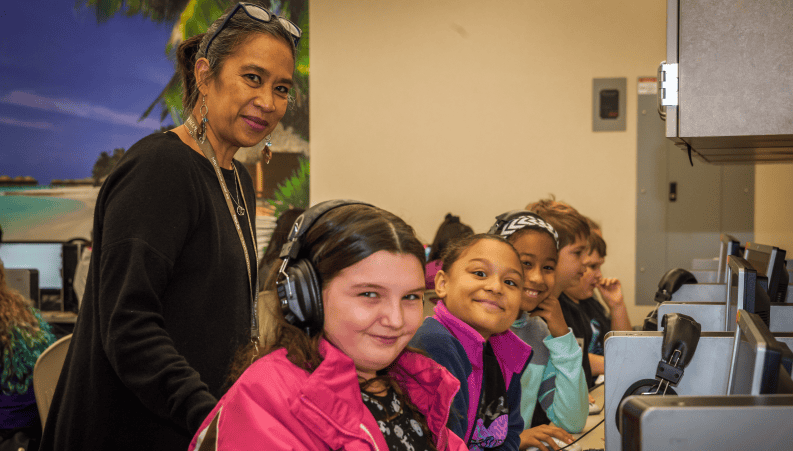
Promoting Equity and Opportunity for All Students
One of the most compelling reasons for bringing computer science into every K-12 school is that it can be a great equalizer. CS offers all students—no matter their background—the chance to succeed and innovate.
1. Bridging the Digital Divide
Access for All: Historically, access to computer science education has been limited to wealthier schools or students in affluent areas. By integrating CS into every school, we can close the gap and ensure all students have equal opportunities to learn these critical skills.
Empowering Underrepresented Groups: Currently, only 32.5% of students who took a foundation CS course are young women. Women, students from historically oppressed groups, and those from lower-income backgrounds remain significantly underrepresented in technology fields. Offering CS education early on can inspire students to pursue tech-related careers, which helps to diversify the workforce.
2. Fostering Social Mobility
Economic Empowerment: Tech-related jobs are often high-paying and come with growth opportunities. Providing all students the tools they need to succeed in these fields can lead to greater economic mobility for underrepresented groups. According to a 2024 Brookings study, exposure to a CS course in high school increases a student’s earnings by 8% by the age of 24.
Innovation from Diverse Perspectives: Diverse teams create better solutions. When students from all walks of life have access to CS education, they can bring unique perspectives to the table, leading to more creative and effective innovations.
3. Solving Local and Global Problems
Community Impact: Students equipped with CS skills can develop solutions to local problems, like creating apps for social services, improving local business websites, or addressing community issues with tech-driven projects.
Tackling Global Challenges: From climate change to healthcare, computer science has the power to solve some of the world’s biggest challenges. By empowering all students to learn CS, we’re enabling the next generation of problem-solvers to take on these critical issues.
How Schools Can Successfully Integrate Computer Science
Understanding the importance of CS is only the first step. Here are some practical ways to successfully integrate computer science into your schools.
1. Build Teacher Capacity
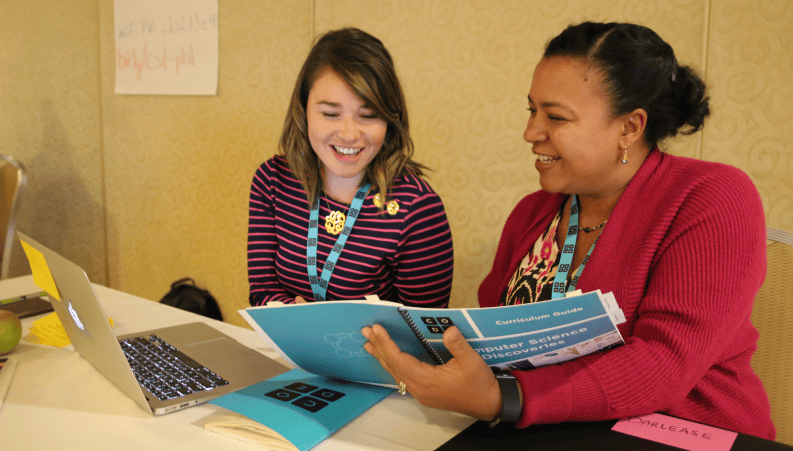
Professional Development: Invest in ongoing training for teachers to ensure they feel confident teaching CS concepts. Teachers don’t need to be expert programmers to introduce students to the fundamentals of CS.
Leverage Existing Resources: Code.org offers free curricula (which can be accessed through PowerSchool), teacher professional development, and a comprehensive program that can help districts get started with minimal costs.
2. Embed CS in Curriculum
Start Early: Introducing CS in elementary school can spark interest and build a strong foundation for students to continue in middle and high school.
Integrate CS with Other Subjects: Computer science doesn’t have to stand alone. Schools can embed CS concepts into subjects like math, science, and even art or music. For example, students could learn about algorithms while studying math or use coding to create music.
Offer Advanced Courses in High School: Once students reach high school, offering more advanced CS courses, like AP Computer Science can prepare them for college and beyond.
3. Ensure Access to Resources and Equipment
Equity in Access: Provide the necessary technology—whether it’s computers, tablets, or software—so that all students have the tools they need to succeed. Many schools can secure grants or partner with tech companies to get the hardware and software required.
Creative Solutions for Underfunded Schools: For districts with limited resources, after-school programs, partnerships with local businesses, Code.org free curriculum, or community-based coding clubs can provide students additional access to CS education.
4. Engage Parents, Families, and the Community
Inform Parents of CS Benefits: Parents play a key role in encouraging students to pursue CS education. Schools should engage parents by highlighting career opportunities in tech and showing them how CS skills are valuable in any field.
Build Community Partnerships: Collaborate with local tech companies or universities to create internships, mentoring opportunities, or even classroom visits that expose students to real-world applications of CS.
5. Create Inclusive CS Programs
Encourage Participation from All Students: Make a concerted effort to engage women and other underrepresented groups. Representation matters—students are more likely to pursue CS if they see role models who look like them succeeding in tech fields.
Clubs and Extracurriculars: Computer science clubs, hackathons, or coding competitions give students the chance to develop their skills outside of the classroom in a fun and collaborative way.
Real-World Success Stories
To see the impact of integrating computer science in K-12 schools, let’s look at some real-world success stories. Across the country, schools that have embraced CS have seen remarkable results.
Yreka Union Elementary
This small (less than 1,000 students in grades K-8) district didn’t have funds to hire a computer science teacher. An enterprising half-time Kindergarten teacher expressed an interest in providing computer science instruction to students and to help other teachers become more comfortable with CS. The district was able to increase the teacher’s contract from part-time to full-time. She started teaching Kindergarten in the morning and cycling through other classrooms in the afternoons to provide direct instruction to students as well as modeling and coaching teachers in computer science.
Chicago Public Schools
Chicago made headlines by becoming the first large urban district to require CS as a graduation requirement. This bold move ensures that every high school graduate leaves with foundational CS skills. Since its implementation, the district has seen increased interest in STEM fields, particularly among girls and underrepresented groups in CS.
Osage School District
In 2017, Osage schools sent 36 teachers to Code.org CS Discoveries Principles PD. Since then, Osage schools have trained 100% of their teachers (about 65-70 teachers) in CS and have CS integration in every subject at each grade level.
Los Angeles Unified School District (LAUSD)
LAUSD, the second-largest district in the U.S., launched a district-wide effort to bring CS to all its students. The district partnered with tech companies and nonprofits to train teachers and offer coding classes to students from kindergarten through 12th grade. The initiative has helped students from underserved communities gain access to the same CS education that wealthier districts offer.
Arkansas Statewide CS Initiative
In 2015, Arkansas became the first state to require high schools to offer computer science classes. The initiative has been a resounding success, with thousands of students enrolling in CS courses, many of them in rural and underserved areas. Arkansas now ranks among the top states in the U.S. for CS education.
The Path Forward for K-12 Schools
As the world becomes more reliant on technology, providing students with a solid foundation in computer science is no longer optional—it’s essential. One of PowerSchool’s focuses is to prepare students for the future. By integrating CS into K-12 education, PowerSchool schools can equip students with the skills they need to thrive in a rapidly changing workforce. More importantly, CS offers an opportunity to promote equity, inspire innovation, and empower the next generation of thinkers, creators, and problem-solvers.
For school administrators, the task may seem challenging, but the benefits far outweigh the hurdles. With thoughtful planning, collaboration, and a commitment to equity, every school can unlock the potential of its students through computer science education. The future is waiting—and it’s time to prepare our students to meet it head-on.
About Code.org:
Code.org® is an education innovation nonprofit dedicated to the vision that every student in every school has the opportunity to learn computer science and artificial intelligence as part of their core K-12 education. We expand access to and participation in computer science in schools, with a focus on increasing participation by young women and students from other underrepresented groups. The leading provider of K-12 computer science curriculum in the largest school districts in the United States, Code.org also organizes the annual Hour of Code campaign, which has engaged more than 15% of all students in the world. Code.org is supported by generous donors including Microsoft, Amazon, Google and many others.

Every student should have the opportunity to learn computer science
Discover how Code.org increases diversity in computer science by reaching students of all backgrounds.
Learn More