

Professional learning communities, or PLCs, consist of collaborative teams of educators who are student-focused and inquiry-based. PLC teams meet regularly to discuss ongoing improvements in their teaching practices. When these teams work together toward common goals, they produce measurable benefits for student learning environments.
What is a professional learning community (PLC)?
A professional learning community (PLC) is a team of educators who meet consistently to share ideas that broaden their teaching skillsets and facilitate whole-child learning. Many PLCs operate in a school building or across a district. They can be organized by grade level, subject area, or interest area—and sometimes they consist of an entire teaching staff.
PLC meetings tend to take place at weekly, bimonthly, or monthly intervals—often during a teacher’s prep period. While there may be an agenda at a PLC meeting, there are no learning targets that an individual must master. PLC meetings are more focused on teamwork, and they tend to be iterative in response to student or faculty needs that vary throughout the course of a school year.
What is the difference between professional learning communities (PLCs) and professional development (PD)?
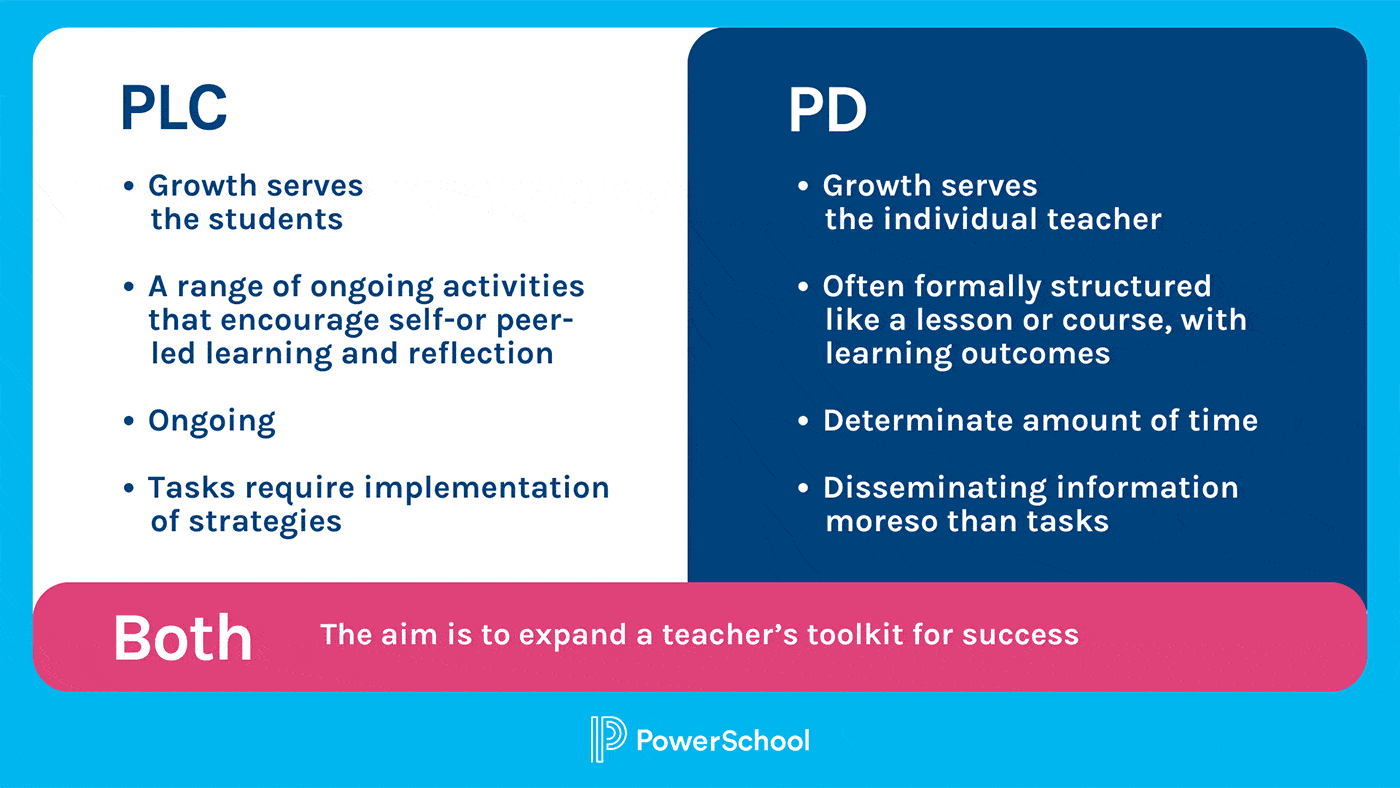
There is a crucial difference in the function and scope of professional learning communities (PLCs) as compared to professional development (PD). Professional development is “given” to teachers in the form of workshops, seminars, or lectures that focus on individual teacher learning and outcomes. On the other hand, PLCs are typically interactive, ongoing, customized to teachers’ needs, and give educators more agency.
Professional learning communities are like team sports, with the teachers placed in a similar role as athletes who practice skills in their own contexts, reflect on successes and challenges, and take responsibility for their own growth and learning as it reflects upon a larger unit (in this case, a school).
The work in a PLC is individualized, yet it is supported and inquired upon by a whole PLC team that has the same goal: overall student success. This work differs from PD, which is intended to be more “one size fits all” in its approach, since professional development presenters often deliver the same material to broad groups of teachers working with a variety of students. Teachers benefit from both PD and PLCs, but they apply their learning from these scenarios differently.
5 Characteristics of a Professional Learning Community (PLC)
While PLCs can vary in terms of size and group makeup, they share similar features and goals. Across the board, they tend have these characteristics:
1. PLCs are Collaborative
PLCs may be required or scheduled by school leaders, but these session outcomes are not evaluated in terms of specific learning standards to master. They are opportunities for teachers to collaborate with peers and ask questions regarding student learning.
Teams may discuss lesson alignment to state standards, assignment efficacy, grading procedures, rubric criteria, assessment execution, behavior management, and even communication practices. The goal in PLC meetings is to seek input on any teaching practices that can impact a school’s overall success.
The most effective PLC teams speak openly, so everyone in the group must be respected and treated professionally. Equally, professional learning communities often share collective leadership. This applies to relations between faculty and leaders, and also among teachers. In PLC meetings, educators often take turns leading discussions based on their own lines of inquiry.
The PLC approach to leadership relies on the belief that that teachers may be more willing to openly discuss their concerns and accept feedback when they guide a meeting. After all, professionals in any field are expected to work together to build shared knowledge on best practices.
2. PLCs are Action-oriented
PLC team members often apply their knowledge from a PLC meeting as soon as possible within their lesson structures. This is because PLC groups share quick tips as well as advice on grading, standardized test preparation, or any other topic that is timely to the group.
While team members are tasked with trying the ideas, they are often driven to do so naturally—and asked by teammates to respond with feedback on how it went. In this way, these groups hold each other accountable for being action-oriented. This is why PLCs thrive when they consist of engaged teachers who elevate each other’s agency.
3. PLCs Focus on Continuous Improvement
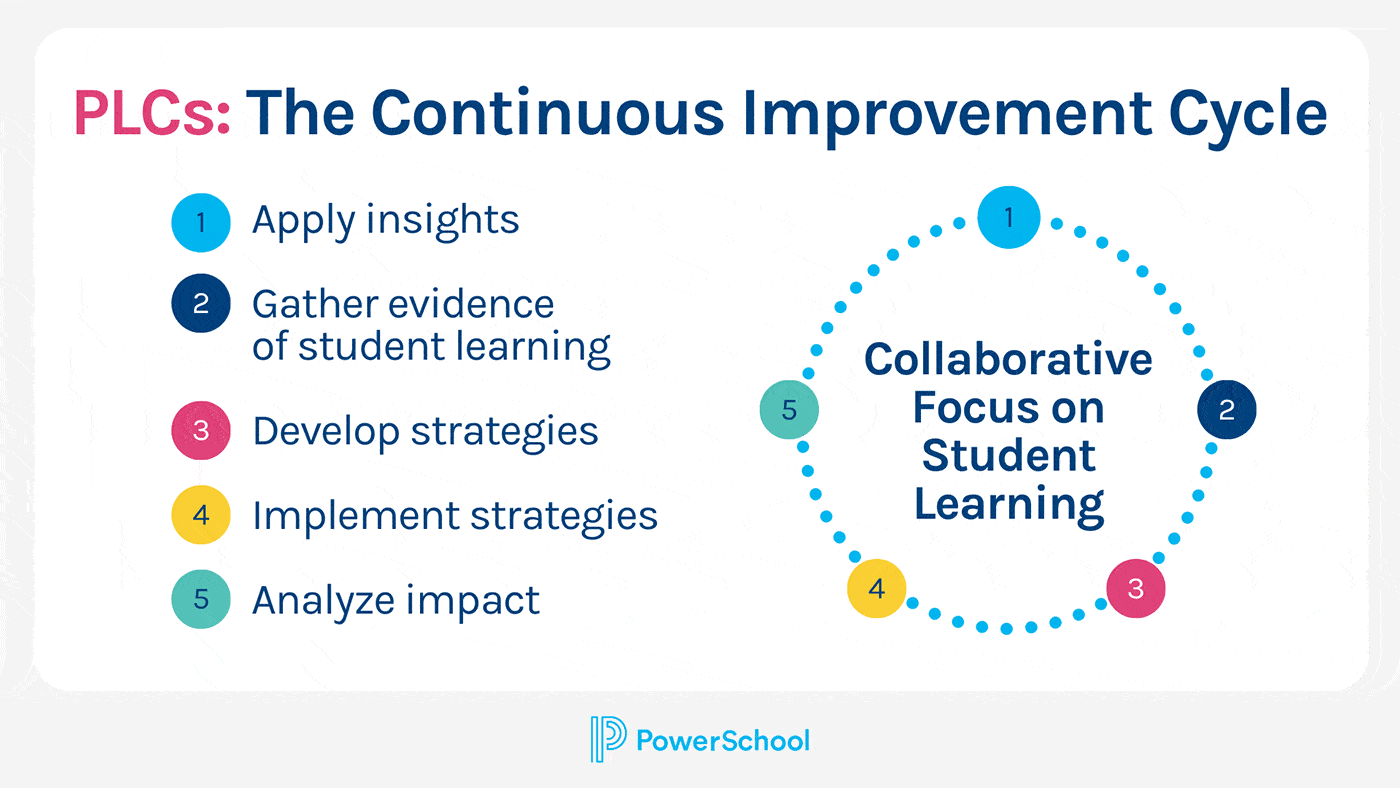
A PLC shares a commitment to continuous improvement. Teams are continually searching for a better way to accomplish their goal to improve student learning. Their ongoing cycle includes the following, and each team member is responsible for participating in the process.
- Gathering current evidence of student learning (essays, test scores, etc.)
- Developing strategies to build on strengths and address weaknesses in that learning
- Implementing those strategies
- Analyzing the impact of the new strategies to discover what was effective
- Applying insights to the next cycle
4. PLCs are Results-driven
In PLCs, the success of a given continuous improvement cycle must be determined in terms of results rather than intentions. Assessing PLC efforts based on demonstrated results prevents teams from guessing what to do, and it increases purposeful involvement.
One way that PLC teams stay results-driven is to create common formative assessments that produce ongoing evidence of student learning. When teams review the results of these common assessments, they gain insight into program concerns and team members’ teaching strategies. Frequent common formative assessments are a powerful tool for effective PLCs.
5. PLCs Focus on Student Learning
A professional learning community concentrates on student learning and experiences. This is why their discussions center around lesson plans, assessments, activities, and other topics that directly affect student learning.
One way that PLCs maintain this focus is to share best practices. Teams might share activities or successful lessons with one another—with the aim of empowering colleagues to apply similar techniques to improve their own classroom learning environments.
How do PLCs rank with educators?
Find out in this blog: Survey Results: Educators Tell Us the Professional Development Options They Want
Read Blog4 Benefits of a PLC
Professional learning communities increase student engagement and learning. They promote teacher confidence and support whole-school collaboration. Here are four specific ways that they can help a school.
1. PLCs give teachers regular opportunities to improve
With regular meetings, it is possible for teachers to brainstorm innovative ways to improve student achievement. In short, when you meet with your team, you have an enhanced opportunity to reflect, share student progress, and take ownership of every child’s education. Communication is key in a PLC team, and the payoff is a greater sense of purpose and ownership for your own daily instruction.
2. PLCs build stronger relationships among team members
In sharing a single focus on student learning, PLC teams create a bond and elevate leadership qualities in one another. This, in turn, encourages teachers to develop leadership across a school or district. The most supportive PLC teams understand each others’ strengths and weaknesses—and they enhance each others’ strengths. This builds trust and camaraderie. Mutual respect grows naturally over time because the team’s focus is external, positive, and important.
3. Shared knowledge in a PLC keeps teachers aware of new research and technology tools
While PLCs often take place at the school level, they also take place globally, through social media sites, and within other online communities. This encourages teachers. They feel that they are not alone, and they come to understand that an educator’s practice extends far beyond their local PLC team.
With communication tools online, more knowledge can be shared, especially when it comes to new research and technology tools. In-the-moment collaboration is now possible across continents, and team members can bring this information back to their local PLCs—thus expanding knowledge, reach, and effectiveness in everyone’s practice. In all, the fact that PLCs are held regularly, and have a clear task at hand, makes it more comfortable for them to collaborate.
4. PLCs lead educators to reflect
Learning from colleagues leads teachers to attempt new practices and reflect on the ways they can enhance their teaching. In a PLC, varied minds come together with a single focus, yet they come from differing backgrounds and training. The more supportive PLC teams are, the more likely they will add value to students and schools.
5 Tips for Creating a Professional Learning Community
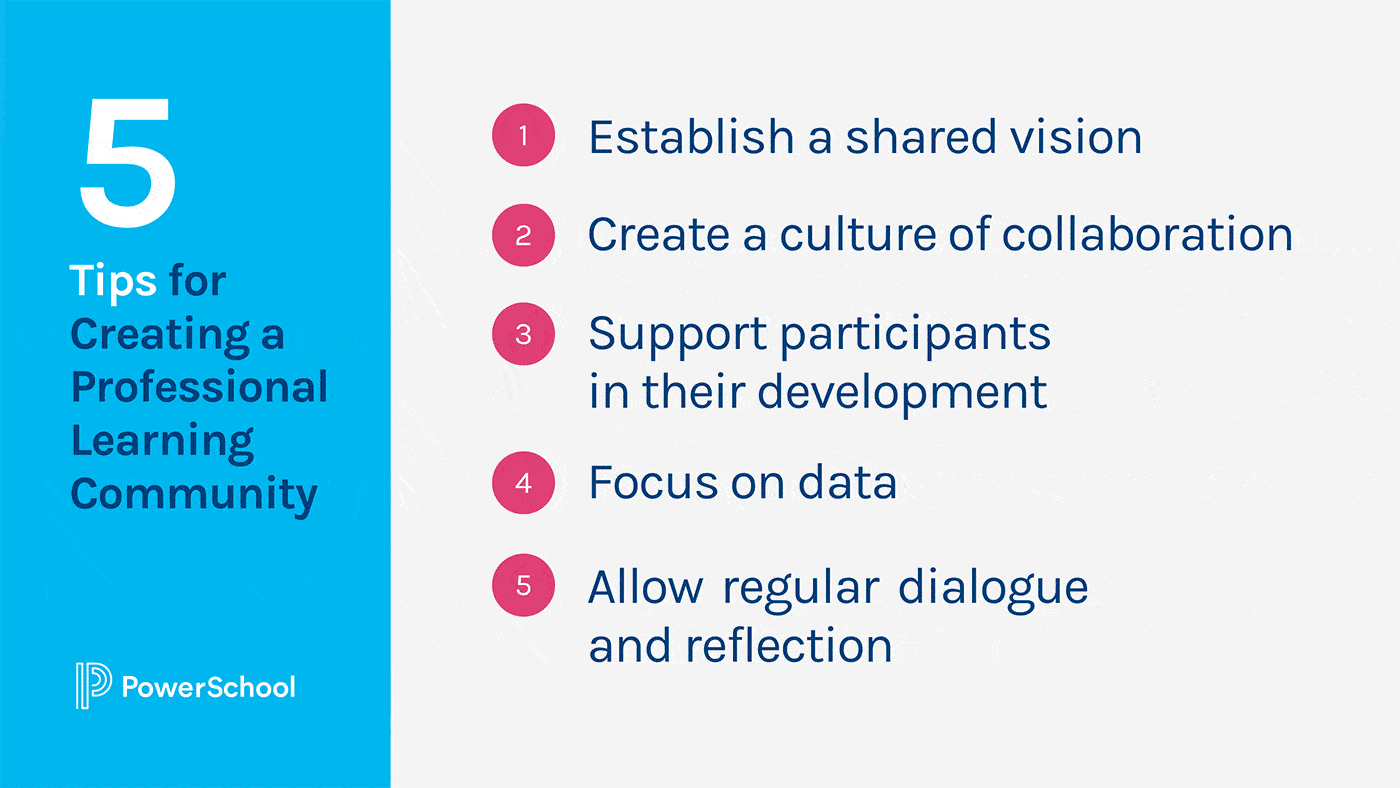
The collaboration inherent in professional learning communities (PLCs) makes individual progress achievable, reliable, and comfortable for teachers. The continuous improvement cycle of learning in PLCs produces significant growth for teachers and schools, so many schools have them in place. Here are five tips for creating a PLC.
1. Establish a shared vision for your PLC
Setting goals and learning together—through reflective trial-and-error—is empowering. When a group remains focused on its shared vision to improve student outcomes, it will succeed. Teachers in a PLC explore questions like “what should students learn?” and “how will we know when they have mastered it?” These foundational questions require teams to come to a common understanding about the best ways to assess and improve student growth.
2. Create a culture of collaboration in your PLC
One example of the benefits of PLC collaboration involves unpacking standards. This common practice asks teachers to help each other analyze the nouns and verbs from their standards in order to understand them better. In this exercise, teams build one another’s agency and confidence as they determine which skills and concepts students will need to learn in order to succeed.
When PLC teams have an effective culture of collaboration, they are more comfortable. In this example, teachers may be more open to sharing which standards feel hard to teach or learn. The end result of PLC collaborations like these is increased student learning, since teams are able to be honest about their challenges and open to receiving feedback.
Other ways that PLC teams might build community could include taking turns leading meetings or planning a “show and tell” session to display their best student work. In all cases, their work is externally focused on students and their growth.
3. Support PLC participants in their development
PLCs are the lifeblood of innovation and constructive risk taking in schools. When structured well, PLC teams constantly learn together and work to discover what is best for students. Still, supporting teacher development isn’t always easy. Personal and professional growth takes place in the space between a problem being posed and a solution being reached. This is why supporting one another doesn’t always mean agreeing with them. It means posing additional questions that will benefit individuals, teams, and schools.
Participants may have to engage in productive conflict as they question methods or take risks. Since teams are made of diverse people, they bring in varied viewpoints that should be shared and can be acted upon. This is where the development happens. The nature of PLCs requires groups to embody critical thinking and kindness, so that teachers are both questioned and supported.
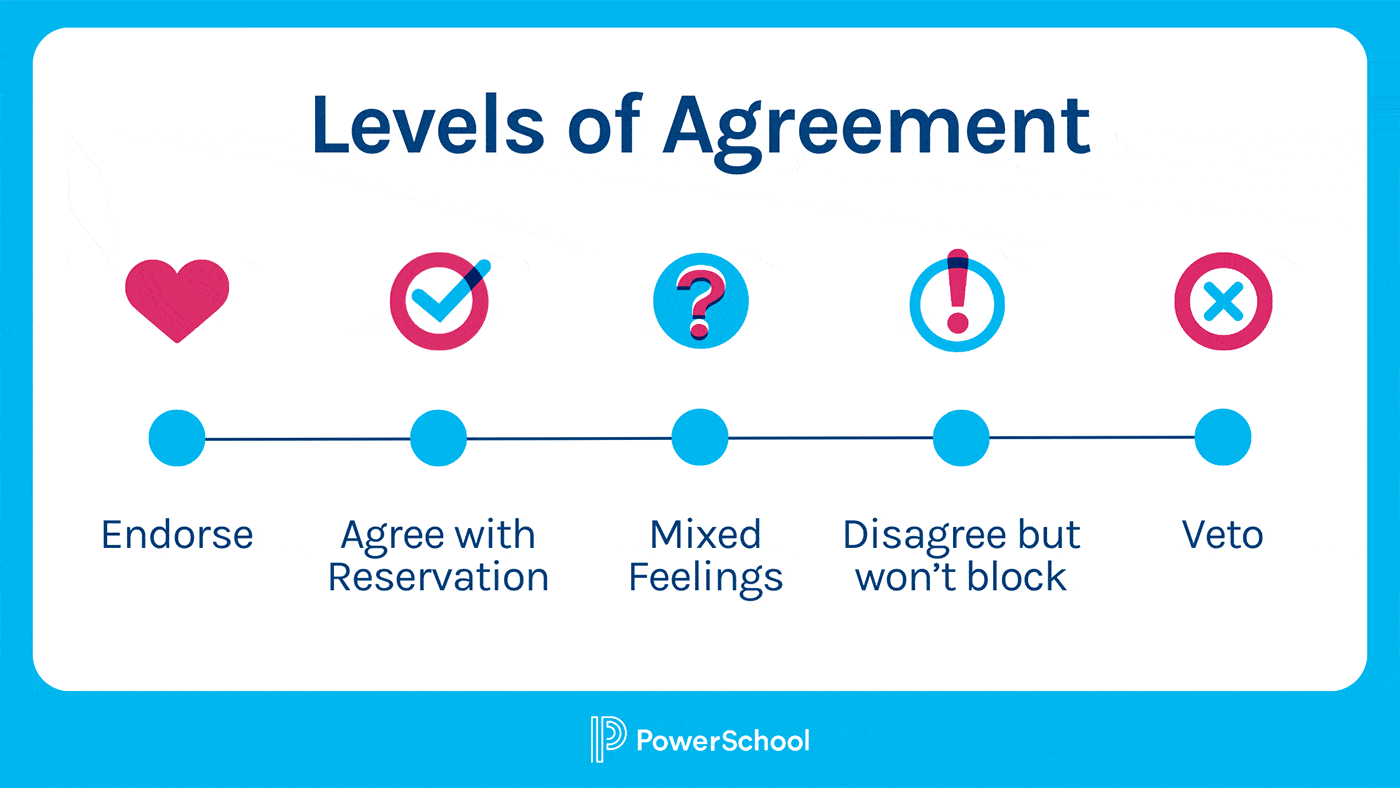
The Gradients of Agreement structure can help in this instance. This common tool for group facilitation enables groups to make decisions while also honoring divergent thinking. It helps build consensus on the best ways to move forward.
4. Focus on data in your PLC
Teachers discover which teaching methods work best for their students when they have the freedom to try out new strategies. This is where the focus on data comes in. As a PLC group continually tries new strategies to improve student learning, their innovations should be tested, measured, and reported.
PLCs can make this happen by having teachers collect evidence from common assessments and using data protocols to determine which strategies were most effective. This method is far more reliable and explicable than decision-making based on hypotheses or intuition.
5. Allow regular dialogue and reflection in your PLC group
Each PLC meeting should include time for inquiry and discussion. The Continuous Improvement Cycle of PLCs encourages regular dialogue and reflection. When a PLC team relies on the cycle model in partnership with the Gradients of Agreement structure, they are empowered to plan meetings, engage productively, and ensure all voices are heard in a collegial manner.

Learn More
See how Learning Management Systems, like PowerSchool Schoology Learning, can be used to support PLCs.
Read the Blog3 Examples of Professional Learning Communities
Professional Learning Communities can be formed in various ways and for a myriad of purposes. Some are based on grade level or subject. Here are three additional examples to consider.
1. Exploratory Teams
At times, school leaders need to determine which new technologies to adopt, including Student Information Systems (SISs), Learning Management Software (LMSs), or add-ons like web polling tools or online libraries of classroom materials. Other times, leaders need to choose a new curriculum. In these cases, administrators need to make sure faculty voices are heard, and they can do this by creating an Exploratory PLC team.
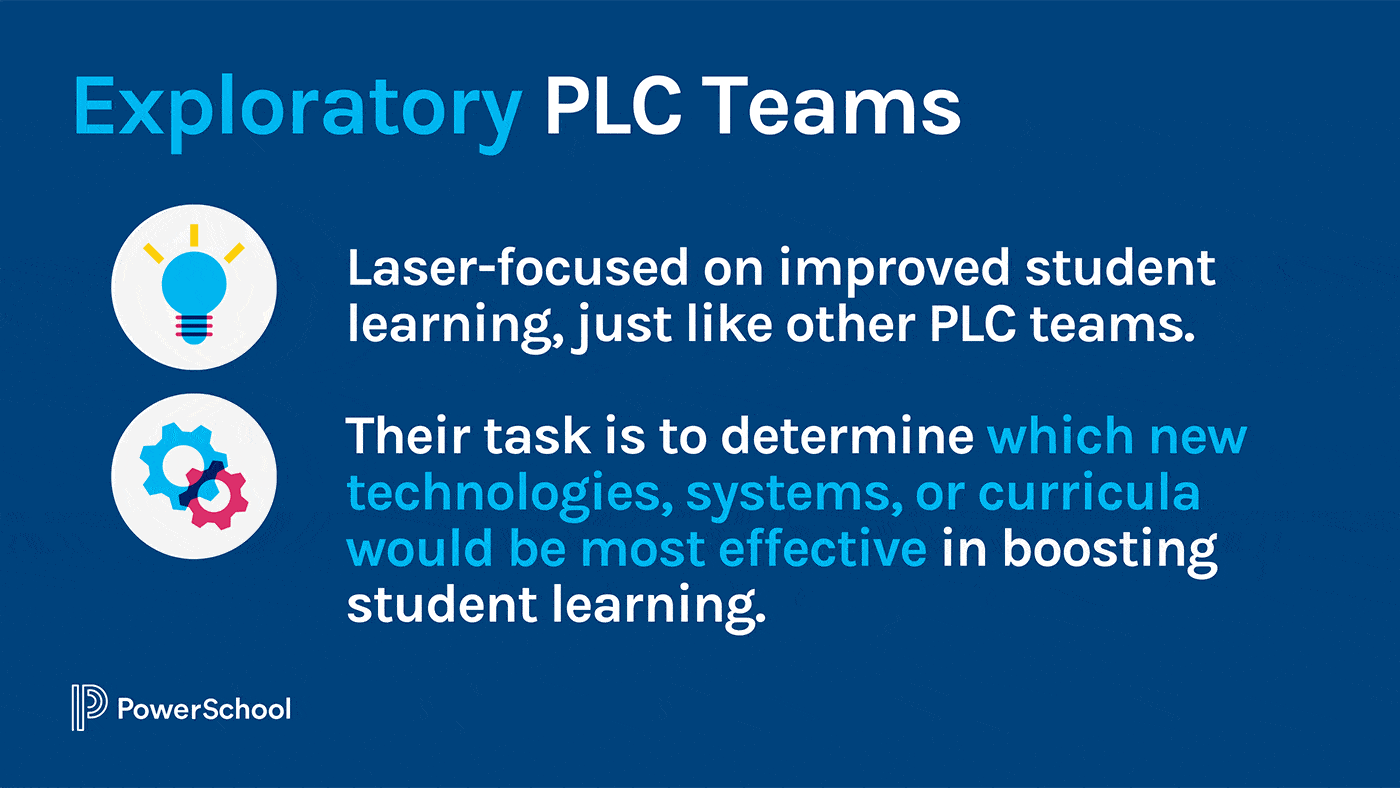
Exploratory PLC teams are laser-focused on improved student learning, just like other PLC teams, but their task is to determine which new technologies, systems, or curricula would be most effective in boosting student learning. Exploratory PLC teams could form when a math department needs updated curricula that comes in several languages, or they might form when a gymnasium needs new equipment. There is so much to explore when it comes to making changes in a school, which is why successful exploratory teams remain focused on a single question: how will the item we are exploring foster student learning?
2. Externally-facilitated PLCs
An external facilitator can offer an unbiased view on a school and the learning needs of its student body. PLC facilitators might play different roles. They could model a typical agenda for PLC meetings and show how to maintain a structure for continuous improvement cycles. They can help teams get started on helpful lines of inquiry. They might even meet with a whole-school PLC to discuss any emergent challenges they have uncovered.
A good facilitator can look at the big picture and help PLC teams identify where they could make an impact. Since they are external to the school, they may also serve as a listening ear when it comes to teacher’s feelings on the school, leadership, support systems, and other issues related to teacher satisfaction.
3. Web-facilitated PLCs
Sometimes, professional learning communities have a broader scope. Some PLCs may meet asynchronously or on a less frequent basis. One such community is called “Creative High School English.” This team has a shared social media page where they ask questions, make suggestions, get feedback, gain support, and check out trending pedagogies through links to podcasts and articles. Another PLC uses Slack to connect technology teachers across their state.
Whether a PLC meets in person or online, whether it aims to adopt new technologies or support current curricula, and whether it is led by a teacher or facilitator, the community stays focused on improving student outcomes.
Which technology supports professional learning communities?
PowerSchool Professional Learning is a powerful solution that helps in-school PLCs succeed, and it offers online professional learning communities as well. Within these communities, teachers can gather course feedback, surveys, and ratings. They can gain optional credits, take part in online discussion boards, and share content.
Part of the Educator Effectiveness Cloud, this solution is also a resource for immediate teacher needs like supporting remote education or adjusting to ever-changing compliance procedures. PowerSchool Professional Learning is accessed in the same LMS that teachers are accustomed to.
For in-school PLCs, it offers dashboards and on-demand reports to assist with data collection.
Does PowerSchool offer PLCs?
PowerSchool connects, nurtures, and inspires educators, administrators, and K-12 stakeholders through membership in our Champion program. Participants gain access to exclusive experiences and support that allows them to maximize their impact.
PowerSchool Champions have access to their own exclusive Champions Circle: a space to connect with other members and connect every month through in-person and virtual PLC meet ups. Champions receive special invitations to events where they learn best practices from members in similar roles, facing similar challenges, with the same PowerSchool solutions.
In PowerSchool User Groups, teachers can access curated timely and relevant resources that support their work. User groups are already established in various states, regions, and countries—and they take part in regular conferences.

Collaborative Development Works
Teachers surveyed across the U.S. overwhelmingly preferred working with a mentor or peers over traditional “sit-and-get” learning methods.
See the Survey