The untapped power of K-12 data
K–12 data comes in many forms, but unfortunately, much of it is underutilized. Some of the richest data sets districts and schools collect simply don’t scale well.
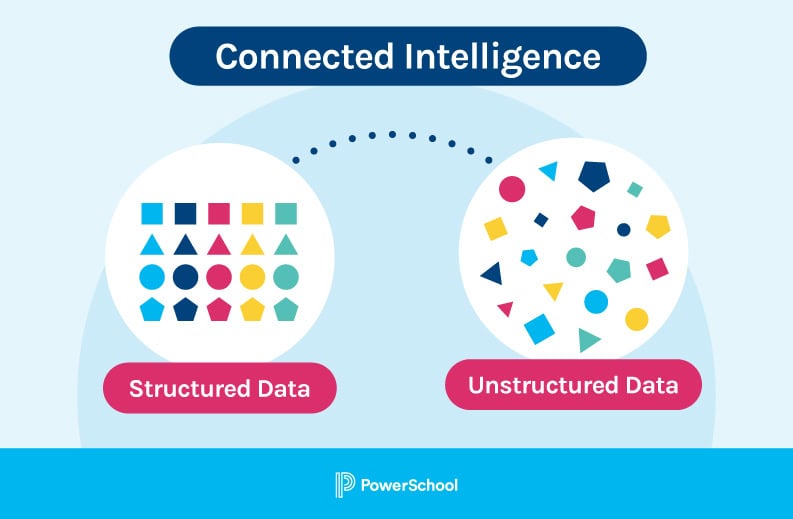
When people think of data in education, they usually picture structured information: assessments, attendance, behavior, or enrollment. With a strong data system, such as solutions from PowerSchool Data, Analytics & Insights, this data can be visualized in charts and graphs, sliced and disaggregated, and viewed at multiple levels: from the state to the district, the school, or even the individual classroom. This type of data scales easily and is often the focus of most data-driven discussions in education.
Structured data: what we know how to use
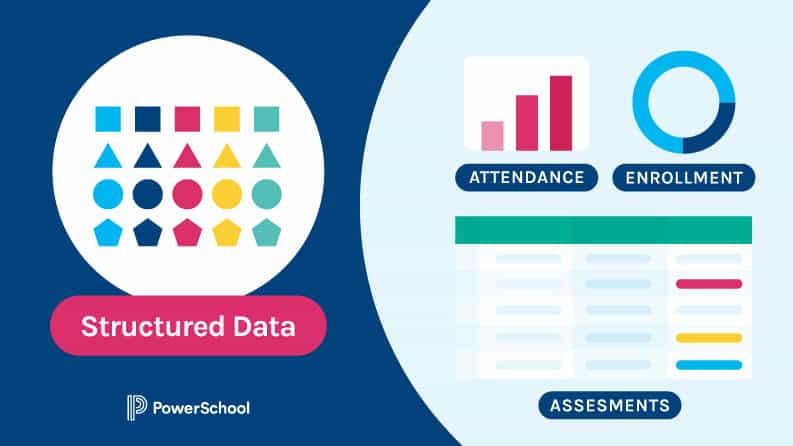
Structured data fits neatly into rows and columns. It’s organized, measurable, and easily aggregated to provide meaningful patterns and trends. Educators and administrators rely on it every day to monitor attendance, analyze assessment results, and inform interventions.
However, the overreliance on structured data means that other valuable sources of information often go unnoticed or underused, particularly those that don’t fit the traditional mold of numbers and charts.
Unstructured data: the hidden layer of learning insights
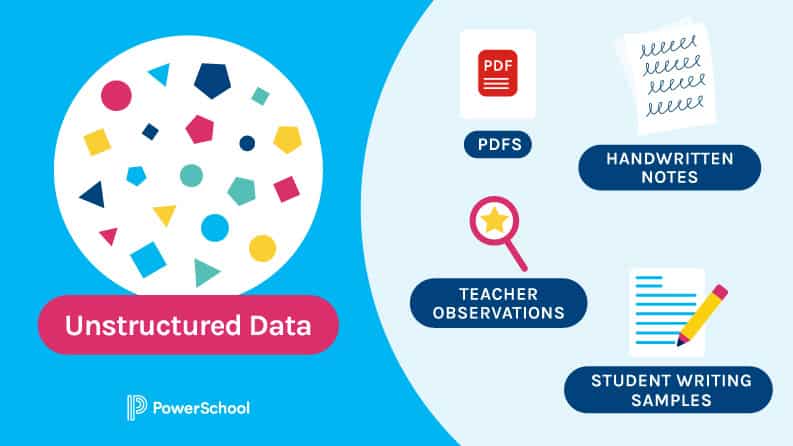
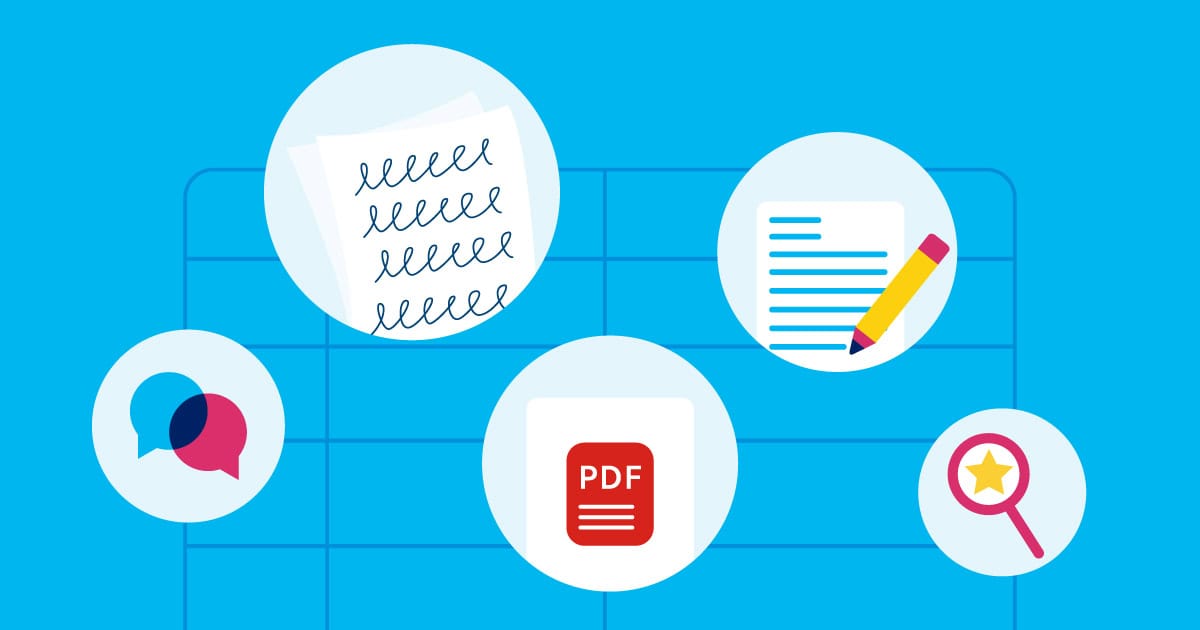
K–12 education generates a wide range of data that doesn’t fit neatly into spreadsheets. This is unstructured data: classroom observations, student writing samples, narrative-rich school improvement plans, and even teacher reflections. These sources are filled with insights about teaching, learning, and culture, but they’re notoriously difficult to analyze or compare beyond the classroom level.
There’s also a wealth of data locked away in static files: birth certificates required for enrollment, student transcripts, or compliance documents stored as PDFs. Each holds important information, but accessing and using it efficiently remains a major challenge for districts.
The challenge: unlocking unstructured data at scale
Unlocking and using this data at scale is one of the most pressing challenges in K–12 education. The difficulty isn’t just technical—it’s also philosophical. Traditional data systems weren’t designed to capture or interpret narrative, qualitative, or visual information.
As a result, districts often miss opportunities to make connections between structured and unstructured sources that could lead to better insights about students and schools.
The solution: digital tools that leverage AI
PowerSchool Connected Intelligence, the first Data as a Service (DaaS) platform built for education, offers a powerful way to bridge that gap. It combines industry-leading capabilities, including a data lake, 24x7x365 observability, engineering, data science, and secure data sharing, with built-in tools that make analyzing unstructured data possible.
One of those tools, DocumentAI, helps districts surface insights that were once hidden in text-heavy or static documents. By applying AI-driven analysis, educators can now extract meaning and make data-driven decisions from materials that previously lived outside traditional dashboards.
Real-world examples: From enrollment to equity
Districts around the world are already putting these capabilities to work:
- Ceibal (Uruguay): Analyzing student comments in Schoology Learning (LMS) to identify and address instances of bullying
- Denton ISD (Texas): Streamlining enrollment by automatically verifying family documents, reducing staff workload and wait times
- Ontario districts (Canada): Processing and preserving transcripts securely and accurately for the 55 years required by regulation
- Additional districts: Exploring how to better understand and access 504 plans, while others look to reduce paperwork-heavy special education workflows
The possibilities extend far beyond these examples. Student, parent, and teacher reflections—often collected but rarely leveraged can become powerful sources of insight when analyzed through AI-driven systems.
Reimagining what’s possible with AI in education
Today, the barrier to harnessing unstructured data is no longer technology. With PowerSchool Connected Intelligence and the growing role of AI, educators now have the tools to unlock every type of data at scale.
Perhaps the bigger challenge is rethinking what we believe is possible. As a former educational leader in a large urban district, I know how often our decisions were shaped by constraint time, tools, and tradition. But technology is changing that reality.
AI is not just helping us analyze more data. It’s expanding our vision of what counts as data in the first place. By reimagining how we see, interpret, and act on information, we can make smarter, more equitable decisions for every student.