Given the rapid emergence and adoption of AI, the skills students need to be successful will be far different in the future than what is required today. Complex problem-solving, creative thinking, critical thinking, collaboration, digital literacy, adaptability, and emotional intelligence are just a few of the skills and traits that will be in greater demand. AI is now outperforming humans in standardized tests, only further underscoring the need to prioritize those skills over memorization or content knowledge.
Portraits of a Graduate: Painting a New Vision
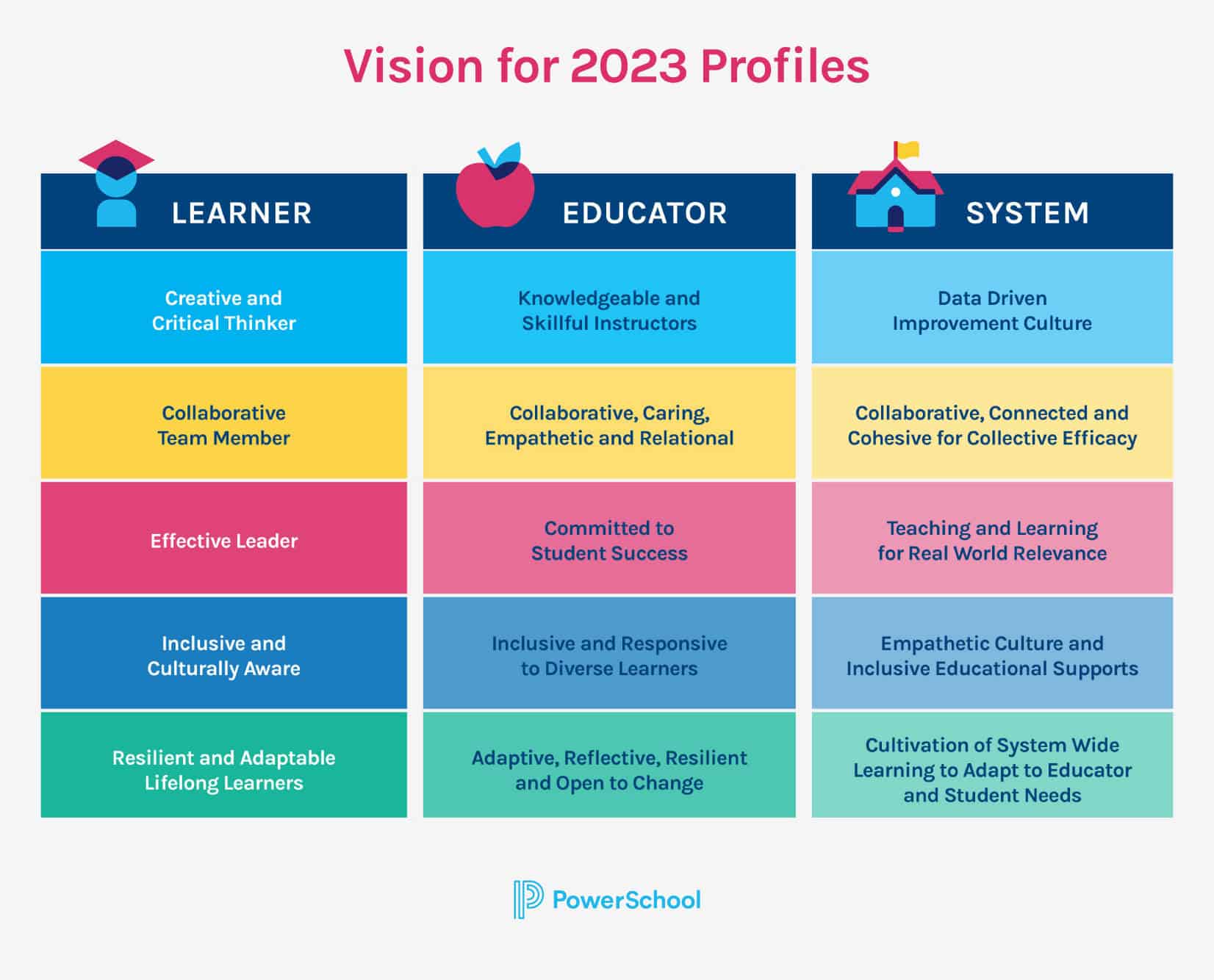
In recent years, school districts have started implementing Portraits of a Graduate to better prepare students for the demands of the modern world by focusing on a broader set of skills and competencies beyond traditional academic achievements. A Portrait of a Graduate is a framework that outlines the key skills, attributes, and competencies that a school district or educational institution believes students should possess by the time they graduate. Some districts have expanded the concept to include portraits or profiles for educators and their systems.
The Disconnect Between Portraits of a Graduate and Accountability Systems
There is an increasing need to understand how well students are mastering the skills of the future. Historically, these skills have been hard to measure at scale.
Not surprisingly, many districts and states have relied on accountability systems rooted in easier-to-measure items, like test scores. Over the years, greater emphasis has been placed on student growth versus proficiency in student assessments. New measures such as absenteeism and advanced coursework success rates have also been added. While these changes have represented positive momentum, by and large, skills such as creative thinking or critical thinking have been ignored.
There exists a disconnect between our desired outcome and our accountability systems, which is intended to tell us whether we have been successful in achieving our vision, typically raising student achievement. This disconnect is logical because historically we have not had any means to access the data, or even understand how to measure these more nebulous concepts. Therefore, skills represented in our Portraits of a Graduate are completely unaccounted for –often living on paper as a distant dreamy vision.
Measuring Success in New and More Relevant Ways
The good news is that a new path is now possible thanks to technological advances with AI. For example, at PowerSchool, Connected Intelligence can replicate a district’s data in one centralized location. Using AI, educators can generate powerful insights from these data in ways not previously possible.
So much of our data that lives in disparate locations, if accessed, analyzed, and correlated, could help us to understand if we are implementing our Portraits of a Graduate with fidelity.
Student and staff surveys can help us understand competencies such as social awareness, self-management, or collaboration. We can measure student engagement across activities from classroom to projects—not just assessment scores or through attendance. Text, audio, and video analysis of student work can be used to detect sentiment, empathy, and collaboration. Positive behavior metrics (i.e., PowerSchool Behavior Support) can help us better understand school climate. The MTSS framework is also taking off in many districts. With it, we are learning about interventions, including which ones work and which ones do not. Currently, we can use AI to better understand the challenges faced by students who are at risk of not graduating. The list goes on and on.
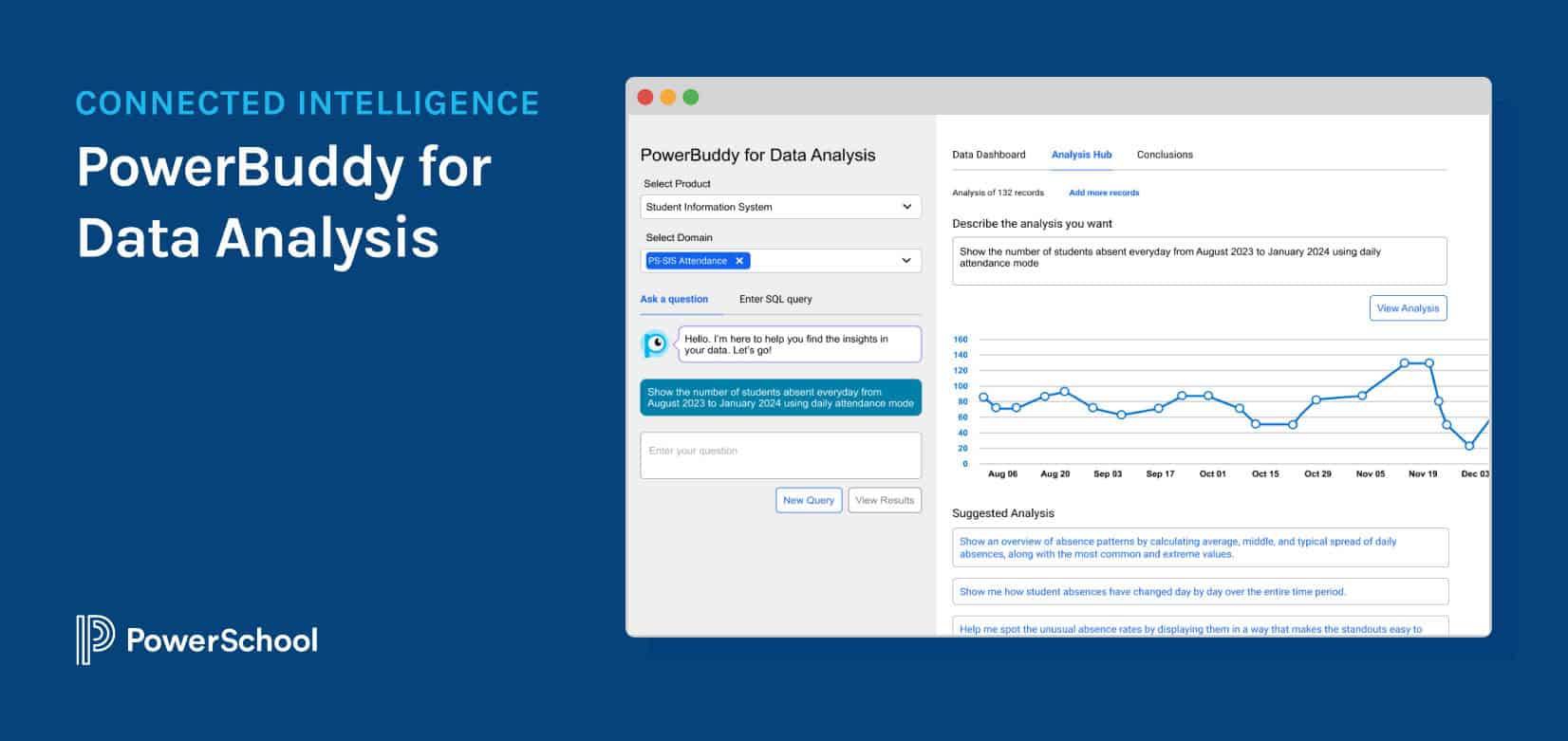
All this data can be housed in one data lake, such as Connected Intelligence. From there, with the help of AI and PowerSchool’s AI-powered assistant PowerBuddy, educators can use natural language to ask relevant questions of the data. It is only a matter of time before the simplicity of these processes opens the door for new accountability systems to emerge. The democratization of data will make it easier and possible to measure our Portraits of a Graduate. I predict this will happen quickly. In a field where accountability systems have stayed the same, with minor refinements over the past several decades, this will represent a seismic and rapid shift.
Beginner's Guide to AI in K-12
This essential guide helps K-12 leaders understand how to navigate the complexities of integrating AI into classrooms and administrative processes.
Get Your Copy