Multi-tiered systems of support (MTSS) is a preventative and proactive framework that relies on data to meet the needs of each student. MTSS isn’t just a strategy—it’s a commitment to every student’s success.
As educators, we often talk about the importance of using data to support student success. We also know that in some schools, data use is hit or miss.
But with MTSS, we really need to use data. It’s not an option—it’s a requirement. Otherwise, you aren’t completing the MTSS framework, or at least you aren’t doing it for real. It would be like eating an apple pie without the apples.
The Ubiquity of Data in MTSS
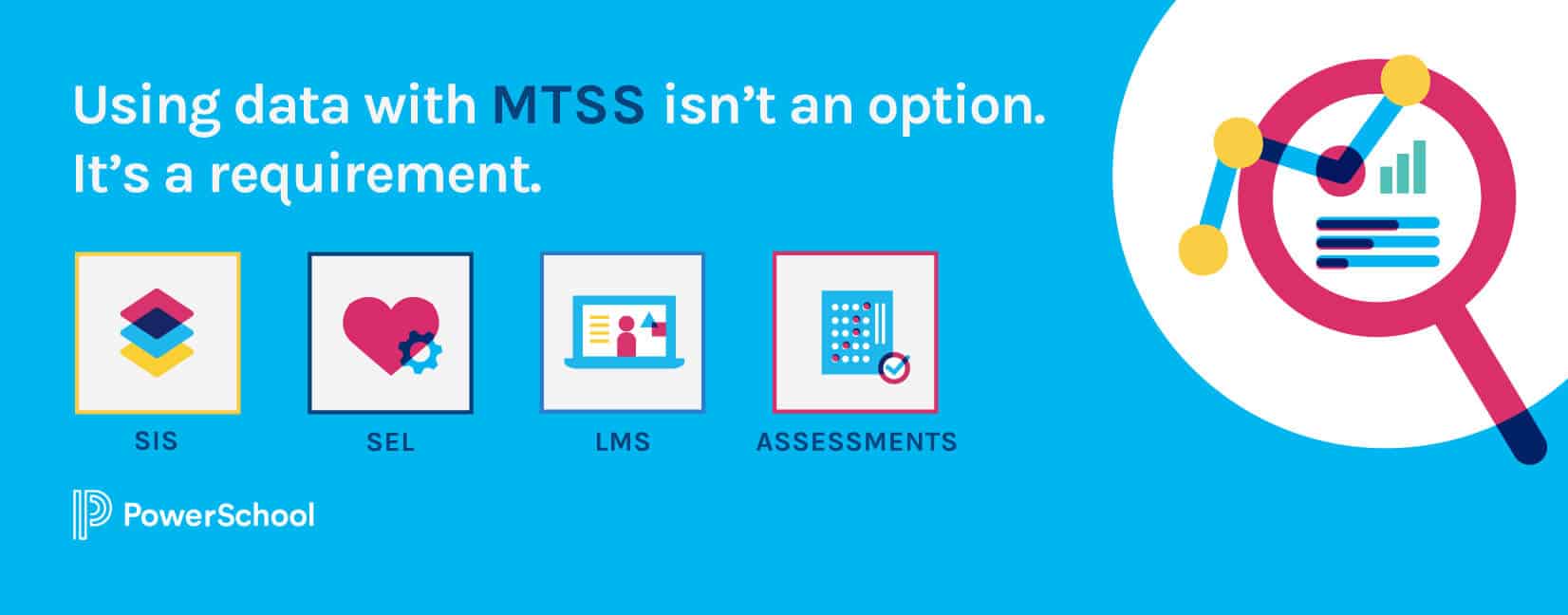
You use data in so many ways with MTSS that it’s essentially ubiquitous—or everywhere and in everything. First, you rely on data to screen students. If a student appears to need additional support based on the screener’s results, then additional data are reviewed to determine the root cause.
Attendance, additional assessments, office discipline referrals, and SEL surveys are just a few examples of some of the data you might analyze. From there, a student is assigned an intervention. Yet again, data are required. This time you rely on data to monitor the progress of the intervention. Ultimately the teacher or interventionist needs to understand if the intervention worked or didn’t, and why.
As a side note, as much as possible, MTSS data should be accessible in one platform so that teachers are not forced to jump from one system to the next and that connections across data sets can be more easily seen and digested.
But we aren’t done yet. Right now, we’ve only covered data for one student. What happens when an entire district implements and invests in MTSS? This is a reality across the U.S. The 2023 Education Focus Report shows that increasing tiered support practices is an expanding district strategic priority area.
The Black Hole of Interventions
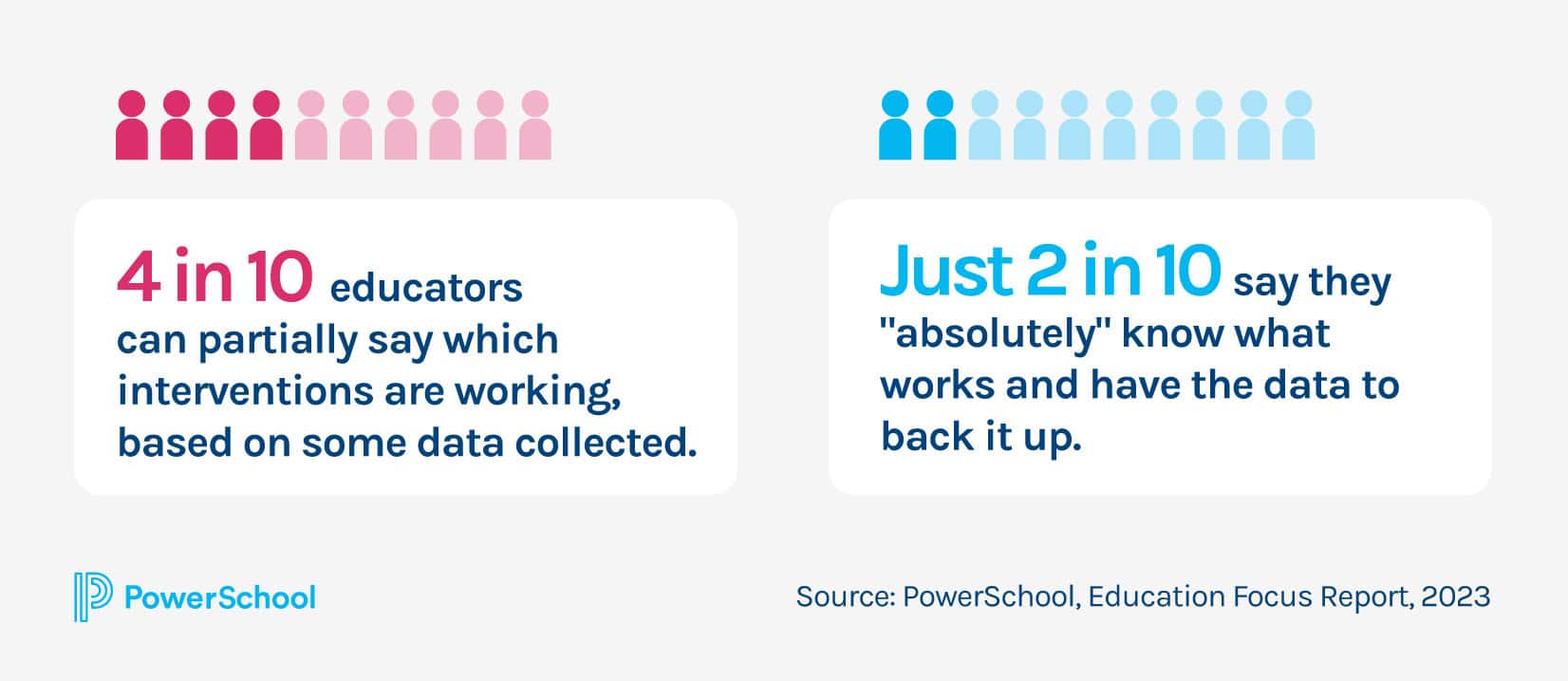
According to the 2023 Education Focus Report survey results, only 4 in 10 educators can partially say which interventions are working, based on some data collected. Just 2 in 10 say they “absolutely” know what works and have the data to back it up.
District leaders, CAOs, superintendents, and school board members want to know if MTSS investments are making a difference. They need to know which interventions are working and which students they’re helping.
Unfortunately, most districts don’t have data systems that can support this type of questioning and analysis. In fact, most district leaders, like CAOs and Superintendents, can’t answer the most fundamental questions, like, “What interventions do we assign? For which students? At which schools?” When you can’t answer these basic questions, it’s impossible to understand what’s working.
These challenges arise because most districts don’t have data systems that can collect and aggregate intervention information. Even for the few that do, many districts don’t have data systems that can deliver this information back to them in the form of insightful intervention analytics.
This means that the people accountable for improving student outcomes are operating in a black hole. While they can see student outcomes like standardized test scores, they can’t see the assigned interventions that led to these outcomes. District leaders deserve better.
Bringing Light and Insight to the World of Interventions
There’s hope. Technology is well positioned to solve certain challenges, and PowerSchool MTSS is one of those technology products. It allows the entire MTSS workflow to be housed in one solution.
Educators often jump from system to system, spreadsheet to spreadsheet, and form to form to complete the entire MTSS process. As educators navigate between and within these items, they waste precious time that could otherwise be directed toward supporting students. MTSS technology can contribute to the financial return on investment through efficiency gains.
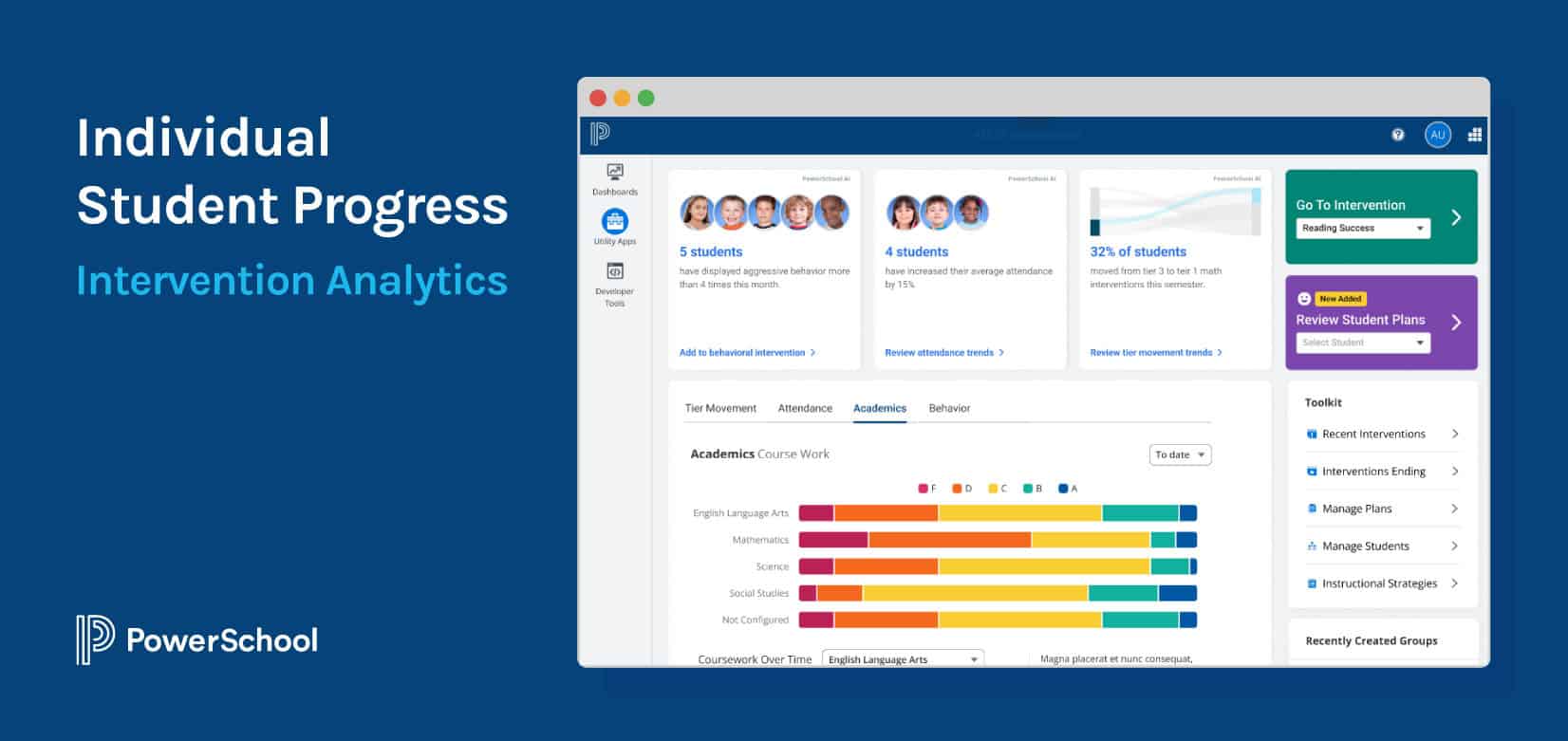
Educators can review a holistic set of data (academic, behavior, attendance, and SEL) in one place. They can select the appropriate intervention based on student needs and monitor the intervention’s progress in real time. This by itself is a game changer as most educators are forced to use multiple “systems” just to support what I’ve described so far.
But when it comes to intervention analytics, PowerSchool MTSS allows educators at all levels (teacher to superintendent) to view the intervention data they need. For teachers, this means understanding whether a student or group of students has made progress on an assigned intervention. For a superintendent, it might mean understanding which interventions were completed with a successful outcome—by grade level and demographics across the entire district. This information can help district leaders tailor professional learning efforts around specific interventions or inform resource allocation decisions.
Superintendents, CAOs, MTSS leaders, principals, and teachers should all have the data to understand whether interventions make students more successful. Currently, many educators simply lack visibility into intervention efficacy. But it does not need to be this way anymore. Education technology and PowerSchool MTSS can help bring visibility and insight into this critical data.

Free Guide to Effective MTSS Interventions
Learn best practices and strategies for implementing effective MTSS interventions to serve students throughout their learning journey.
Get Your Copy