5 steps to transform standards into learning
Standards-based learning can get a bad reputation among K-12 education leaders.
Some may think of classrooms where teachers are so focused on meeting standards that students just learn to memorize answers to test questions. Or others may think instruction is only tailored to the middle of the pack, overlooking students who know the material already and those who struggle because they have yet to meet the standards.
There’s much more to standards-based learning.
Why is standards-based learning important?
Standards establish clear goals. They allow teachers, students, parents, and administration to speak the same language around expectations.
Standards create consistency across teachers, schools, districts, provinces, and states. Still, they aren’t so prescriptive as to tell teachers what to teach—just what skills and knowledge students should master by the end of each grade level.
The bad reputation of standards-based learning generally comes from the tendency to use standards as the curriculum itself. So how can teachers use standards in support of a great curriculum instead?
How to Align Lesson Plans to School Standards
Standards show us where we’re going with teaching and instruction. But first, we need to plot our path to those goalposts.
Teachers can still determine which books to read, which math problems to solve, which projects to assign, and which tests to administer. Teachers could develop thousands of different curriculums from the same set of standards.
That’s where your staff shines. The whole team together—from teachers to administrators—can transform standards into learning that comes to life. You can think of that connection in five parts.
5 Steps to Transform Standards into Learning
1. Understand the Standards
Ensure you understand each standard thoroughly and where it fits into the overall educational journey across subjects and grade levels. For standards to work, it’s essential to clearly understand where students need to be by the end of the school year and what concepts and skills they need to master before they get there. It’ll require some work, but a thorough read-through will pay off.
2. Gain Alignment Across Standards
Here’s the thing about curriculums—they don’t exist in a vacuum. Every student has an educational journey from kindergarten to 12th grade (and, in some cases, beyond), from English to science to math. Bringing those together in a coherent way is called alignment.
Vertical alignment is how topics flow from one subject and grade to another within your school system. Horizontal alignment ensures that grade-level standards are the same across teachers and schools.
In either case, alignment across standards starts with identifying where there are shared goals and then working to support those goals consistently.
3. Structure Lessons According to Curriculum
Now that you have a curriculum map, the lesson planning can begin. Using the map as a guideline for what students need to learn and the timeline for that learning, teachers can consider which strategies to convey those concepts and build those skills over that time.
To best support learning, consider a wide range of methods—from reading literature to conducting experiments, from individual written work to group work—to make sure you solidify not just the information but a deep understanding of concepts and skills.
4. Use Assessments to Evaluate Growth
How do you know if your students are learning the right things effectively? That’s where assessments come in.
This step can be tricky because what’s measured isn’t that a student can recall memorized information but that they understand and can apply what they’ve learned.
Rubrics are common in standards-based assessments because they tell students the expectations from the get-go and give teachers a consistent way of evaluating progress toward those learning objectives, both in a snapshot view and tracked over time.
5. Gather Feedback on Standards
Are students meeting goals in trigonometry? Or are your students particularly strong in local politics? Another benefit of standards is that they give data that you can use year after year (or even within the same class) to measure how things are really going in your classrooms. Each assignment and assessment is like a goldmine of insights that can help teachers and schools make changes in the classroom in real time—and build more robust curriculums next year.
Better data also means better feedback on an individual level. Knowing how far a student has progressed on a learning path means teachers can provide more directed suggestions for student performance and guide them more effectively to meet those standards.
Standards-Based Learning in Action
Here’s an example. Let’s look at a common core sixth-grade math standard: “Understand the concept of a ratio and use ratio language to describe a ratio relationship between two quantities.”
Unpacking this, students need to learn a few things:
- The mathematical concept itself
- The language around the concept
- Describing the concept (which may involve writing or speaking)
- Making connections between objects
And, depending on how the method of instruction, perhaps:
- Reading and understanding texts
- Summarizing using real-world examples
There’s also an opportunity for cross-pollination. In English class, students might write a story that includes a proportional relationship. In science, they might use ratios in a hands-on experiment (and write a report about it afterward). And likewise, in their math problems, they might solve ratio problems related to themes in other courses. There are many opportunities to take this standard, connect it across the board, and spin it into a meaningful, engaging, relevant curriculum.
Getting Started with Standards-Based Learning
For many teachers, standards-based learning may require a pedagogical change. But adopting a standards-based mindset may be the cultural shift your school or district needs. With increased accountability and clear expectations, students and teachers can have more freedom to explore their interests and preferences. Best of all, you’ll create an intentional way for teachers to track their students’ progress and achievements while focusing on helping students learn and reach their highest potential.
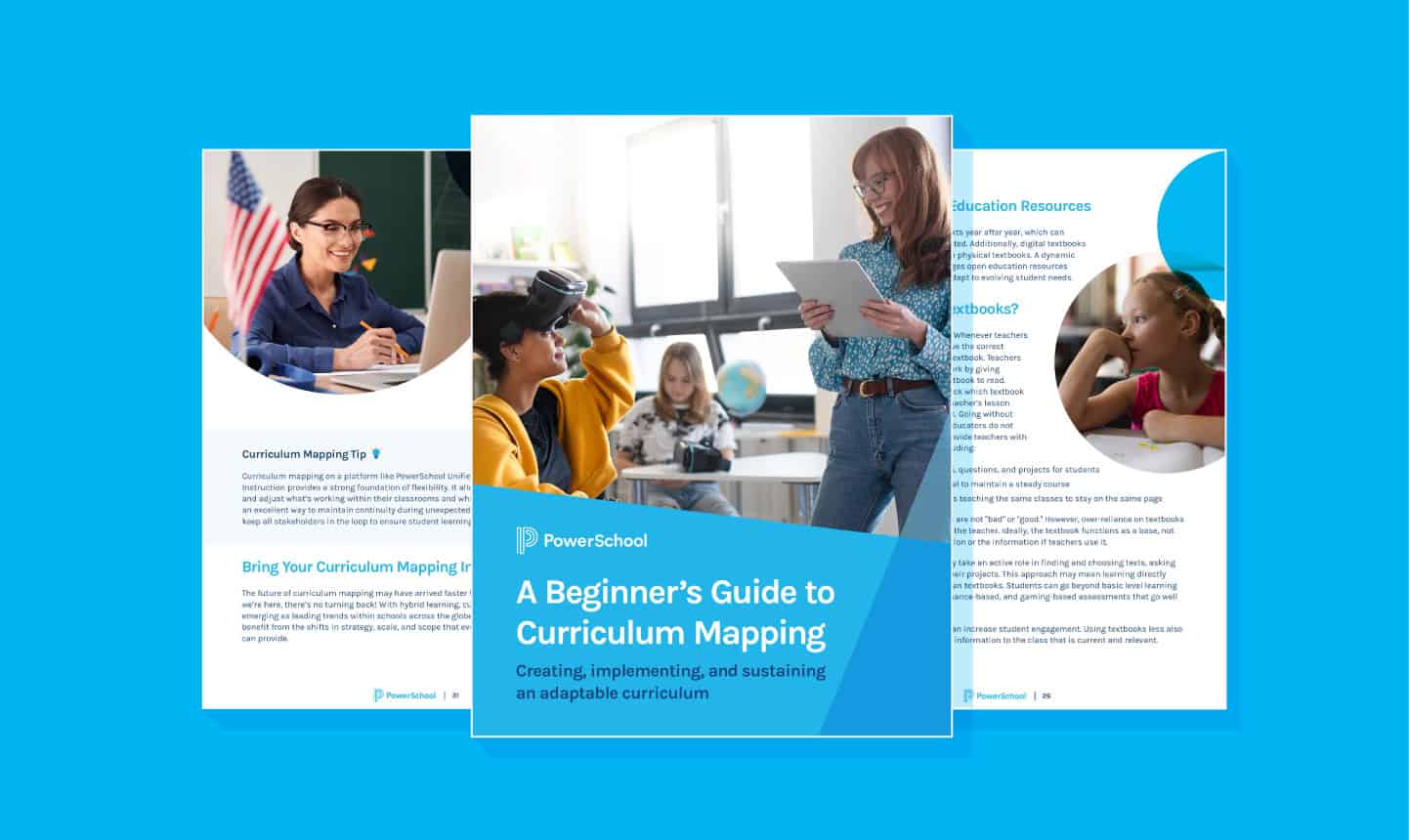
A Beginner’s Guide to Curriculum Mapping
Learn how to create, implement, and sustain an adaptable curriculum that best suits your school or district.
Get Your Copy