Written by
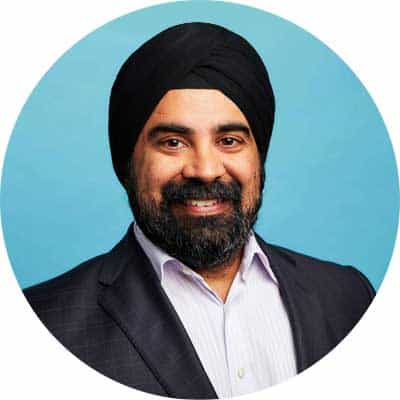
Hardeep Gulati
•Chief Executive Officer, PowerSchool
I recently reached a milestone no parent is ever truly ready for: sending a child off to college. Naturally, I found myself wondering where the time with my son had gone, and how eighteen years passed so quickly. But I thought, too, about the future that awaits him–the job interviews and difficult choices, the promotions and the setbacks, the search for purpose and meaning running parallel to fluctuating workforce demands and job opportunities.
We have long known that there is a disconnect between education and the workforce. Students spend their early years being measured against the academic standards that define the K-12 experience. But when they leave the world of academia, they are expected to have skills and knowledge sets that don’t neatly correlate with those academic standards. They emerge into the workforce ecosystem without the support or clearly defined paths to which they are accustomed.

At PowerSchool, we envision a system that connects classroom learning to the real world so every student enters the workforce with the life readiness skills needed to navigate career paths and find success. By bringing together key stakeholders, eliminating data siloes, and building a robust resource network, we can bridge the gap between education and the workforce. This will give us the ability to forecast labor supply and demand, ensure students learn the skills essential for gainful employment, and create alignment for youth-to-career systems to improve policies and programs for future generations.
The Importance of Prioritizing Career Readiness in Schools
Today’s students graduate high school unprepared for the workforce and need more support in identifying careers of interest, developing employability skills, and planning career paths. Research shows that only 26% of high school seniors have foundational work readiness skills, and only 33% of students believe they will graduate college with the skills and knowledge to be successful in a job.
Students who take the time to identify their strengths and interests are more likely to connect their current academics to their future aspirations. These students are more likely to graduate from high school, earn more money throughout their careers, and be more involved in their community.
The Ability to Address Inequity
Educational inequity can begin as early as preschool and compounds over time. The pandemic highlighted opportunity gaps in the education pipeline. It’s essential that we identify and narrow those gaps. Exposing young students to the wide variety of career paths available to them, as well as encouraging the pursuit of those jobs, helps students at an early age begin to develop a positive self-concept of their occupational prospects.
Far too many students enter high school without any prior exposure to the full range of postsecondary opportunities available to them. Recent data shows that most teenagers in the United States—and worldwide—still have relatively constrained expectations about their future careers. Slightly more than 46% of American teenagers expect to work in one of the 10 most commonly cited jobs.
Every school should have the tools and resources to introduce students to the opportunities available to them, which include pursuing higher education or alternative certifications, enlisting in the military, and joining the workforce. Financial literacy and the ability to navigate funding options for these paths are essential for students, as well. Students can set goals only if they have a full understanding of what’s achievable. The first step to confronting inequity is democratizing future knowledge. We are committed to equipping schools with the tools essential to doing this work.
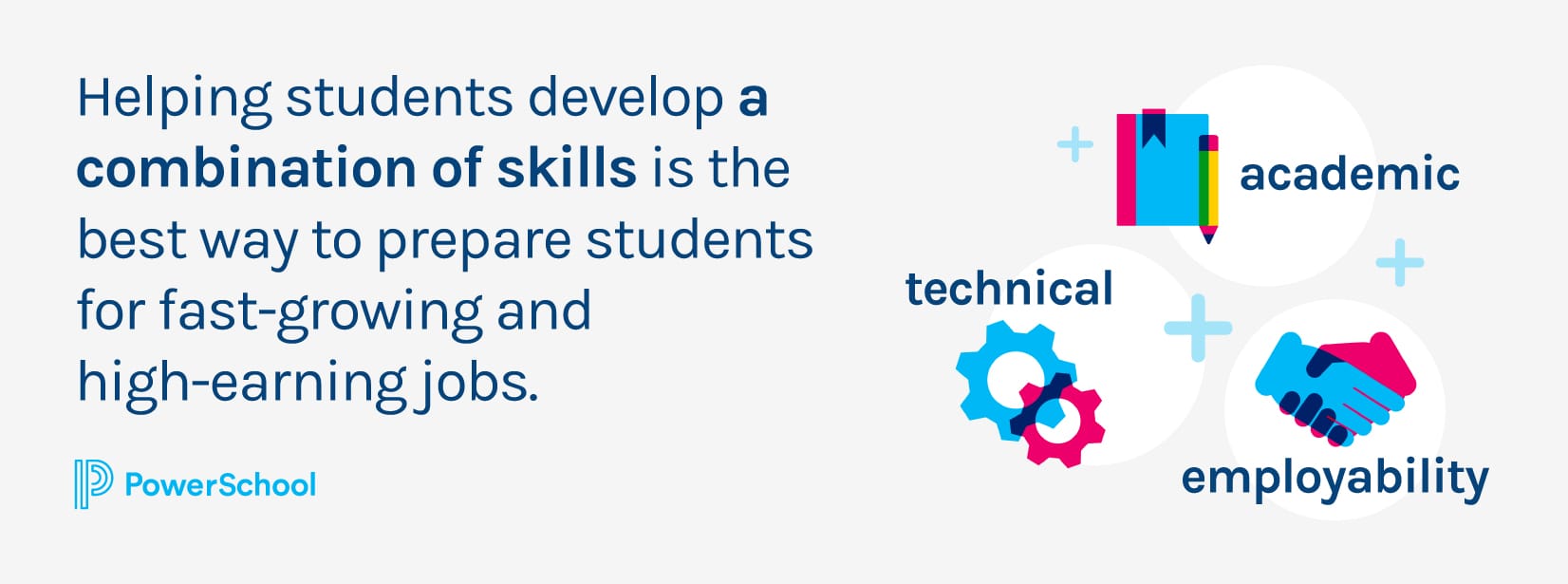
Helping students develop a combination of technical, academic, and employability skills is the best way to prepare students for fast-growing and high-earning jobs. Work-based learning has proven to be one of the best ways to engage students in this work, showing substantial promise for strengthening the connections between education and careers and building complements—and, in more limited cases, alternatives—to traditional college credentials.
How PowerSchool Supports Career Readiness and Workforce Development
At PowerSchool, we serve K-12 education organizations across all states as well as provide compliance reporting in 45 states and five provinces. We reach over 50 million students globally, including over 70% of students in North America.
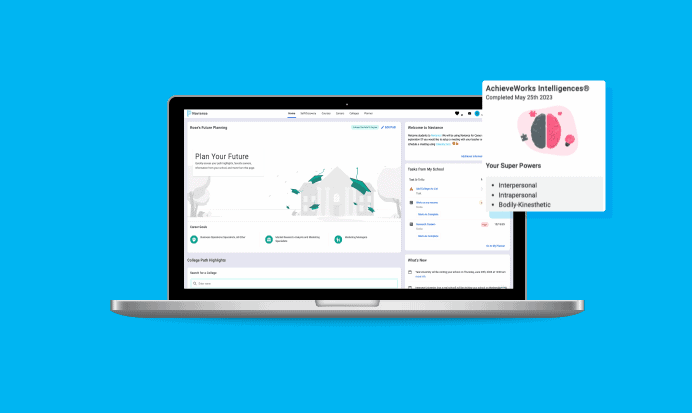
PowerSchool’s College, Career, and Life Readiness Cloud provides the complete support students need to be ready for their futures. With robust tools to drive self-discovery, career pathway exploration, work-based learning, skills development, and education programming and college preparation, students can create a personalized postsecondary plan that helps them reach their goals. With easy access to workforce insights, leaders can be equipped with the data needed to drive education and workforce alignment. As students prepare to enter a rapidly evolving global job market, empower them to acquire the skills, knowledge, and confidence they need to excel in their educational journey and beyond.
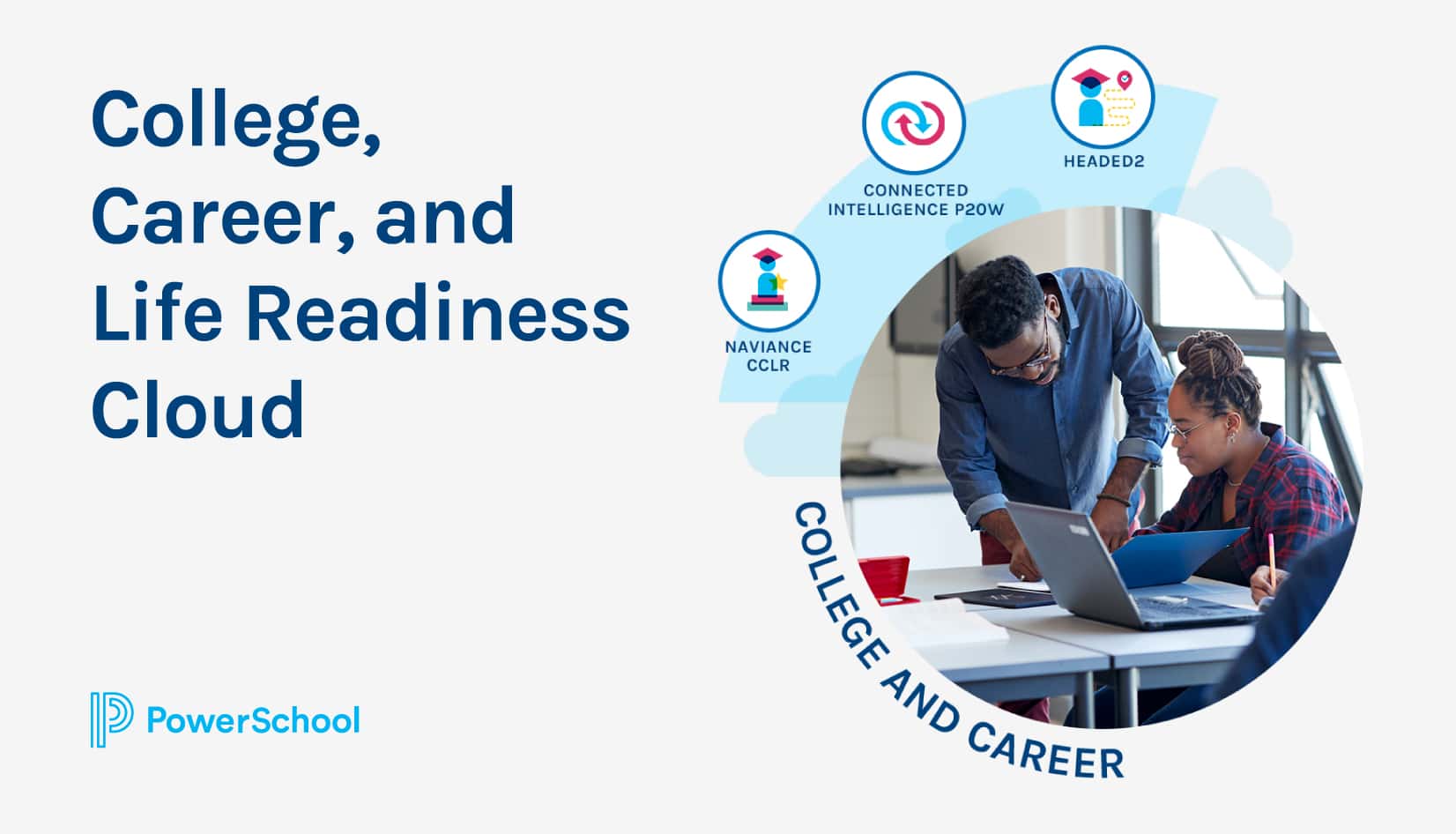
We envision the College, Career, and Life Readiness Cloud transforming the way schools and states collaborate. Learning is a lifelong venture, not something that ends with the receipt of a diploma. The U.S. Bureau of Labor Statistics estimates that the average individual will work 12 different jobs in their lifetime–nearly double that of a generation ago. This “nomad economy” requires working professionals to constantly acquire new skills and take on new challenges. Schools and states can work together to nurture talent and drive the economy forward.
Looking Forward
Having conversations with students about career aspirations helps provide a clear direction and sense of purpose to their education. Students who pursue areas of personal interest have demonstrated better decision-making and reduced dropout rates, and have also reported higher job satisfaction.
It’s easy to lose sight of school’s larger purpose when homework, assessments, and extracurricular activities fill the hours of every day. We’re here to make sure every student is fully supported in reaching their potential throughout their years in the classroom, and for decades after.