In today’s rapidly evolving workforce, education is no longer confined to the four walls of a classroom. Across K-12 work-based learning (WBL) programs, educators are working hard to prepare their students for the future. WBL programs can involve a broad range of activities for students, including career research, job shadowing, and internships. Many work-based learning programs are embedded within Career and Technical Education (CTE) initiatives, providing structured pathways to high-demand careers.
No matter where a district houses a work-based learning program, nearly half of U.S. states have adopted WBL policies. As its popularity grows, WBL is proving to be a game-changer—helping all students build confidence, develop essential workplace skills, and earn recognized industry credentials that give them a competitive edge before they even graduate. This blog introduces the fundamental aspects of WBL, including how it works, how it benefits participants, and how it offers greater access to future opportunities.
What is work-based learning?
Work-based learning is an approach to education that exposes K-12 students to a real-world professional setting. WBL helps students gain skills and discover how their academic lessons apply to the workplace. Students who participate in WBL are supported by school staff and partner employers as they plan for the future.
Work-based learning students gain experience in authentic workplaces, and this helps them explore careers and make more informed choices. WBL also helps schools develop strong partnerships with local communities, since it relies on collaboration between school staff and nearby industry partners to help students thrive.
What are the four types of work-based learning?
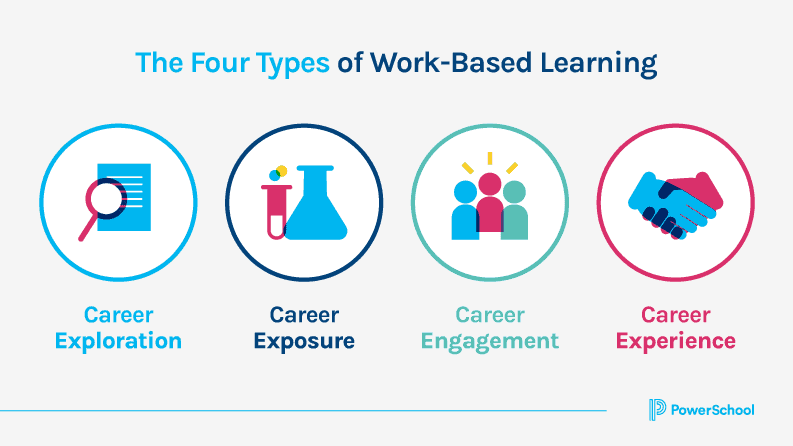
Work-based learning can be categorized into the following four types: career exploration, career exposure, career engagement, and career experience.
- Career exploration helps prepare students for WBL. Oftentimes, career exploration starts before high school, and it can include career days, industry-sponsored school projects, research-based classwork on career interests, and similar activities that help students uncover the day-to-day activities that take place in a given field.
- Career exposure is a type of work-based learning that can include company tours, job shadowing experiences, or other activities. It often involves students going to a workplace and gaining exposure to the way it functions.
- Career engagement places students in a more active role. Engagement activities can include pre-apprenticeships or internships. This type of WBL often involves personalized training for students that allows them to engage with workplace professionals in a hands-on environment.
- Career experience offers students more responsibility than the other types of WBL. With career experiences, students may work as longer-term apprentices or interns. They may receive on-the-job training and actively contribute to broader employer goals.

On Demand Webinar: Prepare today’s students for tomorrow’s goals
Discover how Naviance CCLR is smarter and more powerful than ever before.
Watch NowWork-based learning (WBL) can be a lever to advance equity and economic opportunity for young people. Through WBL experiences such as internships and apprenticeships, young people can learn the technical, academic, and interpersonal skills they need to function in a workplace—an environment they will enter in just a few years and where they will spend decades of their lives.”
The Brookings Institution
Who does work-based learning benefit?
WBL benefits schools, communities, and students alike. A report on work-based learning by Brookings highlights the ways that it can advance equity for young people:
Additional advantages for students include:
- Gaining insight into growing industries and developing relevant skills
- Learning how academic preparation connects to real jobs
- Exploring different careers and understanding skills and interests
- Practicing teamwork, problem-solving, and other soft skills
- Knowledge of additional post‐graduation employment opportunities
- Possibility of paid positions for students that can offset costs for families
Benefits of WBL for schools include:
- Gaining knowledge on local in-demand careers helps them better prepare students
- Connecting learning to real-life experiences to make it more meaningful
- Tailoring teaching methods to fit individual learning styles
- Increasing student retention rates in schools
- Enhancing faculty interaction with the business community
What are some work-based learning opportunities related to program areas?
Work-based learning helps students learn about the day-to-day experiences of employees who work in their particular fields of interest. As students connect with professionals and gain hands-on experience, they are more engaged in schoolwork and better prepared for future success. No matter where a student’s interest lies, WBL can offer experience and support that helps them gain valuable and authentic experiences.
Here are two examples of work-based learning opportunities related to program areas.
Electrician work-based learning opportunities related to program areas
Work-based learning opportunities can help K-12 students prepare for careers in skilled trades like the electrical industry. Programs for students interested in electrician work-based learning opportunities often combine classroom instruction with practical, hands-on experience at local businesses, giving students the chance to apply skills in a real-world settings while earning academic credit. These WBL programs often prepare students for entry into postgraduate career programs and professional licensure in their chosen field.
When school leaders foster student interests in the skilled trades, they play a critical role in fostering student success and economic equity for the future. In the case of electrician WBL programs, the future is bright. In fact, the U.S. government indicates that the demand for electricians is expected to grow by 9% nationally, with some states expecting 33% growth.
Work-based learning opportunities for audio video students
AV production is also offered frequently in K-12 WBL programs. Work-based learning opportunities for audio video students can include learning about cameras, microphones, and editing tools that are used create videos or record events. With these experiences, students also develop their soft skills, especially when it comes to teamwork and problem-solving.
The AV field is expected to grow by 9-10% in the coming years, and work-based learning helps students prepare for these opportunities by connecting them with professionals who offer the hands-on experience that makes school exciting and prepares students for future success.
How PowerSchool can help
No matter which work-based learning opportunity a student is interested in, PowerSchool is ready to help. In 2025, PowerSchool launches a comprehensive work-based learning module in Naviance CCLR that aligns students’ classroom learning with real-world opportunities to enhance their skills, employability, and industry connections.
The new module includes everything a district needs to manage a successful work-based learning program:
- Employer/Opportunity Management: The new employer portal with Naviance integration helps with document management to meet state requirements.
- Opportunity Discovery: WBL opportunities and personalized suggestions are integrated throughout a student’s experience.
- Engagement Tracking: Our comprehensive work-based learning management system includes tracking for engagement, hours, volunteering, and digital signatures.
- Reporting/State Mandate Tracking: Reporting tools for engagement and hours tracking that aligns data with statewide mandates.

Transform your students' paths to success
Prepare students for the future with personalized CCLR tools.
Get a Demo