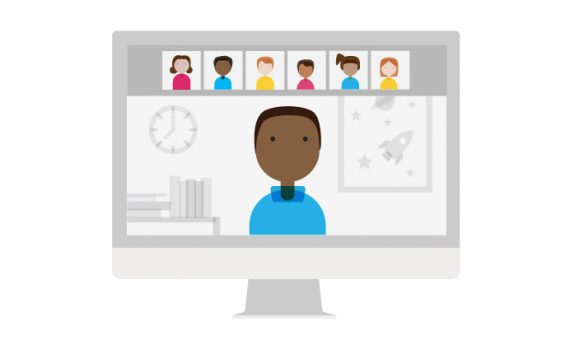
As students, parents, and educators alike have witnessed over the last school year, we’re living in a time of rapid educational and technological change. Right now, educators have the opportunity to empower students to fully participate in a connected, high-tech society by developing an instructional strategy using technology.
Using technology in teaching and learning enables teachers to make the fundamental structural changes that can accelerate learning gains during the next school year and beyond. Here are five actionable ways to develop an instructional strategy that uses technology to manage, facilitate, and enhance learning.
1. Technology Should Complement the Space Where Learning Takes Place
One of the first things that students, parents, and educators notice about a classroom is the physical organization of the learning environment. Often, the one-room schoolhouse setup is the default arrangement. However, if the goal is to facilitate student learning rather than placing the teacher at the center of the classroom, it’s time to reconsider how you set up the learning space. Start by thinking about all the ways to set up your physical space for flexible use, communication, and collaboration, while still preparing students to achieve specific educational objectives.
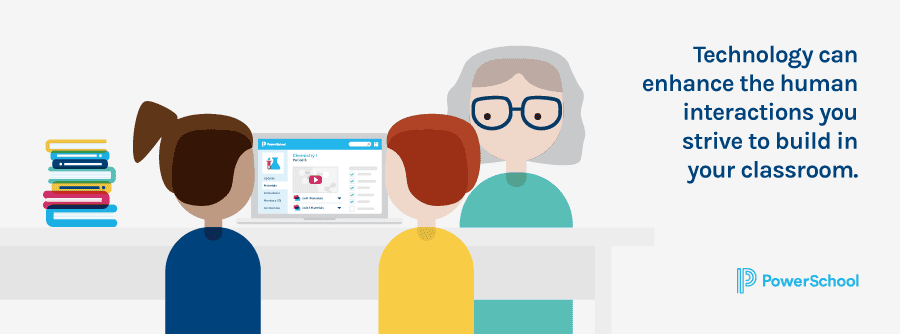
In some cases, monitoring all student screens simultaneously or having a flexible seating arrangement can help create the best environment possible for effective classroom instruction. There are many options to use physical space to promote thinking and collaboration, including maker spaces, station-based, a mix of geometric shapes, and a Socratic seminar or fishbowl approach. It is easier to figure out how technology can enhance and not detract from the human interactions you strive to build in your classroom with an intentional setup.
2. Keep Lessons Practical and Grounded in Real-Life Situations
John Dewey, a significant educational thinker during the Progressive Movement, argued that education should be personally meaningful and participatory and should prepare students to serve a productive role in a democratic society.1 That spirit lives on in today’s classrooms in instructional strategies that use technology to drive student engagement, project-based learning, student accountability, and more.
For example, when teaching an environmental science lesson about biodiversity, education technology (edtech) allows students to take virtual field trips or share data and resources with others both locally and globally. Or, for lessons on polling and calculating the margin of error, a learning management system (LMS) can make it easier to develop and distribute an internal survey for students to analyze, report results, and demonstrate the underlying mathematical concepts.
3. Establish Clear Expectations and Objectives Early
Opening up the computer lab and passing out devices before going over objectives and expectations can use valuable learning time. It’s essential to prepare students for learning with some anticipatory activities that prepare students for the technologically enhanced instruction to come. Providing continuity from the last lesson and getting students ready for the next task is a tried-and-true way to focus attention and engage the class before putting devices in their hands.
Let’s say the lesson is on social revolutions, and you want the students to research the reasons for sudden changes in societies. A quick brief or class discussion on economic, social, or cultural revolutions that the students may already be familiar with to start the lesson plan would be an effective way to set the lesson’s objectives and promote student engagement. Edtech tools such as presentation software and discussion boards in an LMS can be helpful in this type of instructional strategy.
4. Collaborating for Success
According to the Center for Teaching Innovation at Cornell University, there are many well-known benefits of collaborative learning, including developing higher-level thinking, exposure to diverse perspectives, and preparation for workplace interactions.2 The good news is that, with the help of edtech, collaborative learning in the classroom can be more engaging and productive.
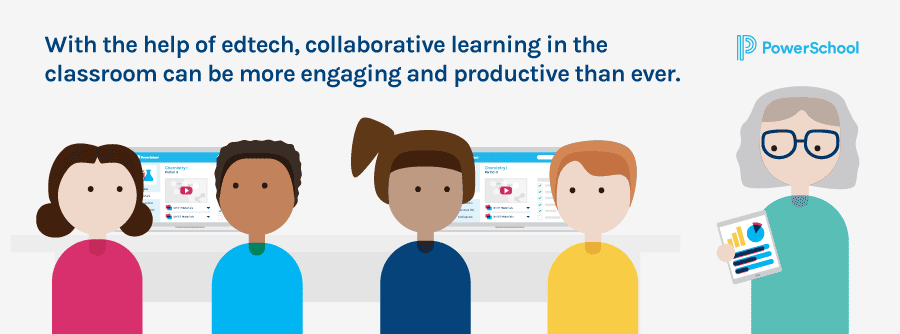
An LMS can be set up for both synchronous (real-time) and asynchronous collaboration, depending on class objectives and the needs of your students. For example, let’s say one of your goals in an English language arts class is for students to provide substantive, specific peer feedback to one another and then make appropriate revisions based on that feedback. Instead of the traditional trading of papers and handwritten comments, an LMS can promote two-way conversation about their work, make comments, share ideas, respond to each other, and edit the product in real-time.
5. Build Character with Digital Citizenship
When integrating technology into your instructional approach, whether small-group learning, a class role-playing exercise, or an independent study project, it’s important to weave in lessons geared specifically toward relevant digital citizenship targets, such as those included in the ISTE Standards for Students. Teaching digital citizenship skills offers a student-centered and proactive approach that utilizes Positive Behavior Interventions and Supports (PBIS) in the classroom.
For example, in exploring characterization, students can compose a series of tweets and replies as Julius Caesar and discuss the concept of his digital identity. Or students can practice citing sources while creating an infographic about the causes of the American Civil War.
Enhance Instructional Strategy with Technology
The vision of an impactful 21st-century classroom includes meaningful integration of technology to improve instruction and personalize learning. Take your instructional strategies to the next level by selecting edtech tools that will best meet the needs of students in mastering the desired content, concepts, and processes.
With the right technology that supports teaching and learning, you’ll have the tools to develop instructional strategies that accelerate learning gains. Whether using social media, features of your LMS, presentation software, or other digital tools, incorporating technology in teaching and learning has a huge potential to engage students and make it easier for them to process, organize, and present their knowledge.
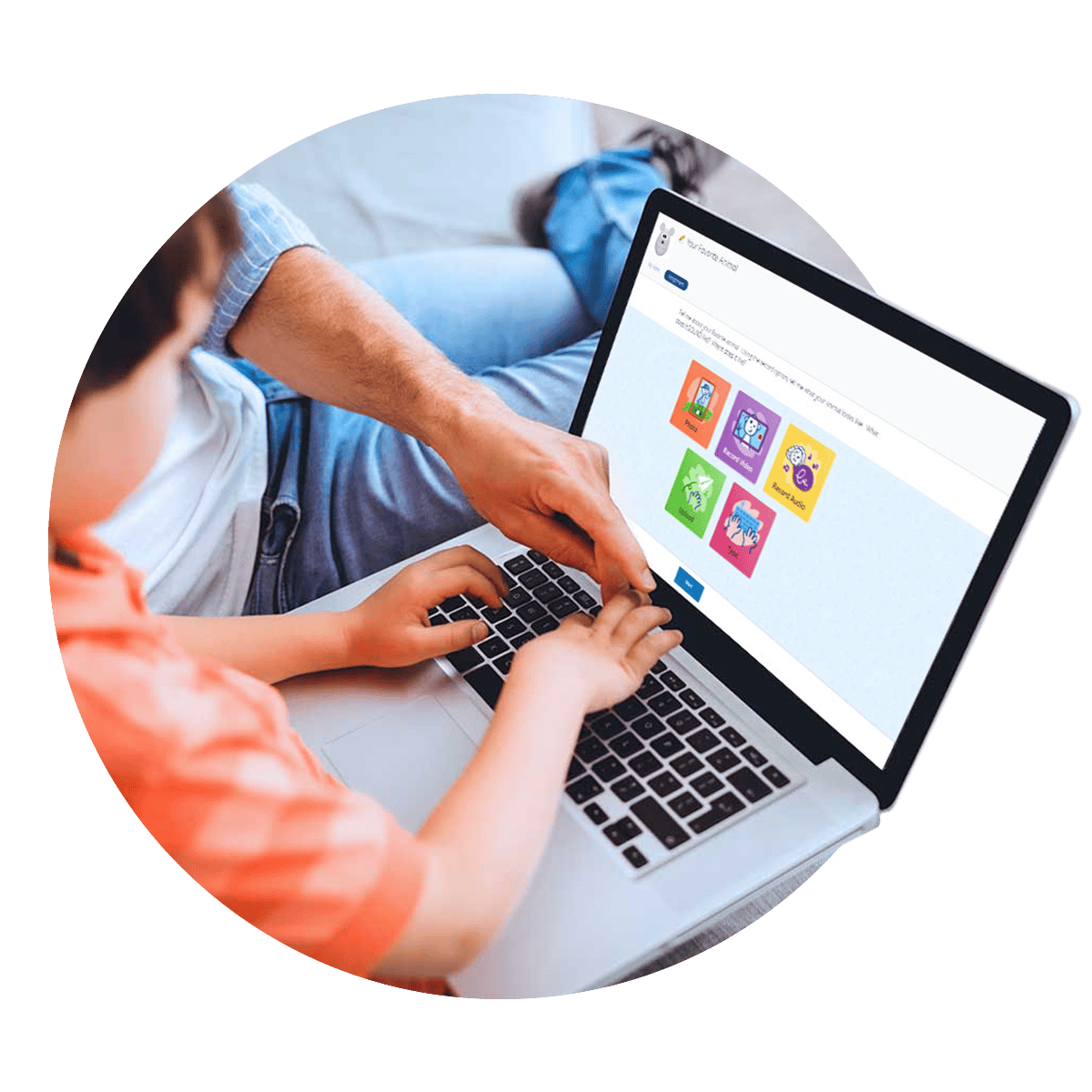
Student Success Resource Kit
We’ve compiled resources about applying reliable digital tools to support student growth and performance to ensure learning continuity.
Get Your Copy- Schoolhouse Pioneers, https://www.pbs.org/onlyateacher/john.html
- Collaborative Learning, https://teaching.cornell.edu/teaching-resources/engaging-students/collaborative-learning