Written by
Dennis Pierce
Numerous studies confirm that when K-12 education technology is used effectively by teachers, it can transform teaching and learning. Not only can achievement soar, but students can also learn important 21st-century skills that prepare them for success in a global economy.
Here are five critical ways that K-12 technology supports better student outcomes.
1. Education Technology Tools Can Make Learning More Active and Engaging
Technology enables students to take an active, hands-on role in their education, rather than sitting passively and taking in new information. Equipped with a digital device and internet access, students can search for information, create and compose original works, collaborate with their peers, and participate in project-based learning.
When students take a more active and engaged role in their learning, they are thinking, creating, sharing, and constructing new knowledge. In short, students are taking ownership of their learning.
2. Technology Gives Teachers Better Insight into Students’ Learning Needs
With innovations in education technology, it’s easy for K-12 teachers to assess their students’ skills and knowledge without taking much time away from instruction. This allows teachers to check for student understanding more frequently by building opportunities for quick, formative assessment into lessons.
Using an item bank aligned with state standards, for instance, teachers can quickly create and administer assessments that home in on students’ abilities. They can then see, at a glance, which students are meeting a certain standard and which need additional support.
Sophisticated analytics tools can help teachers make sense of this information using charts and other easy-to-visualize graphical displays. Teachers can see trends over time and can get up-to-the-minute information for the entire class or for individual students, allowing teachers to make smarter instructional decisions that lead to better outcomes.
3. Technology Can Help Drive Personalized Learning
Edtech helps teachers deliver truly personalized learning that is targeted to the needs of every student while also giving students a voice and choice in what, how, and when they learn.
No two students learn in exactly the same way or at the same pace. When educators are teaching to the whole class at once, they must teach to the middle, delivering a lesson intended for the average student. This ignores the needs of students who are struggling to keep up or who are ready to move faster.
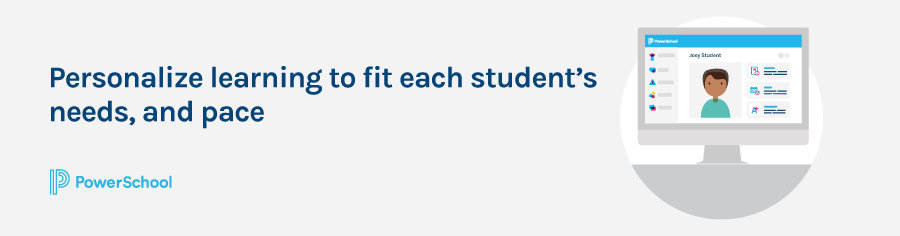
The most effective teachers find ways to address those students’ needs as well, but it takes a great deal of work to differentiate instruction. This is where technology can help.
Technology makes it much easier for teachers to identify the learning needs of each student, as well as create and assign lessons or resources to individual students or groups of students to meet those needs. What’s more, blended learning environments—supported by a high-quality learning management system (LMS)—allow students to work online at their own pace. Students are no longer held back by a classroom that moves at a single pace, which means they are no longer bored and, instead, are more engaged in their learning.
4. Technology Supports Teacher Collaboration
K-12 technology allows teachers to connect with each other, exchange lessons and resources, and collaborate virtually through an LMS or other online platform for sharing information.
Creating lesson plans and finding appropriate instructional resources to support these plans can be very time-consuming. When teachers can exchange resources and ideas from one another online, their planning time is reduced tremendously—allowing them to focus more time and attention on students.
Sharing and discussing instructional strategies with colleagues is also invaluable. For instance, teachers can look at student data collaboratively to develop common solutions for how they can meet students’ needs more effectively. This work can take place through an online platform or in face-to-face meetings, with teachers supported by robust data analysis tools.
5. Technology Helps Foster Parent Engagement
Technology helps teachers and administrators keep parents informed about their student’s education, which leads to greater family involvement in the learning journey.
Parents often lead busy lives as they try to juggle work responsibilities and family obligations. But with today’s digital classroom, parents can get instant updates about their child’s grades, attendance, school projects, special events, and more with mobile apps tied directly to a student information system.
Parents can receive emails, text messages, and automatic notifications from their child’s teachers, and they can access an online parent portal that is updated in real time and available at their convenience. The best part is that this communication doesn’t just flow one way. Instead, parents can ask teachers questions about their child’s education and get personalized feedback.
About Dennis Pierce
The former editor in chief of eSchool News, Dennis Pierce, is now a freelance writer covering education and technology. He has been following the edtech space for over 20 years.
Learn More about Supporting Student Outcomes
To learn more about how K-12 education technology can lead to better student outcomes in each of these five ways—including what the research says about the efficacy of these approaches, as well as examples of these strategies in action—download this free whitepaper, “How K-12 Education Technology Supports Better Student Outcomes.”