A flexible budget allows you to pivot and address evolving needs during challenging times.
K-12 finance leaders are used to dealing with disruptions daily. While the last few years brought unprecedented changes, like building closures, critical staffing shortages, and new federal funding streams, flexibility is always needed. Systems, practices, and budgets that can adapt enhance a school or district’s future-readiness.
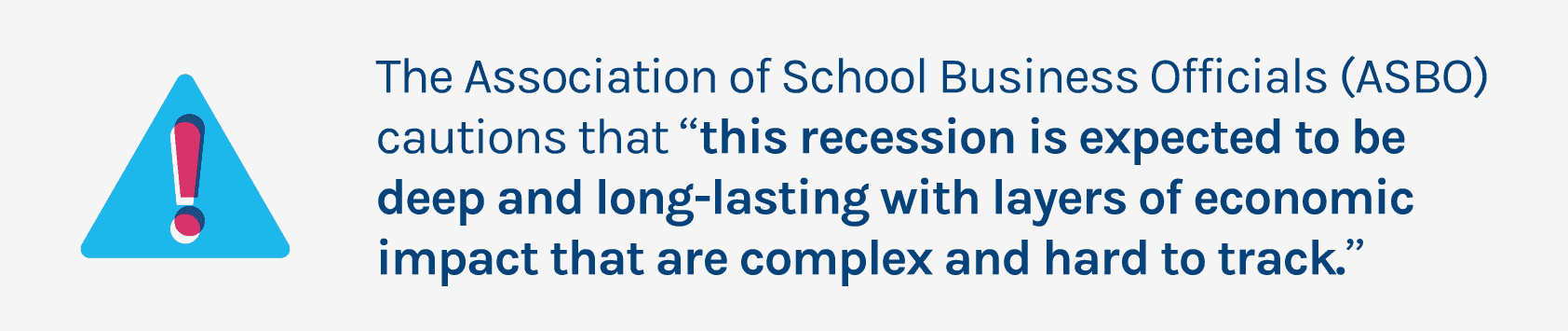
According to “Navigating—and Communicating—Economic Turmoil,” from the Association of School Business Officials (ASBO) International, education faces a series of related ills: an unpredictable economy, drops in sales tax revenue, and widespread job loss, among others. As a result, “states have fewer funds to share with schools and more competing priorities such as contact tracing and temporary hospitals. More students’ families are financially unstable and in need of support, (and) pension funds are lagging.”
 Many K-12 districts also see declining student enrollment. The National Center for Education Statistics reports that public PK-12 schools saw enrollment decline by more than 1 million students from 2019 through 2021. In New York City alone, for example, student enrollment dropped by 8.3% from 2020 through 2022. Reductions in enrollment add uncertainty that “makes budget planning difficult,” according to the Education Dive article, “Dipping enrollment, funding implications worrying district leaders.” “Because of these fluctuations, districts will likely need to redo their budgets several times throughout the school year,” experts have warned. “Budget cuts could lead to furloughs and layoffs.”
Here’s how a flexible budget helps K-12 districts prepare for future challenges
All of this adds up to the importance of having flexibility in your district budget so you can quickly pivot and refocus funds on changing needs. According to Sean Coffron, Instructional Technology Training Specialist at Virginia’s Manassas City Public Schools, “having a flexible budget helped with critical decisions in our move to a 1:1 school and the creation of a 1:1 environment and the development of an alternative education program.”
Districts can increase the flexibility of their budget by maximizing resources and cutting unnecessary expenses, getting creative with new sources of funding, and improving real-time visibility into spending and revenue with an integrated, digital ERP system to streamline finance and HR functions.
Tips to make your K-12 budget more flexible:
1. Realistically evaluate your needs and prioritize spending appropriately
Prioritize spending by identifying your district’s most critical needs and determining which expenses are non-negotiable, such as salaries, necessary infrastructure improvements, and expected upkeep costs. However, it’s also essential to examine areas where spending may not be optimized, such as technology systems.
Many districts purchase fragmented systems that require significant maintenance and configuration, limiting the value they provide. Evaluate your technology needs honestly and determine whether your current systems deliver acceptable ROI and their realistic capacity for improvement. Often, replacing legacy systems with a modern, integrated solution offers better ROI in the long term with increased capabilities, simpler upkeep, and better reliability.
2. Find new sources of funding
According to the Center on Budget and Policy Priorities, on average, 46% of school revenues in the U.S. come from state funds, with local governments providing another 45%, and the rest from federal government sources.
With those funds either locked or potentially falling, it’s time to look elsewhere to boost budgets to add flexibility.
“As an administrator and tech coach, I’ve created budgets for school projects,” says Coffron. “I believe that the most important aspects of the project are having a clear understanding of the needs of stakeholders, having a good idea of the flexibility of the funding sources, and a sound understanding of best practices and resources that are available so there are options.”
In addition to potential CARES Act funding, other federal programs like Title I, Title II, Title III, Title IV, Title V, Title VI, and Title X, Part C can provide funds based on specific needs. See the Sources of Funding for School Districts for more details, including relevant you should be asking for funding edtech software.
For state and local funding, outside of the money you already receive, many states appropriate funding for K-12 initiatives that go beyond the day-to-day, including technology adoption, SEL programs, STEM initiatives, special needs projects, and more. Keeping track of legislative sessions and bills that include funding for education programs can provide opportunities. And since these types of grants often hinge on specific goals related to the category, districts with solutions in place to capture and measure data related to those goals will necessarily be at an advantage when applying for such funding.
You can also use your network for in-kind donations, donated expertise or services, or partnering opportunities that may free up funding dedicated to those areas.
 3. Reduce administrative costs to direct more resources to high-impact initiatives
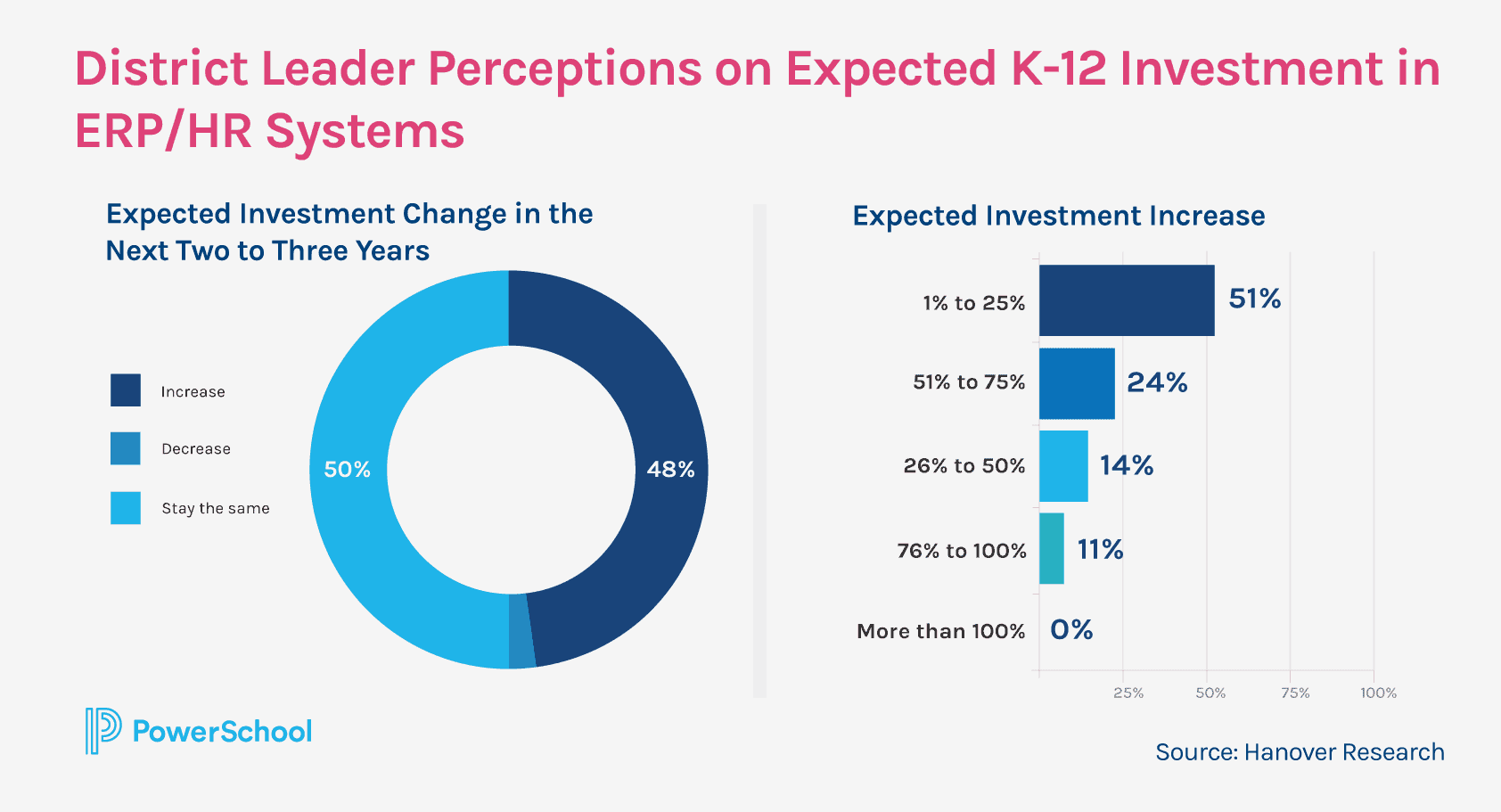
In today’s K-12 districts, managing tight budgets and finances is a daily struggle for many HR and finance leaders. For some, the stress even keeps them up at night. Reducing administrative costs can free up more funding for programs that advance your district’s strategic objectives.
Use technology to automate processes, such as payroll and budget tracking, to save time and money. Automation can also improve accuracy, removing opportunities for typing errors and misread figures when re-entering data into multiple systems.
A holistic ERP system can transform your business and HR operations, while giving you access to data that drives better decisions about budgeting and resource management. What’s more, ERP systems that connect with your other district products can lower your total cost of ownership and deliver further ROI through the following benefits:
- Save time and improve productivity
- Increase capabilities with continued use
- Cut costs through more efficient resource allocation
- Reap long-term financial rewards of lower turnover among more effective educators
- Improve state reporting
- Ensure future-readiness
- Strengthen data security
- It’s better to bend than break
Maintaining a flexible budget keeps you agile and able to adapt to any situation and challenge you face. Plus, it alleviates unnecessary stress worrying about how you’ll keep operations going as future challenges inevitably arise.
But getting there can be a challenge in itself. That’s why working on a few simple, yet critical, steps can help. Find and eliminate hidden costs so you can maximize your resources. Look at new sources of funding outside of traditional state, local, and federal funds.
And finally, consider upgrading and unifying your finance and HR system with an end-to-end administrative solution. With a comprehensive ERP system that connects to your other edtech products, you gain the advantage of shared data for a complete financial view, streamlined processes, increased efficiency, and improved productivity.
Learn more about funding sources
In this eBook, find out how schools and districts tap into new revenue to support continued investment as federal, state, and local education funding shrinks.