

Tackle uncommon schedules in the upcoming school year
The importance of your master schedule can’t be underestimated. While only a few people may have hands-on involvement in building it, it takes input from all stakeholders to satisfy the main objective: giving students every opportunity to discover their passion for learning while providing them with the experiences needed to prepare them for the future.
While building your master schedule is always a challenging puzzle, continued concerns over COVID-19 and how schools will address the health risks it poses to students and staff have created the need for uncommon schedules.
Every district and each individual school must figure out which plan is best for them. But what doesn’t change is schools needing the ability to be resilient and agile to deliver education. Starting from a top-down approach, you can make more informed decisions and build a master schedule that works best for you.
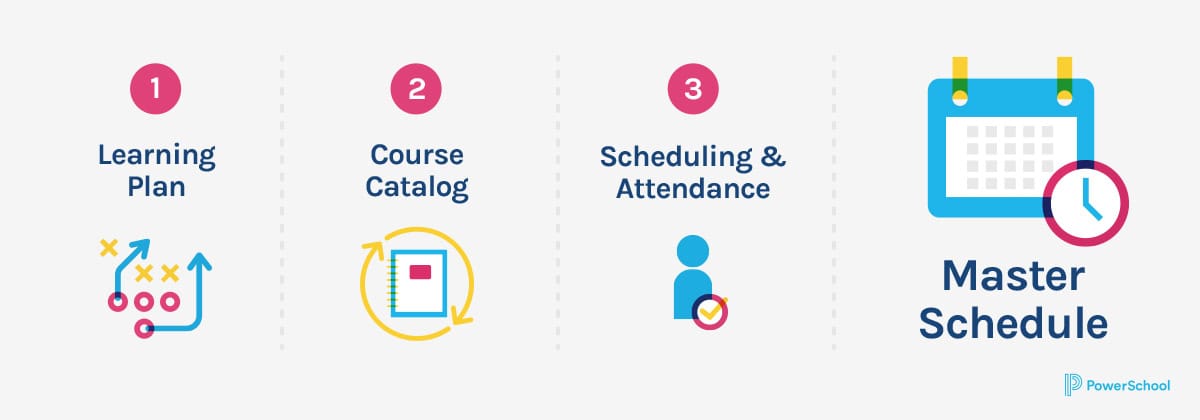
Decide What Your Learning Plan Will Be
The first step toward building your master schedule is deciding what learning plan to move forward with: brick and mortar, distance learning, or a blended learning hybrid. Because campuses aren’t designed for social distancing, most brick-and-mortar schools are a poor option without major intervention and retooling—including reducing the number of students in the building with smaller class sizes, staggering start times, performing routine health checks, planning A/B days or AM/PM schedules, and other similar safeguards.
Conversely, full distance learning creates issues with promoting student accountability, makes certain types of courses more difficult to teach, and deepens equity concerns. Even under the best circumstances, distance learning is not a substitute for in-school education.1
This leaves many schools grappling with the third choice: a blended-learning hybrid approach. This allows for more flexibility and customization in figuring out how to balance in-person instruction with student and staff safety concerns. It builds in the ability to pivot quickly to remote learning as the year unfolds if an individual gets sick or the community has an outbreak. It also leaves open the possibility to return to full-time in-person instruction if things improve.
Regardless of which option is right for your school or district, planning ahead and having meaningful discussions about what-if scenarios will help minimize disruptions and ensure you’re prepared.
Analyze Your Course Catalog and Consider Necessary Revisions
Once you’ve decided on a learning plan, school and subject-matter experts must come together and look at current course offerings to make adjustments based on the method chosen. Revisions of standards due to learning loss from last year will play a large part in determining which courses take precedence.2
Instructional changes due to individual courses being unable to proceed as normal—like physical education or hands-on science labs—will need to be considered as well. Will there be some sections taught in-class only, or are there ways to make courses available asynchronously in case some students can’t or won’t come to campus for instruction?
Based on those answers and other school- and subject-level considerations, the course catalog and structure will require revisions before the master schedule can be built.
Build the Master Schedule with an SIS That Supports Your Scheduling and Attendance Needs
Now that the course catalog is set, a fully customized master schedule with the flexibility to adjust for rapidly evolving situations at the school and classroom level must be drafted. It is crucial your SIS is equipped for this mobility so that you are sure that you can break the pedagogical model and re-define the process.
Your student information system should give administrators the ability to create robust and flexible schedules that can switch between in-person, blended, or remote learning options throughout the year. A comprehensive attendance page can allow your teachers to easily track attendance regardless of whether students are learning at school or at home.
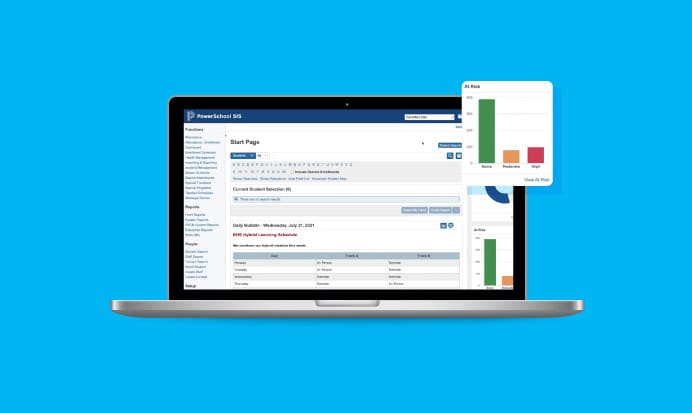
PowerSchool SIS Master Scheduler automates the scheduling process with a simple, flexible builder. Designed to fit a variety of schedule types, parameters, and constraints, it saves staff time in building schedules and minimizes conflicts or experiments with scheduling scenarios without fear of losing previous schedules. Helpful reports assist with building the master schedule, ensuring that you satisfy as many student course requests as possible within constraints and course rank.
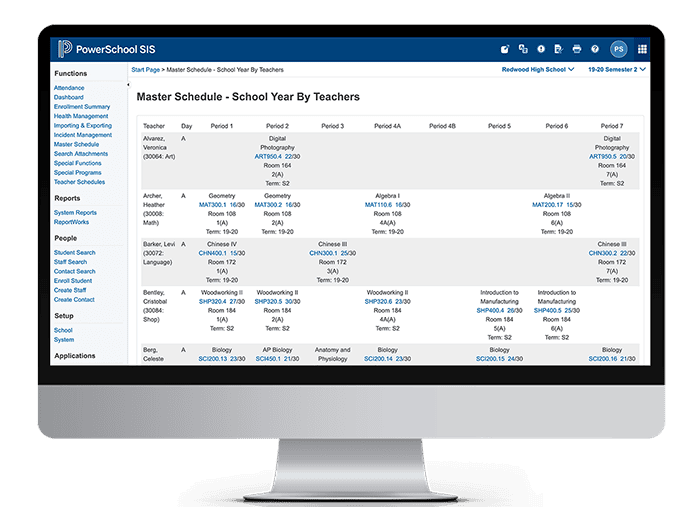
Master Scheduler allows for a single master schedule to be created. The master schedule can be combined with attendance tracks to better support learners as they navigate any learning plan. Tracks can differentiate at-home distance learners, in-class learners, and hybrid learners—so as schools continue to pivot due to outbreaks or changes in policy, the master schedule can remain the same.
No matter which learning plan your district or schools decide on, the right SIS will enable you to create a master schedule that helps you adapt throughout the year.
1The Education Trust, “10 Questions for Equity Advocates to Ask About Distance Learning,” May 7, 2020. https://edtrust.org/resource/10-questions-for-equity-advocates-to-ask-about-distance-learning/
2Edutopia, “School Leaders Debate Solutions For an Uncertain 2020-21,” April 22, 2020. https://www.edutopia.org/article/school-leaders-debate-solutions-uncertain-2020-21
Ready to learn more?
See how PowerSchool SIS Master Schedule can be configured for your unique needs, or register for an on-demand product demo.