

An LMS supports personalized learning for your students and staff
When resources are scarce, budgets are tight, and demands are enormous, productivity and data can drive decision-making as much as the evolving needs of students. While a learning management system (LMS) may not be the top priority in those circumstances, it can help relieve the challenges that overwhelm district administrators.
What is a learning management system (LMS)?
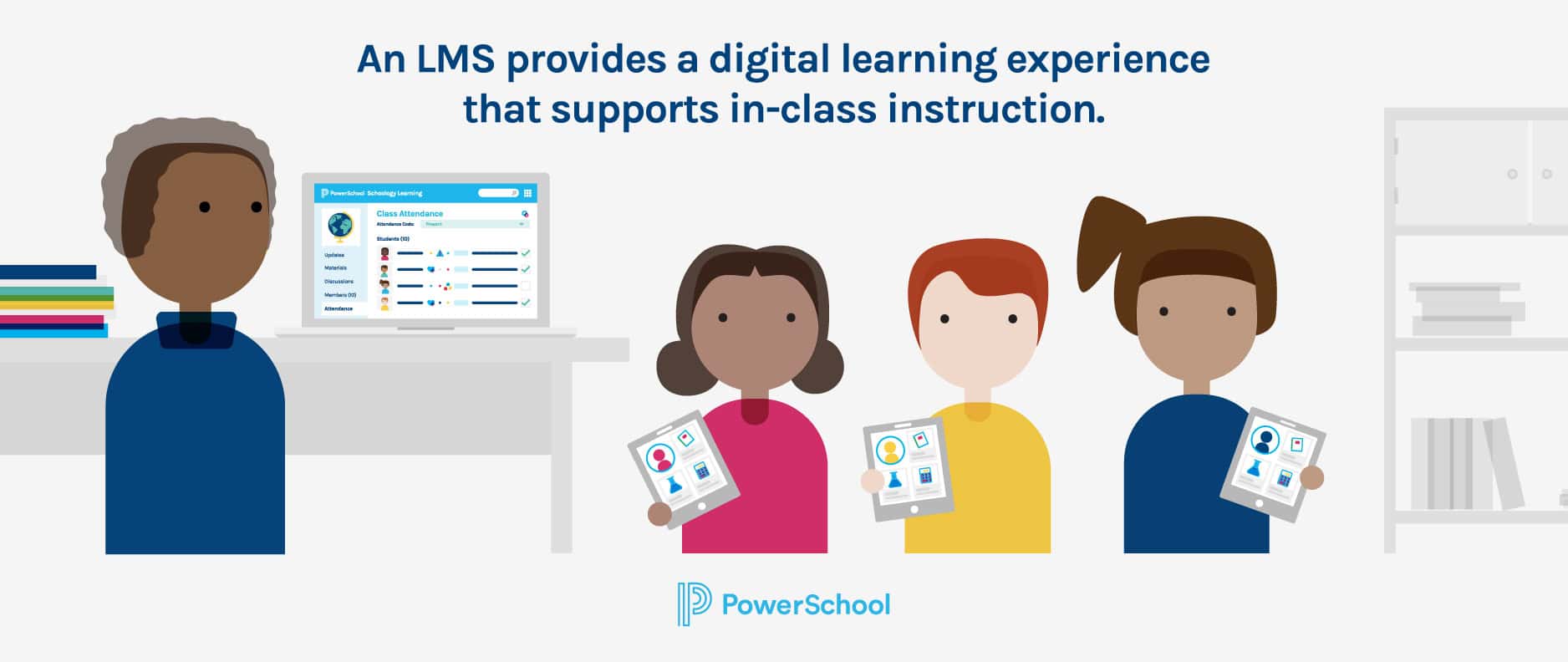
An LMS is a comprehensive teaching and learning platform that connects students, teachers, parents, and administrators. To some extent, an LMS is what each school or district wants it to be, appealing to users in different ways. It can simultaneously contain areas for academic courses, staff development, extracurricular groups, and even spaces specifically designed to support parents. An LMS creates the foundation for personalized, digital learning experiences, supports in-class, hybrid, and virtual instruction, and stores and organizes course and classroom resources and data.
For example, LMS users can review standards-based performance and student participation data to better support students’ ever-changing instructional needs. Other everyday uses of LMS software include:
- Deploying and tracking learning initiatives
- Providing synchronous and asynchronous learning activities
- Allowing educators to view and edit classroom data
Why does my school need an LMS?
An LMS offers easier adoption, training, support, and rollout for entire organizations with one integrated platform. The flexible and reliable system allows teachers to access all their course data in one place, which helps them better personalize instruction and ensure that the school is prepared to pivot more easily while minimizing disruptions when inevitable changes and challenges in teaching and learning occur.
How will our teachers benefit from an LMS?
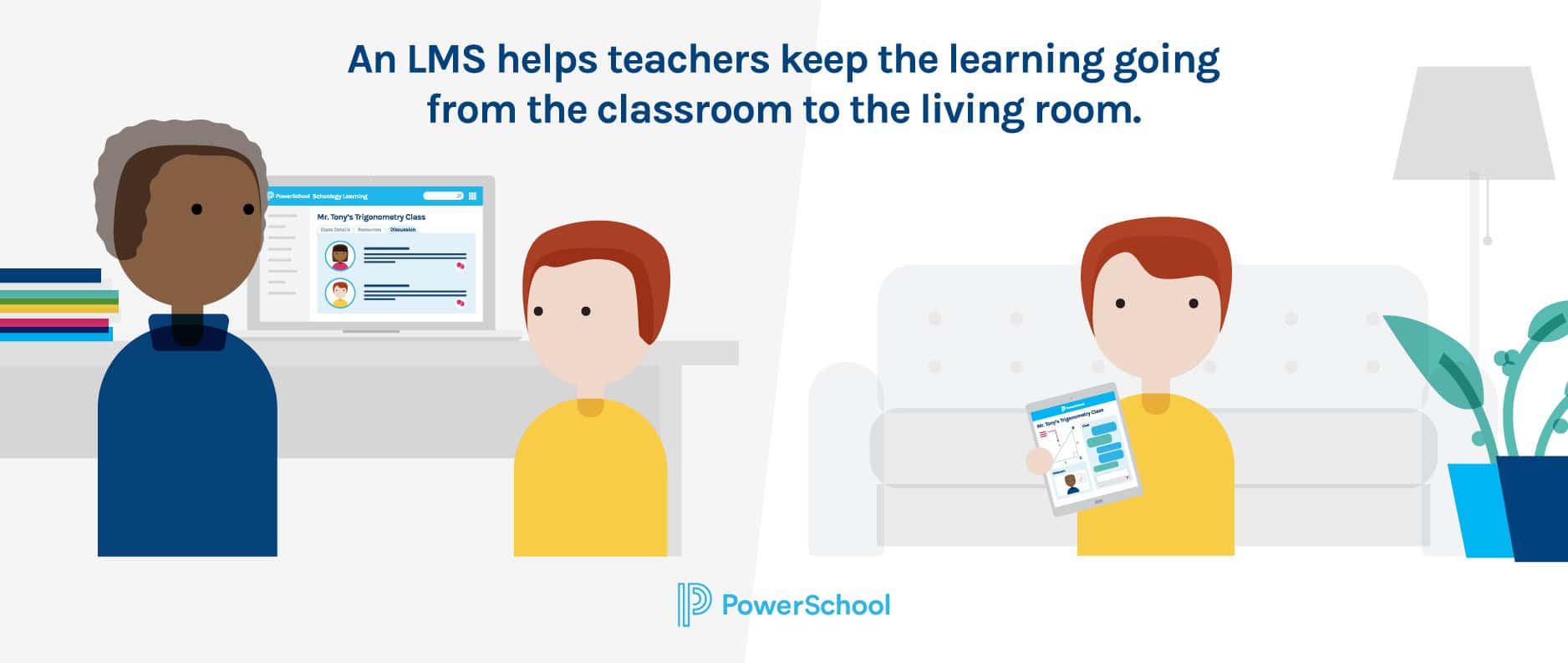
An LMS relieves teachers from much of the manual paperwork burden to help them keep learning going from the classroom to the living room. Not only does an LMS make teachers more efficient, but it also empowers them with tools to do more.
The typical features of an LMS can allow teachers to monitor progress, track student time on tasks, alert educators to any developing issues, and provide real-time glimpses of student performance. A teacher can easily reference performance data with an LMS to make for more effective collaboration on student growth.
How will our students benefit from an LMS?
The LMS is a powerful tool to engage students with a personalized approach in class, at home, and in blended learning environments. Using personalized learning technology, an LMS can deliver flexible, mastery-based, tailored instruction that improves student performance and empowers educators throughout your organization.
Meet the needs of every student throughout your district by equipping your staff with a K-12 learning management system designed to accelerate learning gains. As the leading K12-focused LMS, PowerSchool Schoology Learning empowers schools and communities to keep the learning going for students and staff with intuitive tools that enable teachers to build and deliver personalized instruction, increase communication, collaboration, and access interactive staff development. Schoology Learning also allows teachers to build and deliver personalized instruction, improve communication and collaboration, and access interactive staff development.
Student Success Resource Kit
We’ve compiled resources to help your school or district address unfinished learning, deliver personalized instruction, and better prepare students for future success.
Get Resource Kit