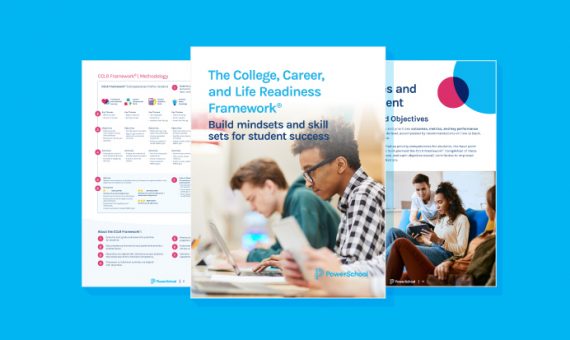
Our education system asks students to make important decisions about their future before they’ve left their teenage years behind. To think about their futures clearly and comprehensively, students benefit from support that encourages them to self-reflect and assess their natural talents, their interests, and their sources of motivation. Taking inventory of themselves helps students refine their postsecondary goals, align their strengths and curiosities with career paths, and begin structuring a life that feels purposeful and fulfilling.

Why Future Planning Is Important for Students
According to the results of the PowerSchool Naviance CCLR 2022 Student Survey, almost 25% of surveyed seniors weren’t planning to attend college immediately after graduation. Nearly half of the students within that group were still undecided about their plans in the spring of their senior year. While all students benefit from early, focused, and supportive future planning, this group of students in particular is more susceptible to encountering academic, economic, and social barriers that limit their opportunities.
When students take a relatively prescriptive set of courses to satisfy graduation requirements, they might not have spent time thinking about what truly interests them and how they could apply their skills to a future career. Giving students the time and resources to discover themselves—their curiosities, their passions, and their strengths—helps them develop a future plan that feels authentic to who they are.

How to Help Students Discover Their Strengths and Interests
Self-assessment tools are useful tests that reveal insights about our personality, our learning style, and our social habits, among other qualities. The self-discovery tools in Naviance CCLR are designed to help students build a comprehensive portrait of themselves so they can begin envisioning a future plan that draws on their strengths, skills, and interests.
Naviance CCLR offers five self-discovery tools for students. The assessments are provided by trusted industry leaders such as Gallup and AchieveWorks so schools and districts can ensure students are receiving vetted and research-backed content.
5 Self-Assessment Tools for Students:
- Gallup’s Clifton StrengthsExplorer®: This strengths-based assessment evaluates 34 CliftonStrengths themes, which are then broken down into four separate domains: strategic thinking, relationship building, influencing, and executing. Students receive a personalized report identifying their talents.
- Career Cluster Finder: The Career Cluster Finder helps students identify specific career clusters that match their interests. Students learn how well each of the 16 National Career Clusters fits their current interests and qualities.
- Career Interest Profiler: Career Interest Profiler captures interests to help students identify personality traits and suggests careers that they might be interested in based on data from the U.S. Department of Labor. The Career Interest Profiler maps student results to John Holland’s six personality types: realistic, investigative, artistic, social, enterprising, and conventional. Naviance CCLR reporting tools give teachers, advisors, and administrators comprehensive information regarding student career interests to guide curriculum planning, career days, and other activities.
- Career Key: The Career Key is a research-backed measure of Holland’s six personality types. Students are matched with careers based on their identified Holland code combination. The assessment is fully integrated with Naviance CCLR.
- AchieveWorks Assessments include:
- Learning and Productivity®: The Learning and Productivity assessment allows students to boost their academic potential by recognizing their natural learning style, discovering better learning strategies, and gaining career development skills.
- Intelligences®: This assessment uses the multiple intelligences theory to generate a comprehensive, personalized report covering nine distinct intelligences such as interpersonal intelligence and logical-mathematical intelligence. Students discover cross-intelligence strengthening strategies to build on current talents.
- Personality® (formerly Do What You Are): This assessment uses personality types to suggest careers and clusters that might be a good match for a student. Unlike values, skills, and interests, which can change as we age, personality type remains constant throughout our life and contains a set of basic drives and motivations that can be instrumental in selecting a career. Students will be better equipped to make decisions and set goals using these insights.
- Skills is an aptitude-based assessment that measures students’ creativity, conscientiousness, critical thinking, leadership, and social and emotional skills to help students develop the soft skills they’ll need to be prepared for college, career, and life.

How Students Can Use Their Self-Assessment Results
As your students discover where their strengths and interests might lead them, encourage them to draw a timeline for the next five years, marking goals and accomplishments they want to achieve along the way. They’re not committing themselves to one choice just yet, but they’ll begin to see how a career path might unfold. Imagining these possibilities is exciting and sets your students up for success.
Naviance CCLR 2022 Student Survey
Learn about the shifting trends in students’ postsecondary plans and the strategies your district can implement to better support student outcomes.
Get the Report